Which standards set the routine?
- NFPA 70B, the standard for electrical equipment maintenance (a standard since its 2023 edition, a recommended practice before), asks for a documented maintenance program, with intervals set by the equipment's condition.
- NFPA 70E covers electrical safety in the workplace: energized work, arc-flash risk and the protective equipment for it.
- IEEE 1188 covers the maintenance, testing and replacement of VRLA batteries.
- NFPA 110 and NFPA 111 cover the testing of generators and of stored-energy emergency systems where the UPS is part of an emergency supply.
The maker's manual comes first for intervals and procedures; the standards set how the program is organized and recorded.
What does the site team check every month?
- Read the display: status, alarms and the event log. Write down anything new.
- Check the load percentage and the estimated runtime against last month.
- Check the room: temperature near 77 °F (25 °C), clear air intakes, nothing stacked on or against the cabinet.
- Listen for fans and look for dust on the filters.
What is checked every quarter?
- Check that monitoring works: an SNMP or dry-contact alarm should reach the people who need it. See UPS monitoring.
- VRLA batteries: record the string voltage and look for swollen or leaking blocks. IEEE 1188 is the US recommended practice for VRLA battery maintenance.
- Lithium batteries: read the BMS status and the module alarms on the display.
What does a qualified technician check every year?
- Battery test: impedance or conductance of each VRLA block, or a controlled runtime test.
- Thermal scan of the power connections while under load.
- Check of the fans, the filters and the DC capacitors against the maker's replacement intervals.
- Firmware, settings and a transfer test to bypass and back, scheduled with the site.
Work inside a UPS means live DC from the batteries even with the input off. Leave it to trained technicians and follow the user manual; AEC's operating guides show the start-up, shut-down and bypass steps of each series.
How is the load kept on during the visit?
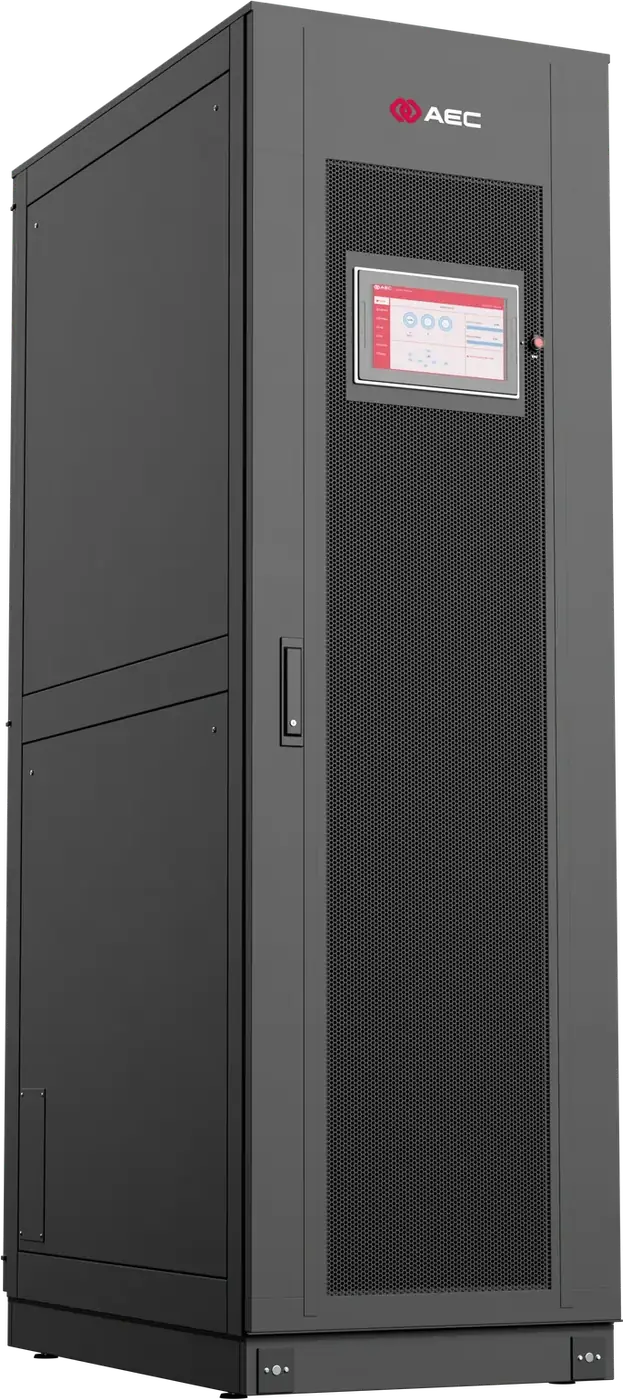
Through the maintenance bypass. The technician moves the load to the static bypass, closes the maintenance bypass, and only then opens the UPS's own input and output, so the load runs on the utility while the UPS is worked on. FERRUS SP has its manual maintenance bypass built in, and the CIRRO 600 and 800 kVA frames carry four breakers in the frame: main input, output, bypass input and maintenance bypass. The CIRRO 1,200 and 1,600 kVA frames need that switchgear outside the frame. On a UPS without a bypass of its own, an external maintenance bypass panel does the job.
While the load is on bypass it has no battery behind it. Schedule the visit at a quiet hour, tell the people who depend on the load, and check the generator is available. At the end, the steps run backwards, and the last check is the display: inverter on, bypass open, no alarm.
What should the log record?
| When | Who | Record |
|---|---|---|
| Monthly | Site team | Alarms and events, load in %, estimated runtime, room temperature |
| Quarterly | Site team | Battery string voltage or BMS status, a test alarm received by the right people |
| Yearly | Technician | Battery test results per block or module, thermal scan images, firmware version, transfer test result, parts replaced |
| Once | Installer | Commissioning date, battery installation date and date codes, warranty registration |
The battery's installation date is the one that matters most: the replacement is planned from it. Register an INFINITE: its warranty goes from three to five years when it is registered.
What is different on each AEC series?
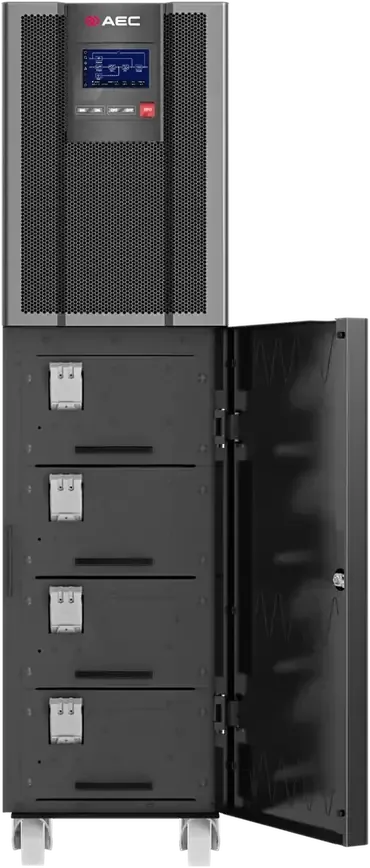
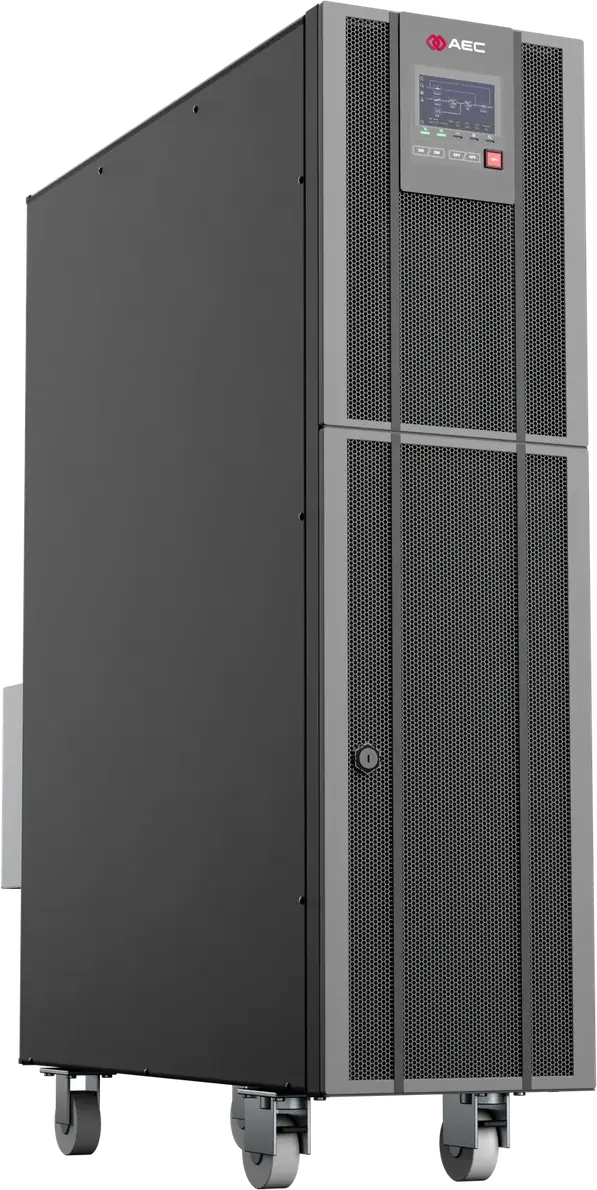
- LUMINA and FERRUS: the LUMINA battery test runs from its LCD and three buttons (see its operating guide); on FERRUS the internal VRLA blocks are changed by a technician, as a set.
- AUREON, RADIANT-IB and CIRRO-IB: internal VRLA in hot-swappable trays; RADIANT-IB and CIRRO-IB trays hold ten 12 V 9 Ah blocks each, 63.5 lb, up to 24 trays per UPS.
- ETHERNO: 50 Ah lithium modules of 81.6 lb each, swapped one at a time with the UPS running; plan the lift.
- RADIANT, CIRRO and INFINITE: external batteries, VRLA banks or L6 lithium cabinets, each with its own check; the L6 cabinet has a 7-inch display for its BMS.
When should the batteries be replaced?
Replace a VRLA string when tests show its capacity near 80 % or when blocks start to fail, and replace the whole string, not single blocks. The battery replacement tool shows the block each AEC UPS uses. Read how long UPS batteries last for the life you can expect.
How does lithium change the routine?
A LiFePO4 battery reports its own state through its BMS, lasts longer and needs no string voltage readings. The yearly technician visit stays; the battery replacements come far less often. ETHERNO's hot-swappable modules come out one at a time while the UPS runs.
What mistakes undo the maintenance?
- Mixing blocks. One new block in an old string, or blocks of different makes or date codes in one string, age unevenly and fail early.
- General-purpose blocks in a UPS. A 12 V 9 Ah block of the same size but built for alarm panels gives fewer minutes at UPS loads: AEC's published runtimes are based on high-rate cells.
- A UPS left on bypass. After the visit, or after an alarm, the load runs on raw utility with no battery until someone returns the UPS to inverter.
- Alarms to nobody. The email list of the network card still names the person who left last year.
- No load during the generator test. The monthly NFPA 110 test is the easiest UPS test there is: watch it go to battery, accept the generator and recharge.