What are the six questions?
- What supply feeds the load? 120 V, 120/240 V, 208 V or 480 V, single- or three-phase. See 208 V or 480 V.
- How much power? The load in kW with 20 to 25 % headroom. See UPS sizing.
- How many minutes? To a generator, to an orderly shutdown, or through the outage.
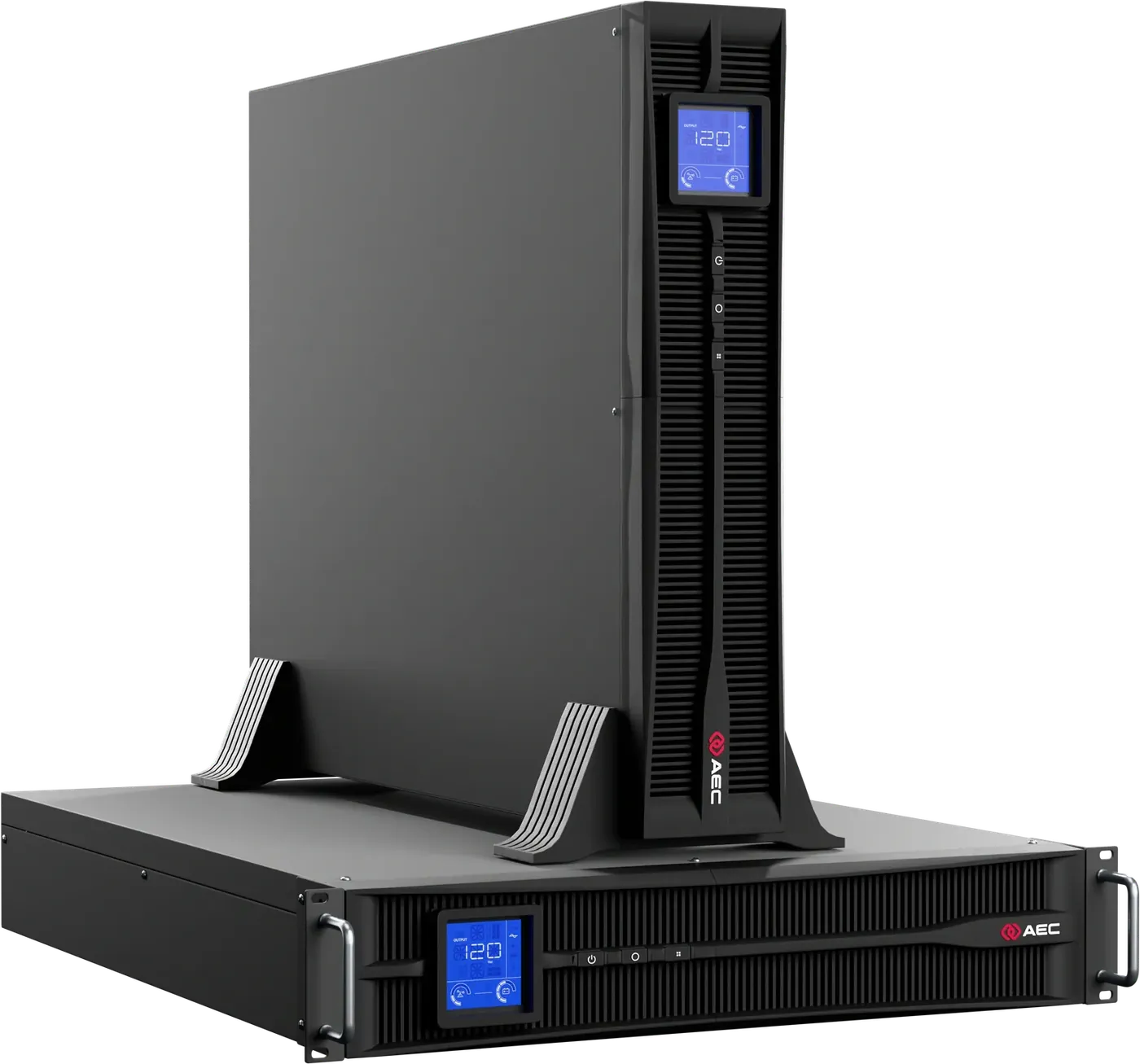
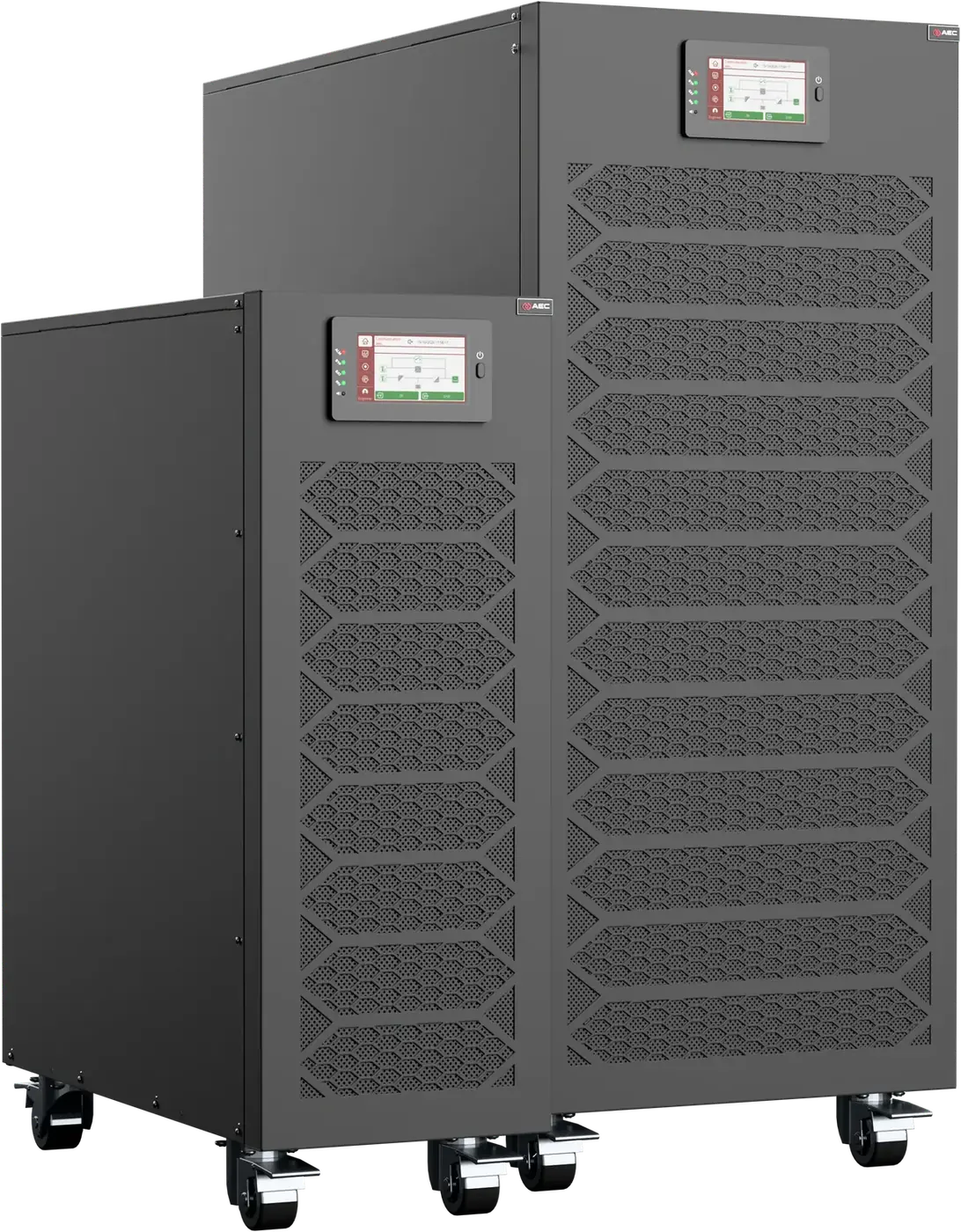
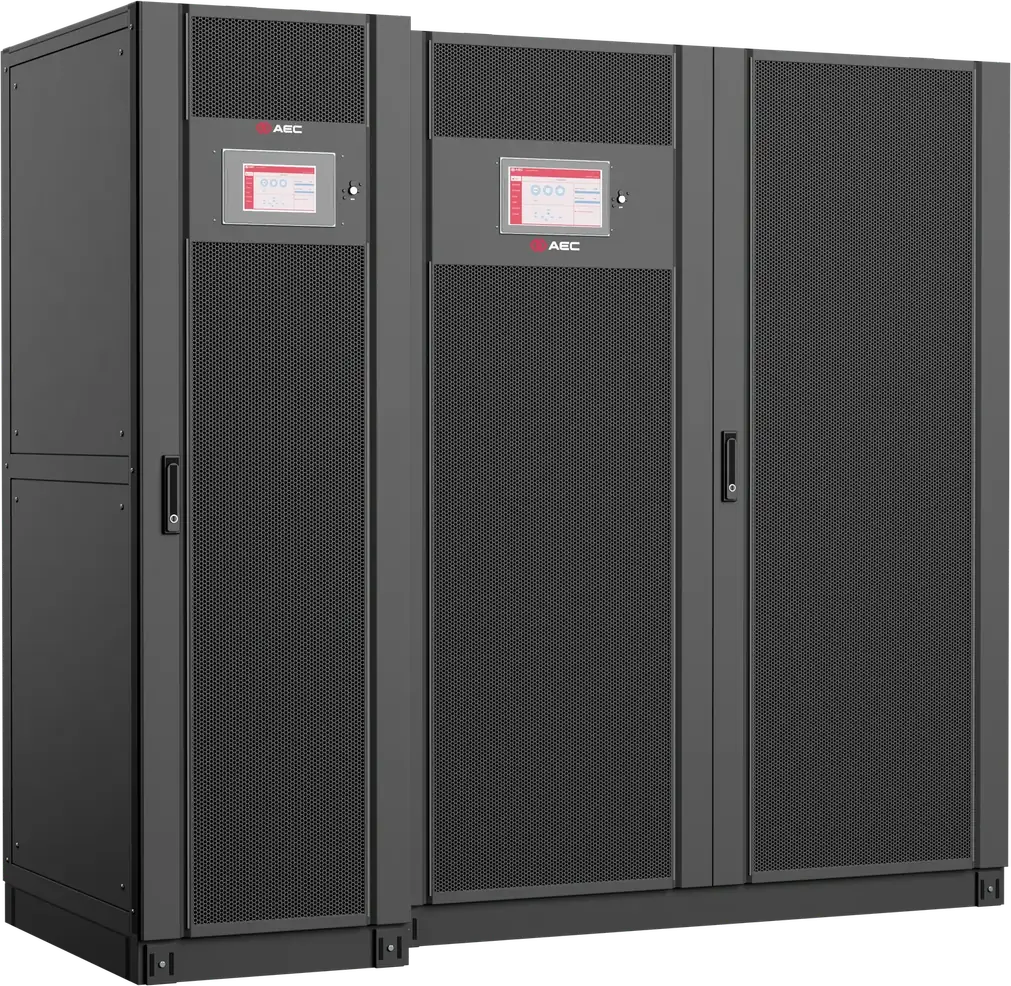
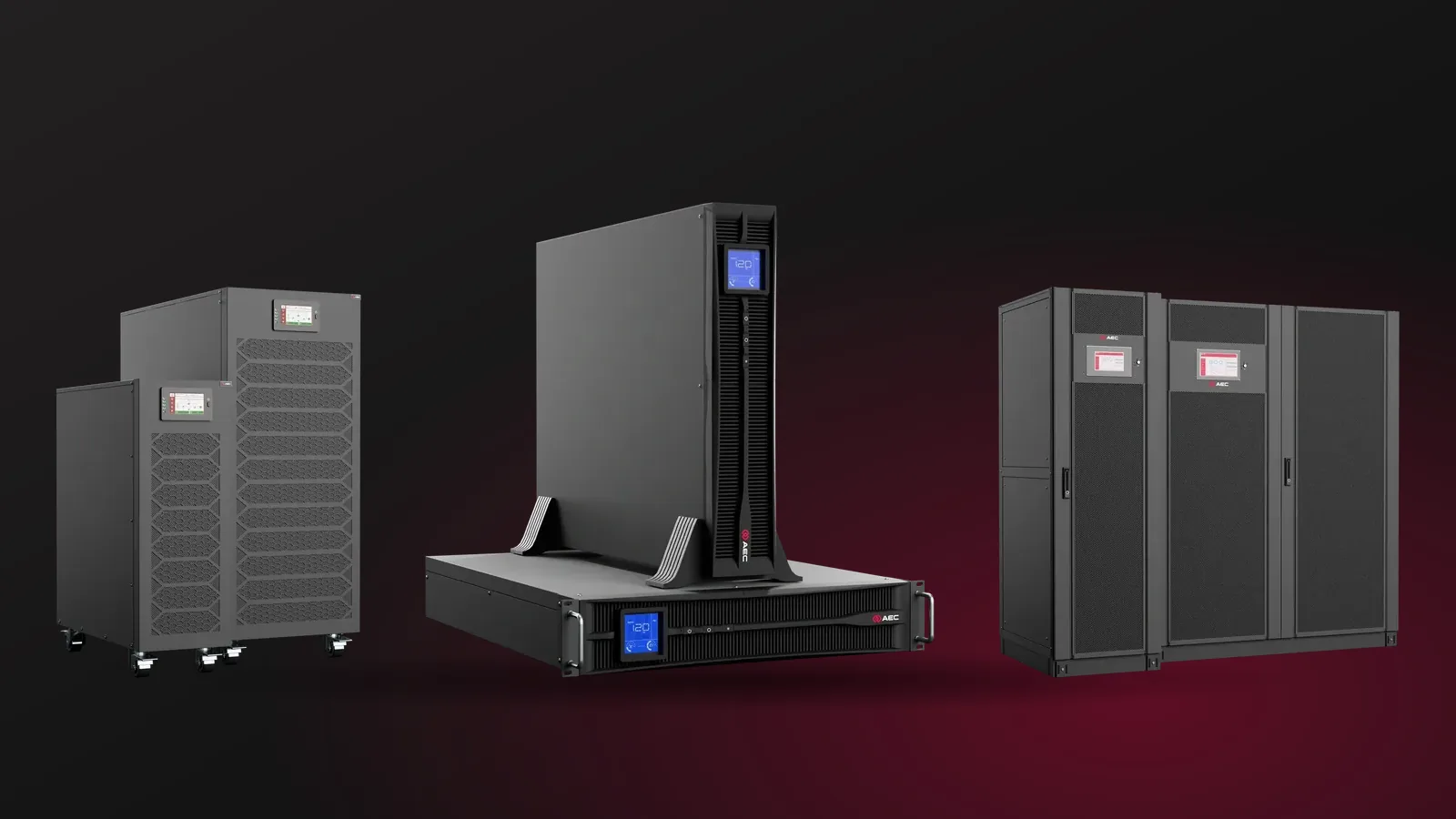
- Where does it go? A 2U rack unit, a tower beside the rack, or a modular cabinet in a plant room.
- Which battery? VRLA for the lowest first cost, lithium for long life, light weight and fewer replacements.
- How will it be watched? SNMP network cards, dry contacts and Modbus connect the UPS to your monitoring.
Which series fits which site?
| Where | Supply | Series |
|---|---|---|
| Network closet, small server rack | 120 V | LUMINA lithium 2U, FERRUS RT |
| Workstations, point of sale | 120 V | FERRUS tower |
| Small office or clinic panel | 120/240 V | FERRUS SP, FERRUS SP RT |
| Server room | 208 V | ETHERNO lithium, AUREON VRLA |
| Growing data room | 208 V | RADIANT, RADIANT-IB modular |
| Data center, industrial plant | 480 V | CIRRO-IB, CIRRO, INFINITE |
How do the six answers lead to one model?
The first two answers pick the series: the supply narrows the table above to one row, and the kW with headroom picks the frame size. The kW arithmetic, with a 15 kW room at 208 V worked through on ETHERNO, is in how to size a UPS, and the UPS sizing tool runs it against every AEC model. The other four answers then choose between the models of that series: the battery, the minutes, the cabinet and the monitoring. The example below takes a site where redundancy decides.
Worked example: 45 kW at 480 V, with redundancy
A plant's control room is fed at 480/277 V and carries 45 kW. It needs 10 minutes on battery, the batteries inside the cabinet, and no single power module that can drop the load.
- Series. 480 V with internal batteries points to CIRRO-IB: 30 kVA modules in a 150 kVA frame, up to 240 VRLA blocks of 12 V 9 Ah inside.
- Modules. 45 kW on 30 kVA modules needs two (N). With one more for redundancy, three: the CIRIB150-3X30, 90 kVA, each module at 50 %.
- Runtime. Its table gives 10.5 minutes at 50 % load, 45 kW. The two-module CIRIB150-2X30 gives the same 10.5 minutes at 75 %, the same 45 kW: the battery is the same, so the minutes follow the kW of the load, not the number of modules.
The answer: the CIRIB150-3X30. If the room later needs more than 10.5 minutes, the internal battery is the limit, and a frame with an external bank, such as CIRRO, takes over.
Tower, rack or modular: what changes on site?
- Rack. LUMINA and FERRUS RT are 2U and fit the rack they protect. FERRUS RT also stands as a tower.
- Tower. ETHERNO stands 12.6 in wide and 39.1 in deep, and weighs 297.6 to 485 lb with its lithium modules. It goes beside the racks, on an ordinary floor.
- Modular with internal batteries. RADIANT-IB and CIRRO-IB are 23.6 × 39.3 in cabinets, 78.7 in high, and weigh about a ton with their batteries (1,998 to 2,399.8 lb). Check the floor rating and the route in: doors, elevators, ramps.
- Modular with external batteries. RADIANT, CIRRO and INFINITE keep the battery in its own cabinets, so the UPS and the battery can go where the floor and the fire code allow.
How does each series report alarms?
Every AEC UPS has its own display. What each series adds as standard, from the 2026 catalog:
| Series | Standard | Network card |
|---|---|---|
| LUMINA, FERRUS, FERRUS RT, FERRUS SP | RS232, USB, EPO | SNMP-L (LUMINA), SNMP-M (FERRUS family) |
| ETHERNO, AUREON | Modbus, dry contacts | SNMP-L |
| RADIANT, RADIANT-IB, CIRRO-IB | RS232, USB, EPO | SNMP-M |
| CIRRO | RS232, RS485, USB, dry contacts, intelligent slot, EPO | SNMP-M |
| INFINITE | RS232, RS485/Modbus, dry contacts, EPO | SNMP-L, optional |
| INFINITE 1.5MW | RS232, RS485/Modbus RTU, Modbus TCP/IP, BACnet, dry contacts, EPO | SNMP-L, optional |
The SNMP cards also speak Modbus TCP/IP, and a dry-contact relay card fits every series. See UPS monitoring.
What mistakes make the wrong choice?
- Choosing by the kVA on an offer sheet instead of the kW of the load.
- Ordering a 480 V UPS for a room fed at 208 V, or a 3-wire UPS where the loads need a neutral.
- Specifying minutes at full load that the site will never draw, and paying for batteries it does not need; or the reverse.
- Forgetting the floor and the route: a ton of cabinet does not climb every stair.
- Leaving out monitoring, so the first sign of a failed battery is the next outage.
What should you check about service?
Guides by building: offices and small business, hospitals and clinics, data centers.
Check the warranty, who commissions the system and how fast batteries and parts arrive. LUMINA and ETHERNO carry a five-year warranty with the lithium batteries included; the other series three years, and VRLA batteries two. INFINITE and INFINITE 1.5MW go to five years when registered, and their L6 lithium cabinets carry five years with the batteries.