How are kVA and kW related?
Apparent power in kVA is volts times amps. Real power in kW is the part that does work. The two are linked by the power factor: kW = kVA × power factor. A UPS rated 10 kVA at a power factor of 0.9 delivers 9 kW; the same 10 kVA at 1.0 delivers 10 kW.
The rest of the current does no work. In a load with a power factor below 1, part of the current flows back and forth each cycle, as reactive power in kVAR, and the three form a right triangle: kVA² = kW² + kVAR². Electronic loads add a second cause, harmonic currents drawn in short pulses, which also raise the kVA without adding kW. Either way the wires, the breakers and the UPS inverter must carry the whole current, which is why a UPS has a kVA rating at all.
What is the current behind each rating?
Volts times amps is the kVA, so the current follows from the rating and the supply: at 120 V single phase, 1 kVA is 8.3 A; at 208 V three phase, 20 kVA is 55.5 A per phase (20,000 ÷ (1.732 × 208)). The kW does not enter the formula: a load at 0.8 power factor draws the same current as a load of 25 % more kW at 1.0. Every rating in amps is in UPS amps from kVA.
What are the AEC ratings?
| Series | Power factor | Example |
|---|---|---|
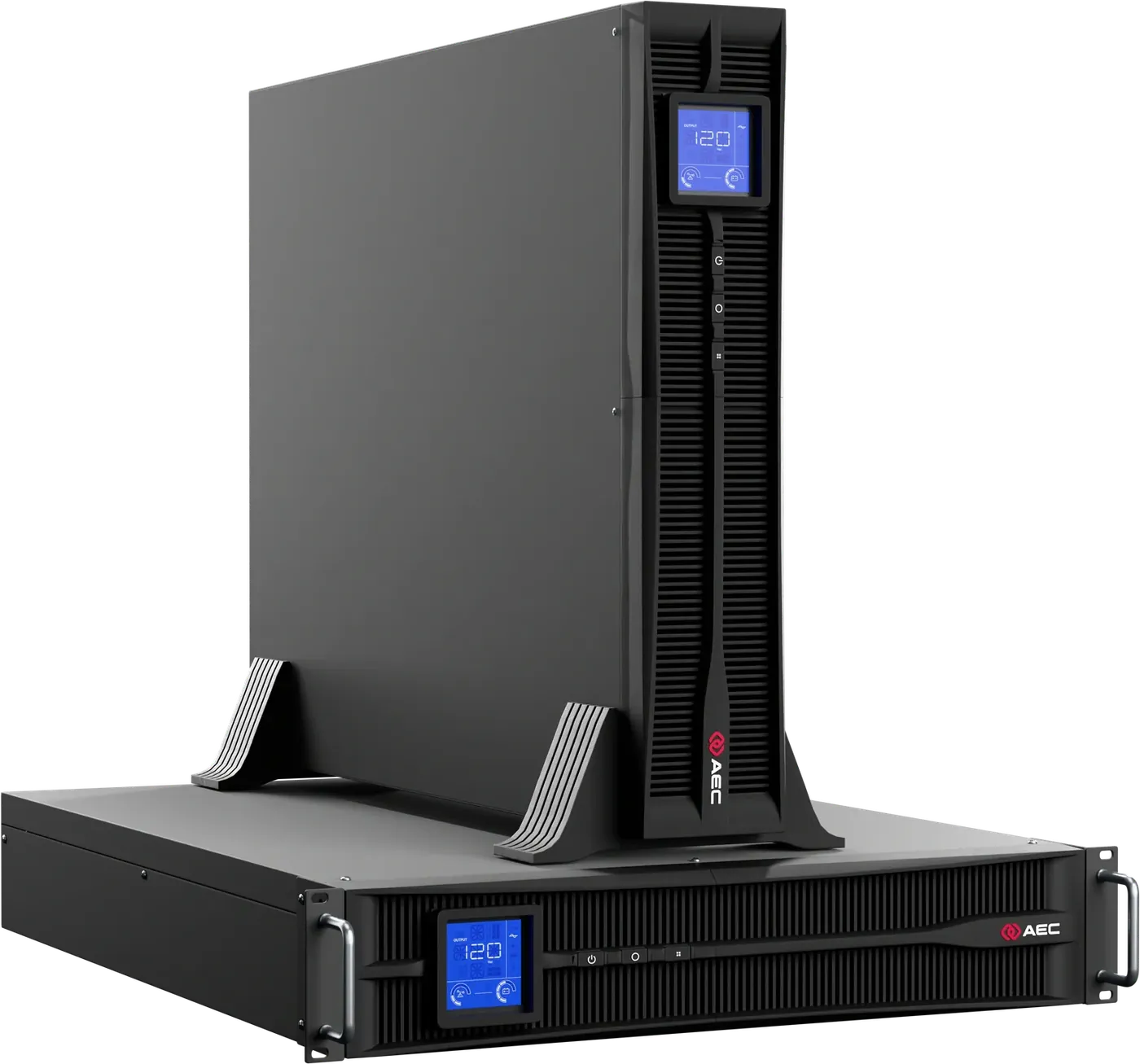
| LUMINA 1 to 3 kVA | 0.9 | LUM1000RT-2U-LI: 1 kVA, 900 W; LUM3000RT-2U-LI: 3 kVA, 2.7 kW |
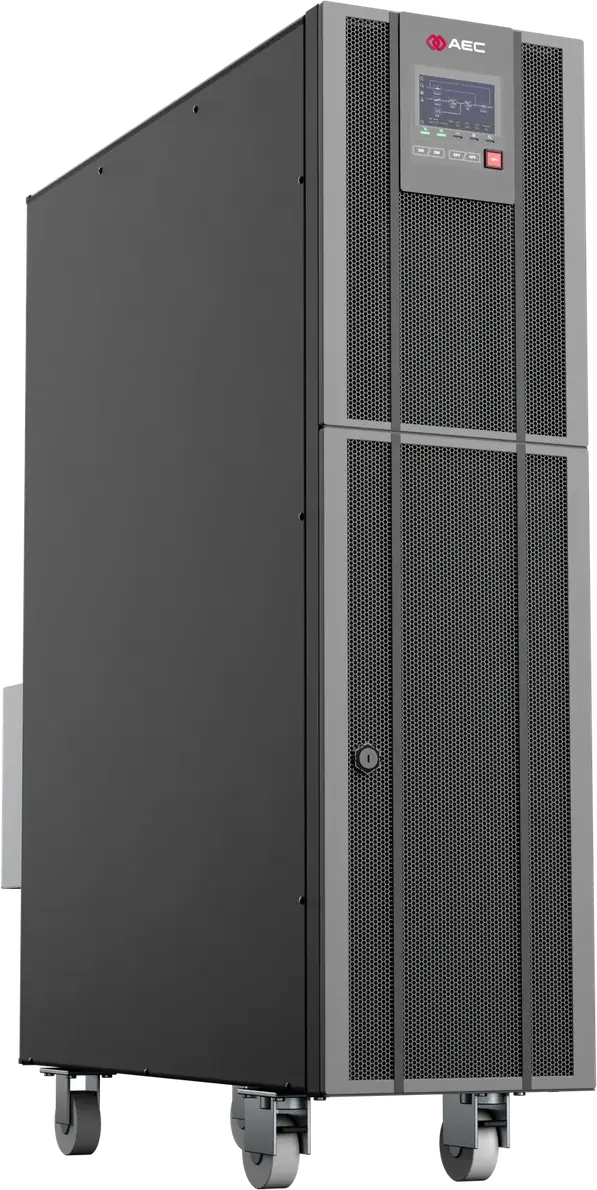
| FERRUS, FERRUS SP | 1.0 | FERSP20000-40X9: 20 kVA, 20 kW |
| ETHERNO, AUREON, RADIANT | 1.0 | ETH20-3X50A-LI: 20 kVA, 20 kW |
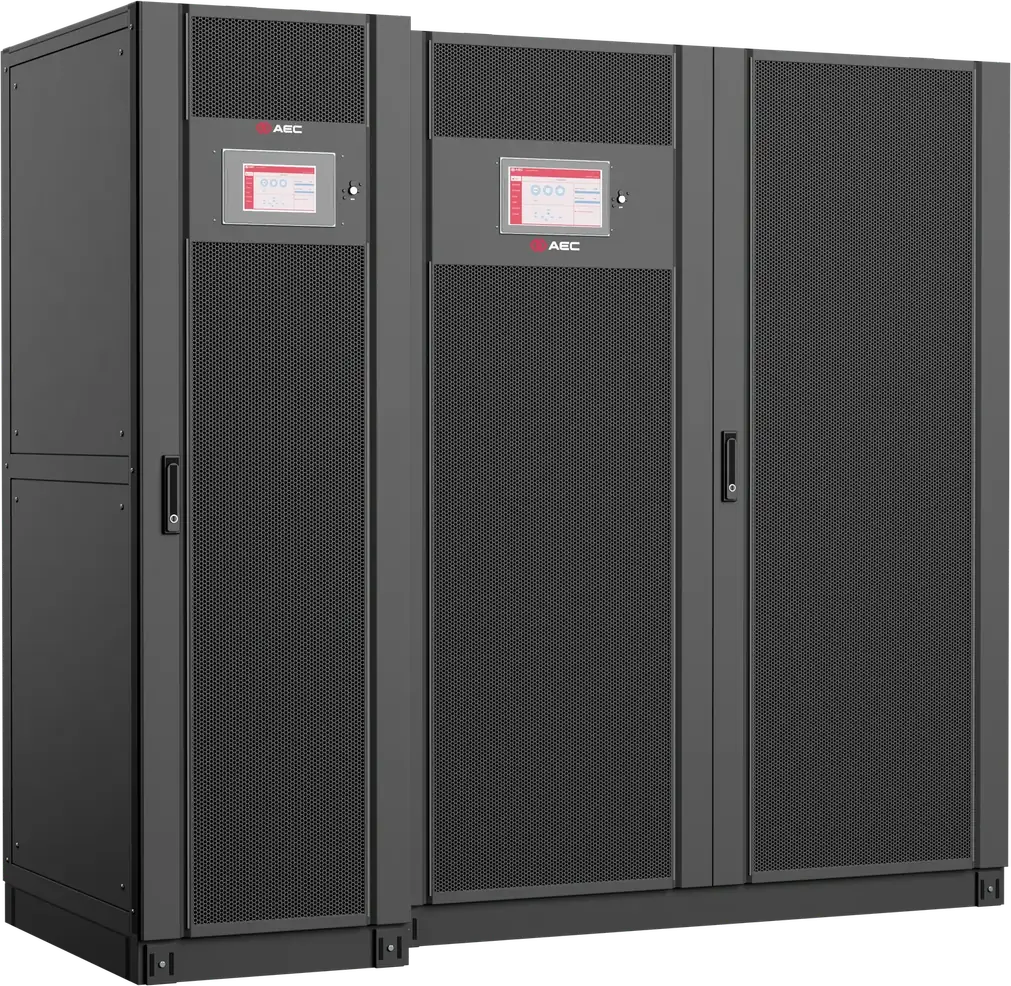
| CIRRO, INFINITE | 1.0 | INF15-1500: 1,500 kVA, 1,500 kW |
Why size a UPS by kW?
Servers, switches and storage today have power supplies with power-factor correction, so their own power factor is close to 1. Their real draw in watts is what fills the UPS. Add up the watts (measured, or from the nameplates), divide by 1,000 for kW, and pick a UPS whose kW rating covers it with room to spare: a load of 70 to 80 % of the rating leaves headroom for inrush and growth.
When does kVA matter?
An older load with a low power factor, motors, or lighting can draw more current than its watts suggest. Then the kVA rating, not the kW, is the limit. If the load is mixed, check both numbers: the UPS must cover the load's kW and its kVA.
What power factor do IT loads have?
Close to 1 in normal service. Servers, storage and network switches sold today have power supplies with active power-factor correction, which shape the input current to follow the voltage. Their power factor falls at light load, when the supply runs well below its rating, and some designs turn slightly leading, the opposite of a motor. Older equipment, motors, compressors and magnetic lighting ballasts sit lower. When in doubt, a power analyzer on the feeder gives kW, kVA and the power factor at once.
Worked example: a rack of servers at 208 V
Twenty servers each draw 350 W, measured, at a power factor of 0.95.
- kW. 20 × 350 W = 7,000 W, 7 kW.
- kVA. 7 kW ÷ 0.95 = 7.37 kVA.
- The UPS. An ETHERNO 10 kVA at a power factor of 1.0 gives 10 kW: the load is 70 % of its kW and 74 % of its kVA, both inside the 80 % target. A UPS of the same 10 kVA rated at 0.9 would give 9 kW, and the same load would be 78 % of it.
Worked example: older equipment at 0.8
A line of older controls without power-factor correction draws 8 kW at a power factor of 0.8: 10 kVA. On a 10 kVA / 10 kW UPS that load is only 80 % of the kW rating but 100 % of the kVA rating. The kVA decides: the UPS is full, with no headroom for an inrush. The next size up is the answer, or a check of the real power factor with a power analyzer before buying.
What mistakes come from mixing kVA and kW?
- Reading the number on the box, "1500", as watts when it is VA.
- Comparing two UPS on kVA alone. Two units of the same kVA carry different loads when their power factors differ: compare them on kW, and read the kVA as the current they can carry.
- Adding kVA from some nameplates and watts from others, then comparing the sum with one UPS rating.
- Sizing by the kVA of the load and forgetting that a UPS rated at 0.9 gives fewer kW than its kVA.
- Applying the 125 % of the NEC, which sizes conductors and breakers for continuous loads, as if it were the headroom rule for the UPS itself. The 80 % target is a separate, common practice.
The kW is also the heat: almost every watt the load draws ends up as heat in the room, 3,412 BTU/h per kW, plus the UPS's own losses. See UPS heat output.
What comes next?
The sizing guide goes on to voltage, runtime and growth; the sizing tool does the arithmetic and lists the AEC models that fit.