What do N, N+1, N+X and 2N mean?
- N: exactly the capacity the load needs. No spare.
- N+1: one more module or unit than the load needs. Any one can fail.
- N+X: X more than needed. X of them can fail.
- 2N: two complete systems, each able to carry the whole load, usually fed from separate paths. The highest level, and the most equipment.
How does one modular frame give redundancy?
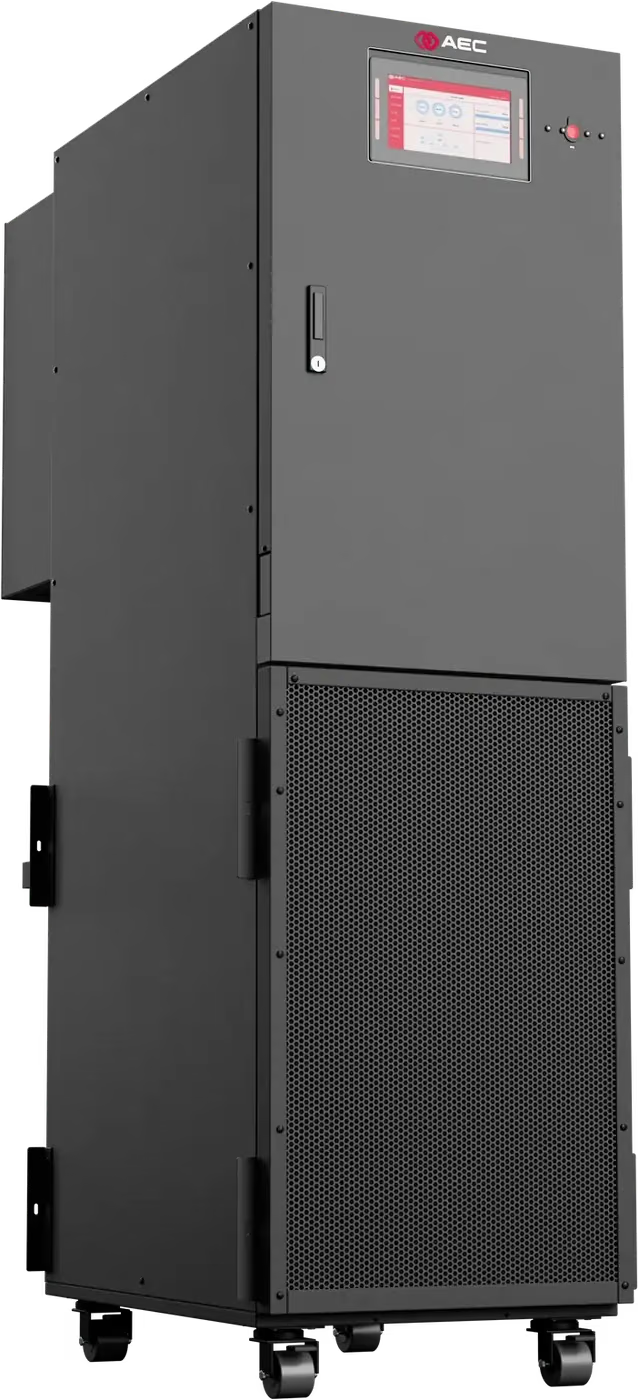
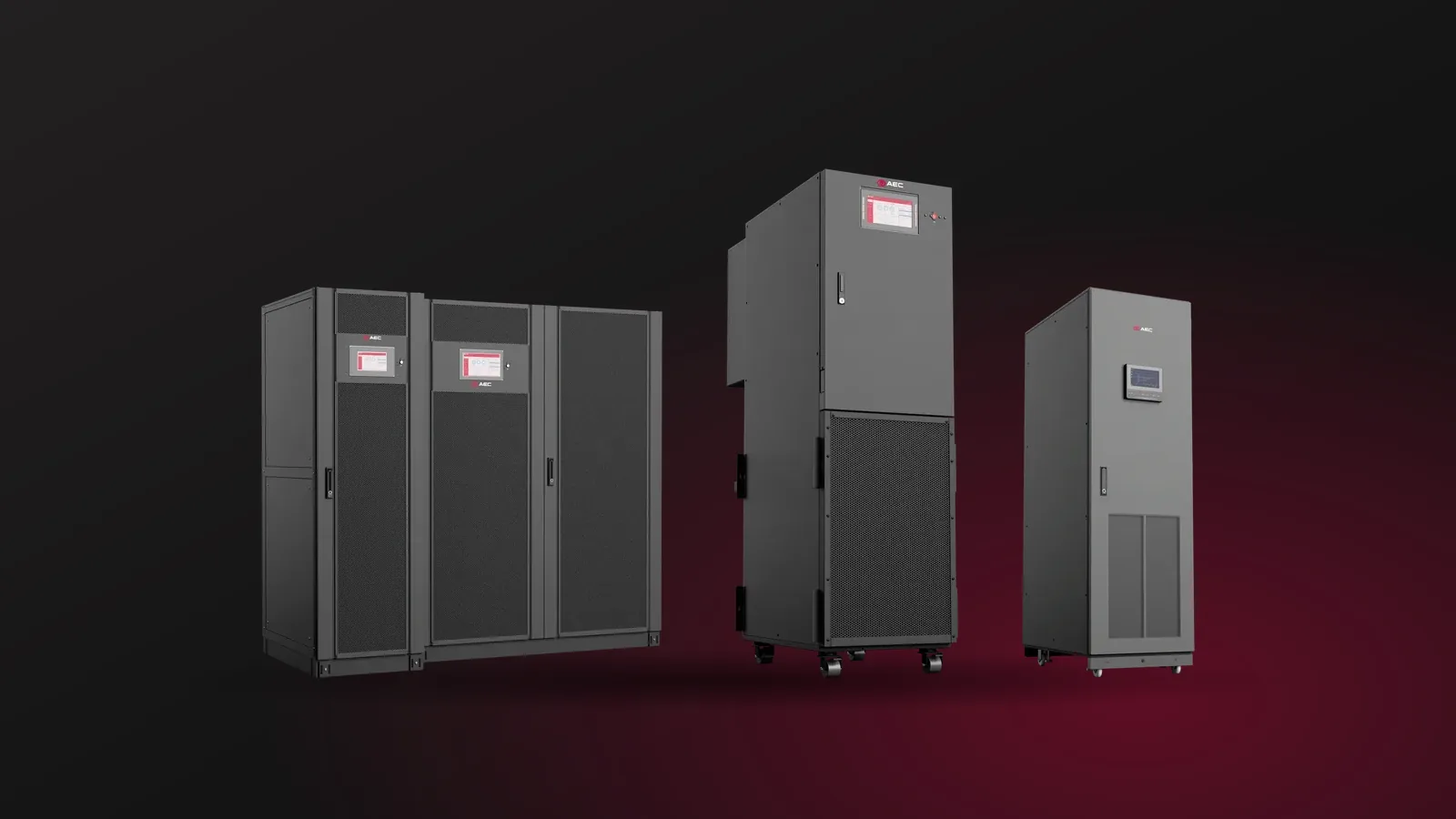
A modular UPS is a frame with slots for power modules. The modules share the load; if one fails, the others carry it, and the failed one slides out hot while the load stays on the inverter. Redundancy then costs one module, not a second UPS.
| AEC series | Supply | Module | Range in the 2026 catalog |
|---|---|---|---|
| RADIANT | 208 V | 15 kVA | 15 to 90 kVA, 1 to 6 modules |
| RADIANT-IB | 208 V | 20 kVA | 20 to 100 kVA, internal batteries |
| CIRRO-IB | 480 V, 4-wire | 30 kVA | 30 to 150 kVA, internal batteries |
| CIRRO | 480 V, 4-wire | 60 and 100 kVA | 60 to 1,600 kVA |
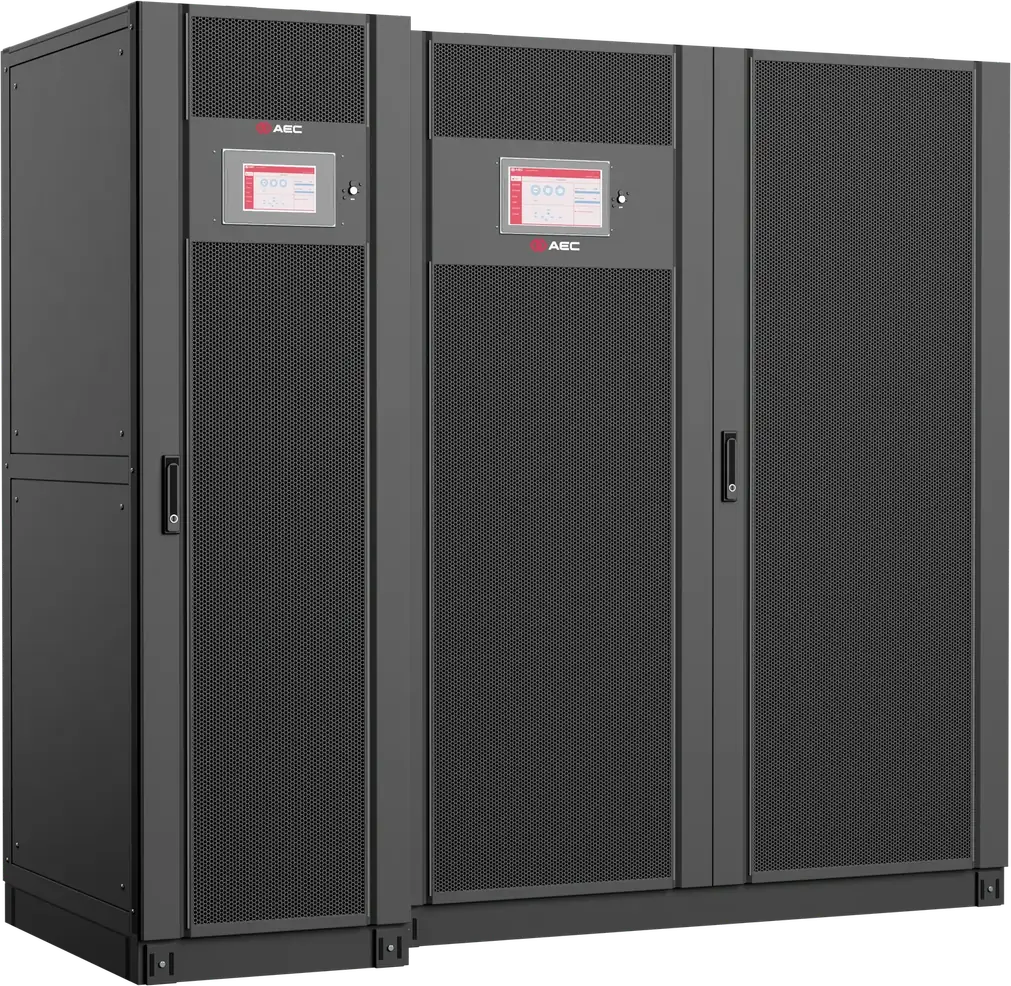
| INFINITE | 480 V, 3-wire | 100 kVA | 100 to 600 kVA, N+1 frames |
| INFINITE 1.5MW | 480 V, 3-wire | 125 kVA | 750 to 1,500 kVA, one frame |
How does it work out in a real case?
A 45 kW server room on 208 V needs three RADIANT 15 kVA modules (N). For N+1 it gets four: the RAD90-4X15, 60 kVA in one frame. Each module runs at 75 % of its rating, and any one can drop out without the load noticing. INFINITE is sold the same way: the INF-100+1 is a 100 kVA system with two 100 kVA modules. The UPS sizing tool adds the N+1 module for you when you ask for redundancy.
How many modules for N+1, series by series?
The count is N = load ÷ module rating, rounded up, then one more. The same arithmetic on each AEC modular series, from the catalog's module sizes:
| Load | Series and module | N | N+1 | Model | Each module at |
|---|---|---|---|---|---|
| 50 kW, 208 V | RADIANT-IB, 20 kVA | 3 | 4 | RADIB100-4X20 | 63 % |
| 50 kW, 480 V | CIRRO-IB, 30 kVA | 2 | 3 | CIRIB150-3X30 | 56 % |
| 420 kW, 480 V | CIRRO, 100 kVA | 5 | 6 | CIR600-6X100 | 70 % |
| 900 kW, 480 V | INFINITE 1.5MW, 125 kVA | 8 | 9 | INF15-1000+1 | 80 % |
Two checks follow. With one module out, the rest must still carry the load at a level the site accepts: in the CIRRO case, five modules carry 420 kW at 84 %. And the frame must have the free slot: the CIR600 frame takes six modules, so this system has no room left to grow inside it.
Is the battery redundant too?
Not by itself. N+1 covers the power modules. The battery is shared, and a VRLA bank is a string of blocks in series, sometimes two or more strings in parallel: one open block takes its string out, and with a single string the runtime is gone. A second string in parallel, or a lithium battery built from modules with their own BMS, keeps part of the runtime when one part fails. In the L6 cabinet each 50 Ah module has its own BMS and DC/DC converter, so a module that trips leaves the others on the bus, with fewer minutes.
How far can frames be paralleled?
- RADIANT: up to 4 frames.
- RADIANT-IB and CIRRO-IB: up to 3 cabinets.
- CIRRO: up to 8 units, with the CIRRO parallel kit.
- INFINITE: up to three 200 kVA frames, 600 kVA; INFINITE 1.5MW: up to 8 units.
- ETHERNO and AUREON: two or more towers with their parallel kits.
Paralleled frames give N+1 at the level of whole UPS units: with three frames where two carry the load, a whole frame, its bypass included, can be shut down for service.
How do tower UPS get redundancy?
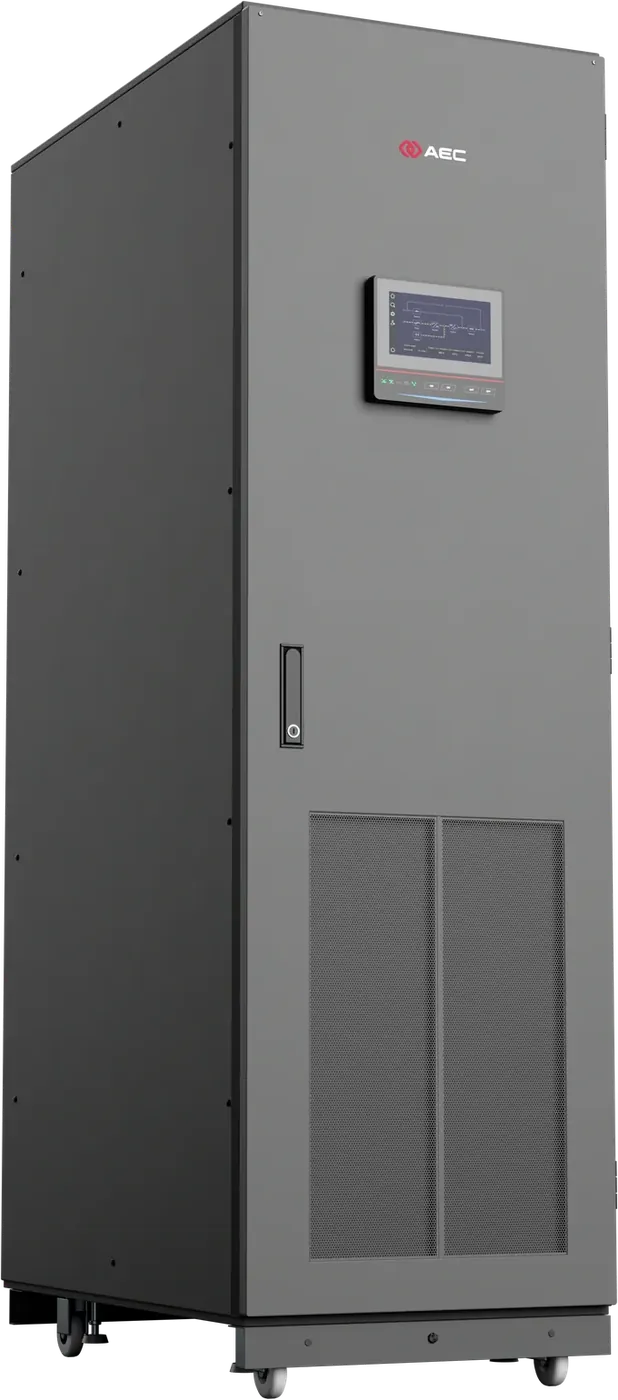
Tower UPS such as ETHERNO and AUREON reach N+1 by running two units in parallel with a parallel kit: two 20 kVA units carry a 20 kW load, each at half its rating, and either can stop.
What does redundancy not cover?
Modules in one frame still share the frame, the bypass and the input feed. A site that must survive the loss of a whole UPS or a whole feed is designed for 2N, with two systems and two paths; that is a decision for the engineer of record. See modular UPS and N+X for every AEC frame.
What does a 2N system look like?
Two UPS systems, A and B, each sized for the whole load, fed if possible from two switchboards. Dual-corded servers take one cord from each side, through two PDUs. Single-corded loads go through a static transfer switch, which picks the healthy side in a fraction of a cycle. Because each side must be able to carry everything, each normally runs at 50 % of the load or less; a 2N pair for 200 kW is two systems of at least 250 kVA each, if each is held to 80 % when it carries the load alone. In the language of the Uptime Institute's tiers, N+1 with concurrent maintainability is the mark of Tier III, and fault tolerance, usually reached with 2N, of Tier IV.
What mistakes erode redundancy?
- Growth that eats the spare. A RAD90-4X15 bought as N+1 for 45 kW is no longer N+1 at 50 kW: all four of its 15 kVA modules are then needed. Set an alarm at the load where N+1 ends, and fill a free slot before it is reached.
- Counting the bypass as redundancy. Static bypass keeps the load powered, but on raw utility with no battery: it is a fallback, not a spare.
- One feed, one breaker. Two UPS on the same input breaker share its failure.
- A spare never tested. Swap the modules in turn during maintenance, so every one has carried load recently.