



















Technology
How AEC UPS systems work.
Six articles on how an AEC UPS works, each with the catalogue's figures, the app's diagrams and the real displays: online double conversion with 0 ms transfer, efficiency, LiFePO4 lithium, modular redundancy, isolation transformers and monitoring. Open the cabinets, switch the operating modes and read the curves.
Short answers
What do these articles answer?
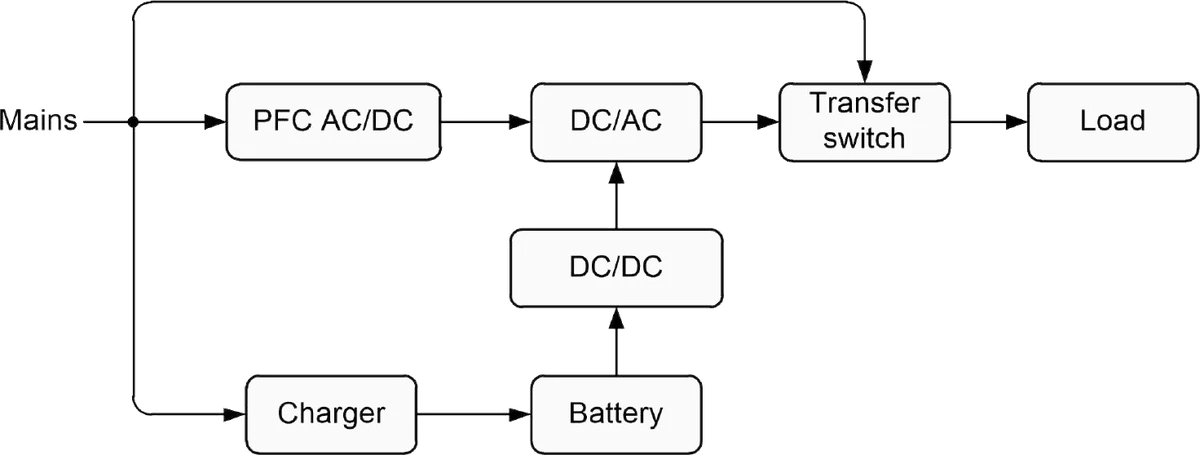
What does online double conversion mean? The rectifier and the inverter run all the time, so the load is always fed by the inverter and nothing transfers when the mains fails: 0 ms. Every AEC UPS range works this way.
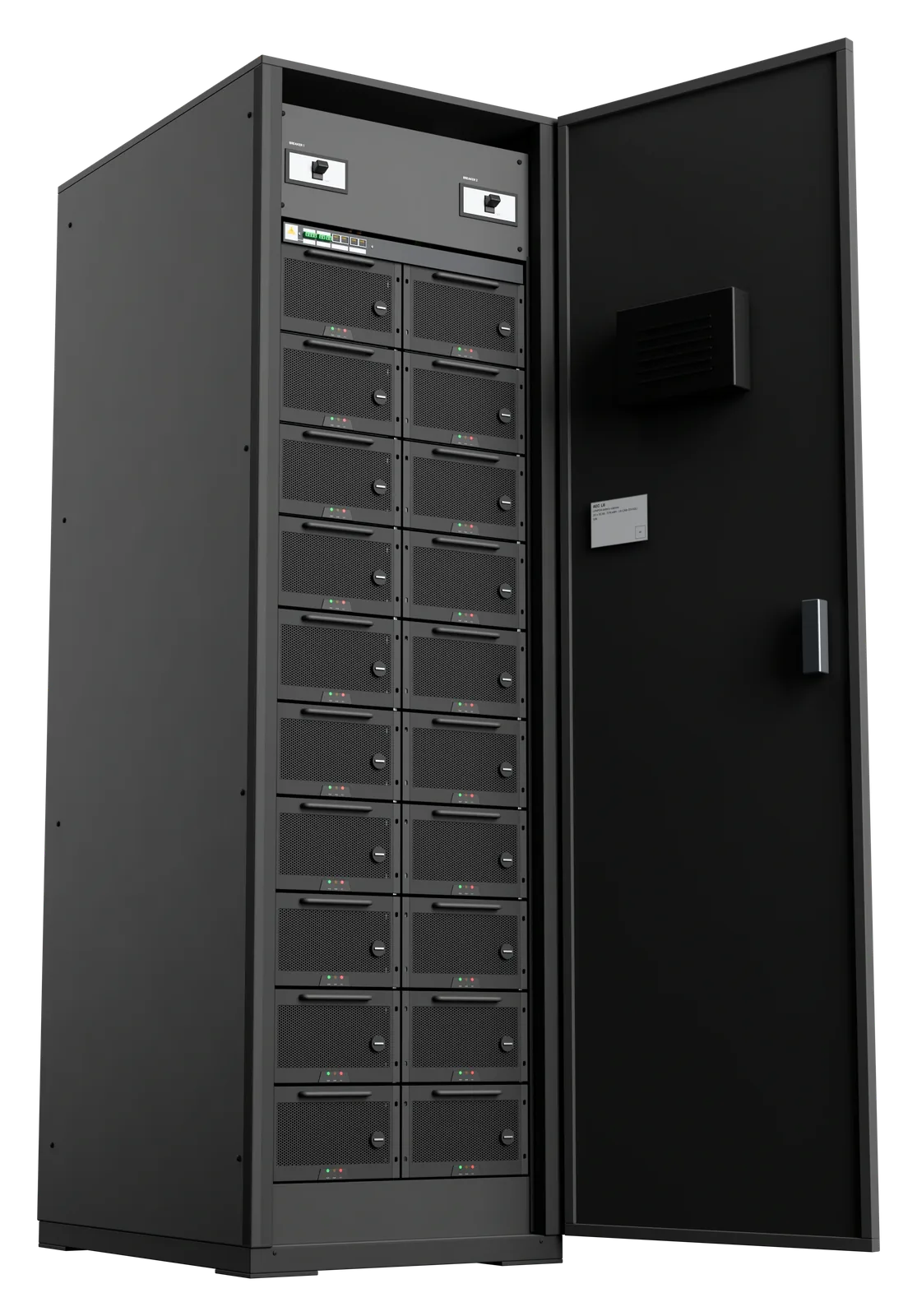
Is a lithium UPS battery safe? AEC uses lithium iron phosphate (LiFePO4), the lithium chemistry least prone to thermal runaway, in hot-swappable 40, 50 and 100 Ah modules, each watched by the battery management system.
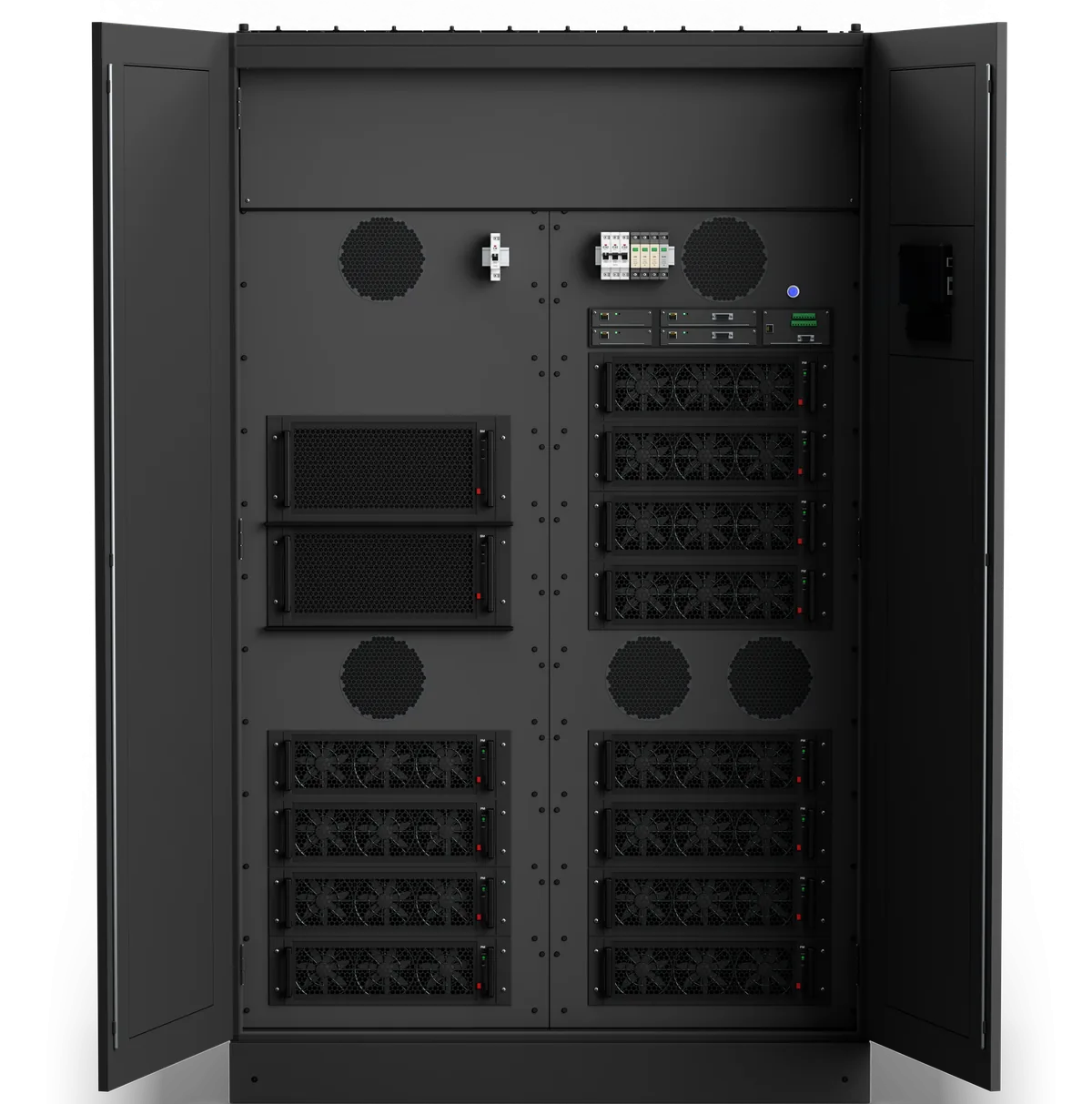
What is N+1 redundancy in a modular UPS? One power module more than the load needs: a module can fail or be swapped while the others carry the load. On the IST6-120 the fifth slot is kept for it.
How much does UPS efficiency save? Losses are the load times (1 ÷ efficiency − 1): at a steady 100 kW, 96% loses 4.2 kW, about 36,500 kWh a year; the IST6 400–1200 at 98.1% loses 1.9 kW.
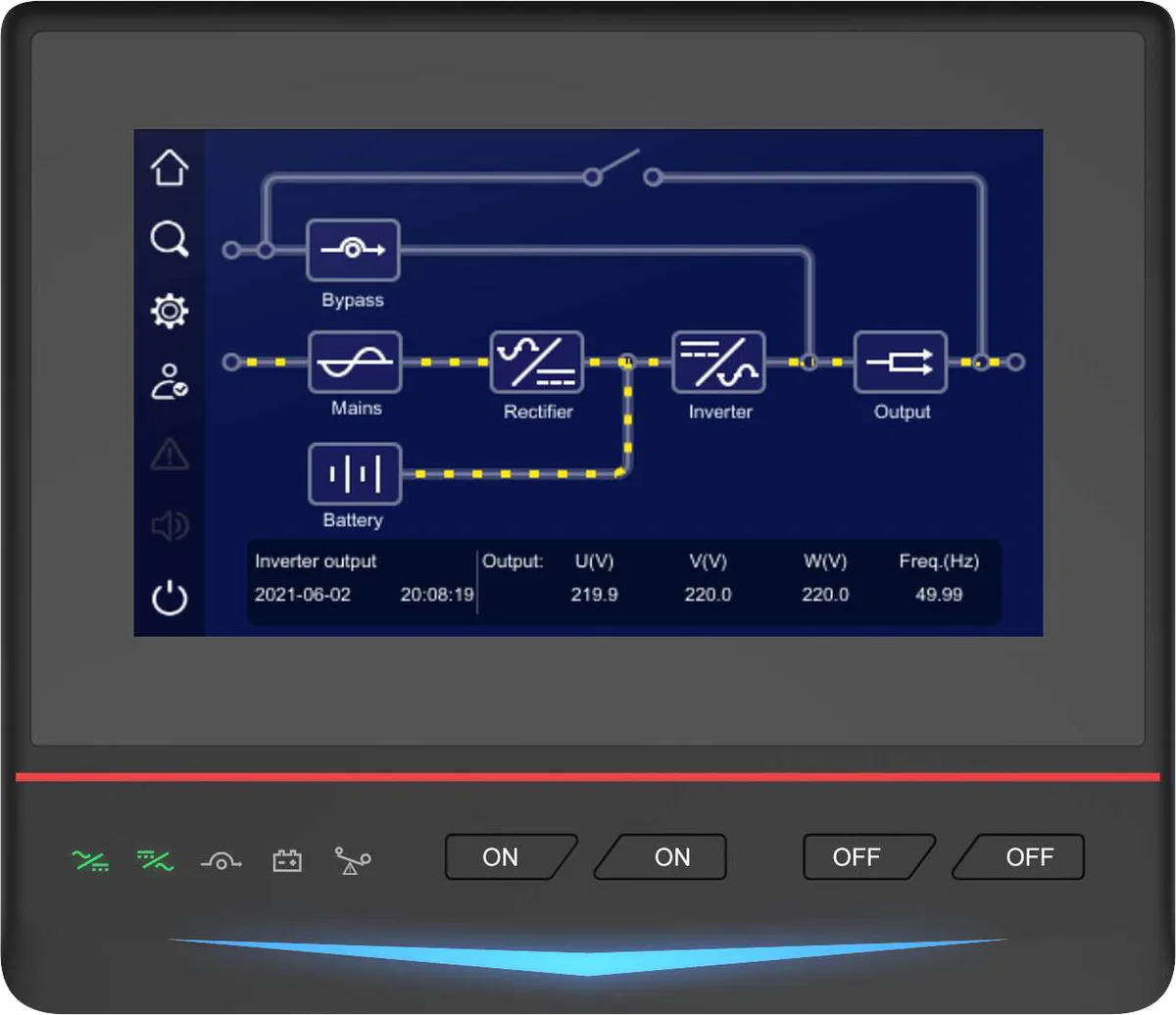
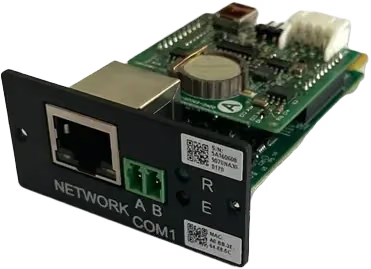
How is a UPS monitored over the network? With an SNMP network card, Modbus, a dry-contact relay card for alarms, a USB card for a single computer, or the UPS's own touch screen.
When does a UPS need an isolation transformer? When the load needs galvanic isolation from the mains, a new neutral or a different voltage, as on industrial sites and harsh grids. The IST7-T has one built in, from 100 to 200 kVA.
Power electronics
From thyristor to silicon carbide.
Seventy years of the power switch inside a UPS, era by era, and what AEC UPS use today.
Efficiency
EU Code of Conduct on UPS efficiency.
What it asks at 25, 50, 75 and 100% load, and AEC's efficiencies.
Talk to an engineer
Tell us the load, the voltage and the minutes you need. We answer with the model and the batteries that fit.