



















Batteries and cabinets · Lithium and VRLA lead-acid
Battery cabinets for UPS: BB1–BB8
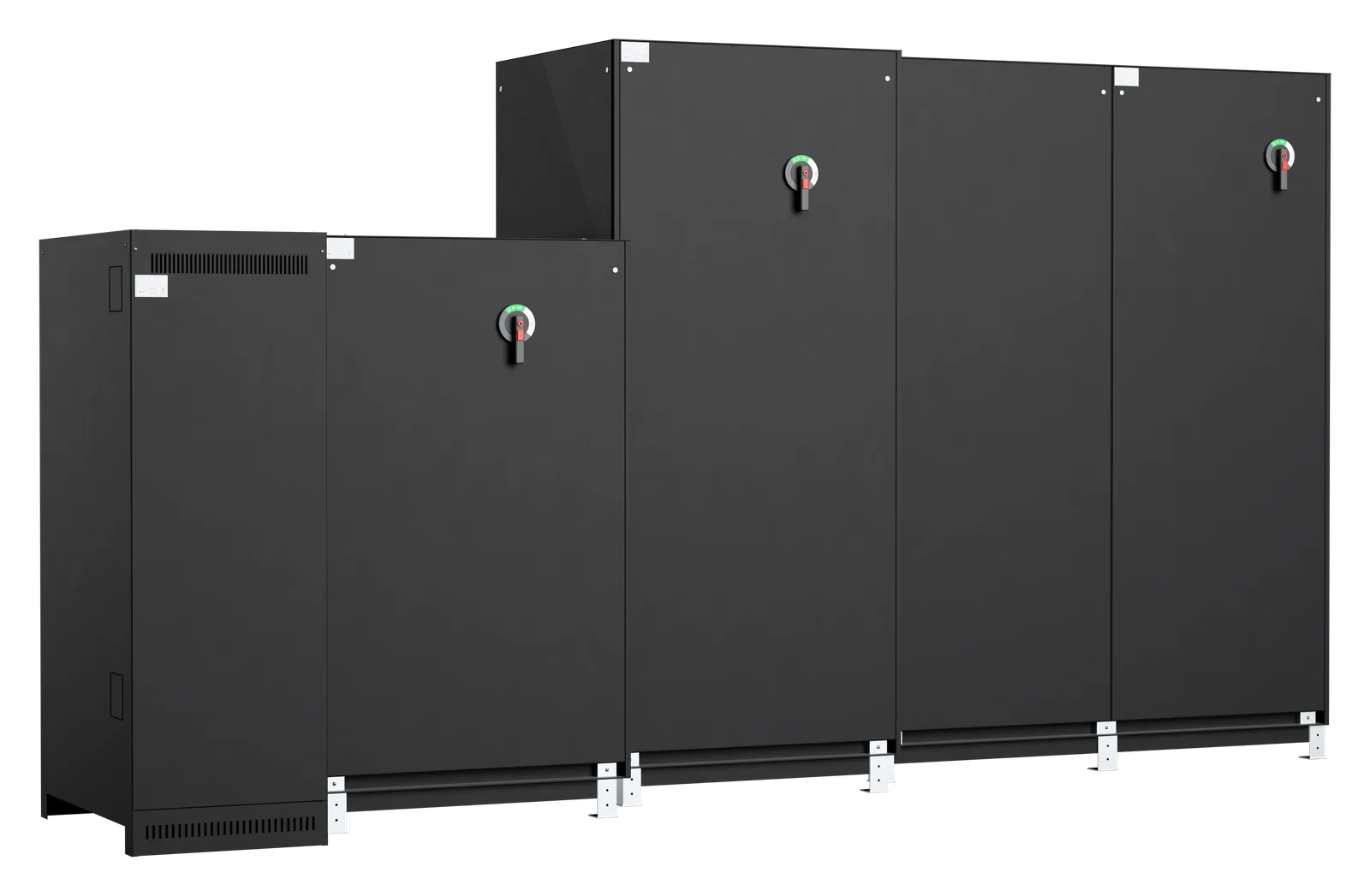
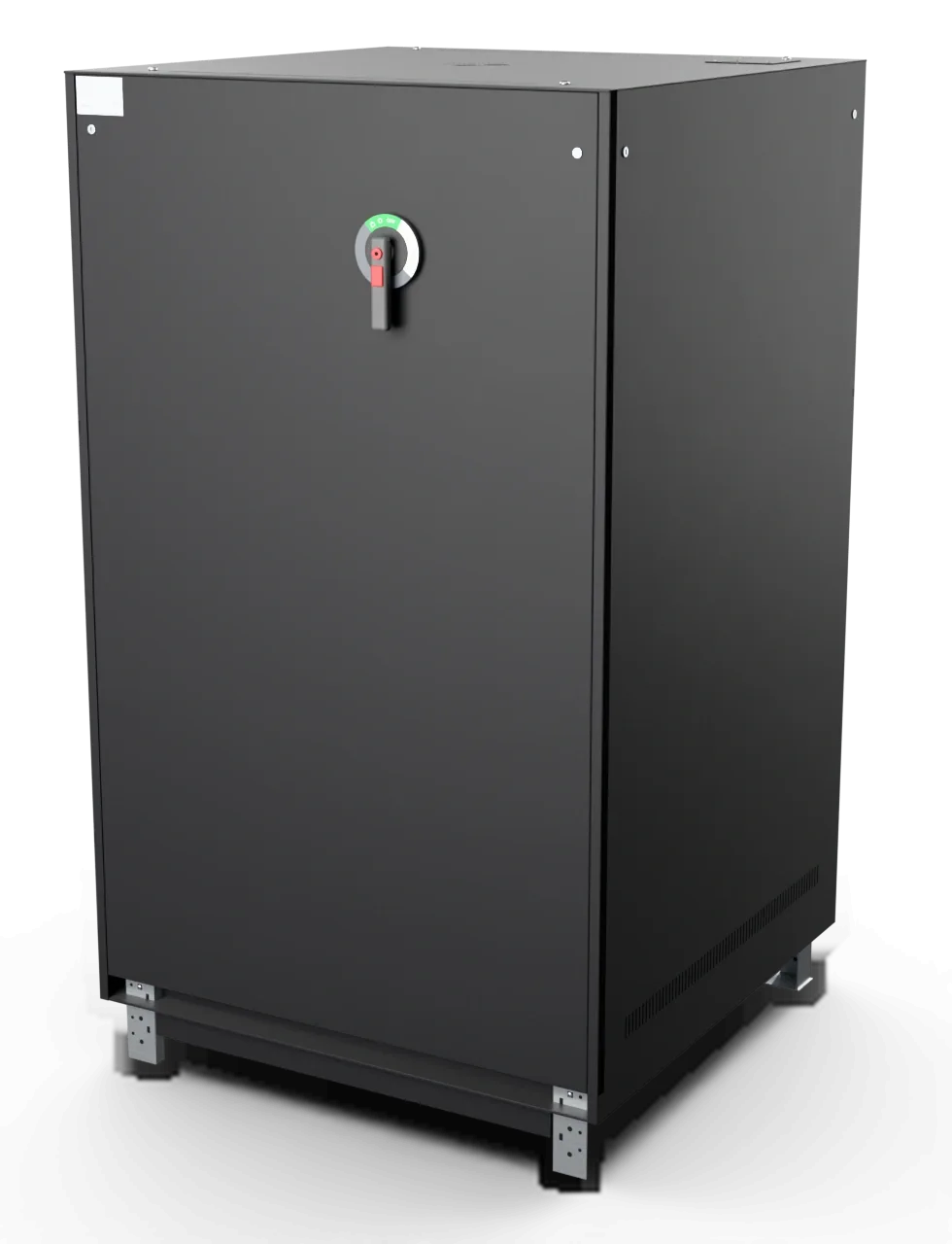
AEC battery cabinets BB1–BB8, BBJ and BBJ2 are ten tower, rack and floor-standing models for 12 V VRLA AGM batteries from 9 to 100 Ah, which extend the backup time of AEC UPS. Three-pole string with neutral at ±240 V; one cabinet serves a UPS up to 200 kW, and every cabinet comes with AEC's wiring diagrams.
 Drag to turn
In 3D
Look around the Battery cabinets
Drag it round, swipe on a phone or use the arrow keys. X-ray makes the enclosure see-through, so you can see what sits behind the panels.
Pick a size: the turn and the full 3D view follow it. Rendered from AEC's 3D models; the full 3D view zooms in, opens the unit and names every part.
What is what
Inside the Battery cabinets, part by part.
Each number on the picture is named in the list.
Front, door open · BB5

- Disconnect Q1DC switch-disconnector with fuses, on the top level. With Q1 OFF the UPS terminals are isolated from the batteries; keep it open for any work inside.
- Battery shelvesThe blocks go in from the bottom shelf up, in the positions and with the terminals of the AEC wiring diagram.
- OZ Power 12 V blocksAEC's own VRLA AGM blocks.
Front, door open · BB6
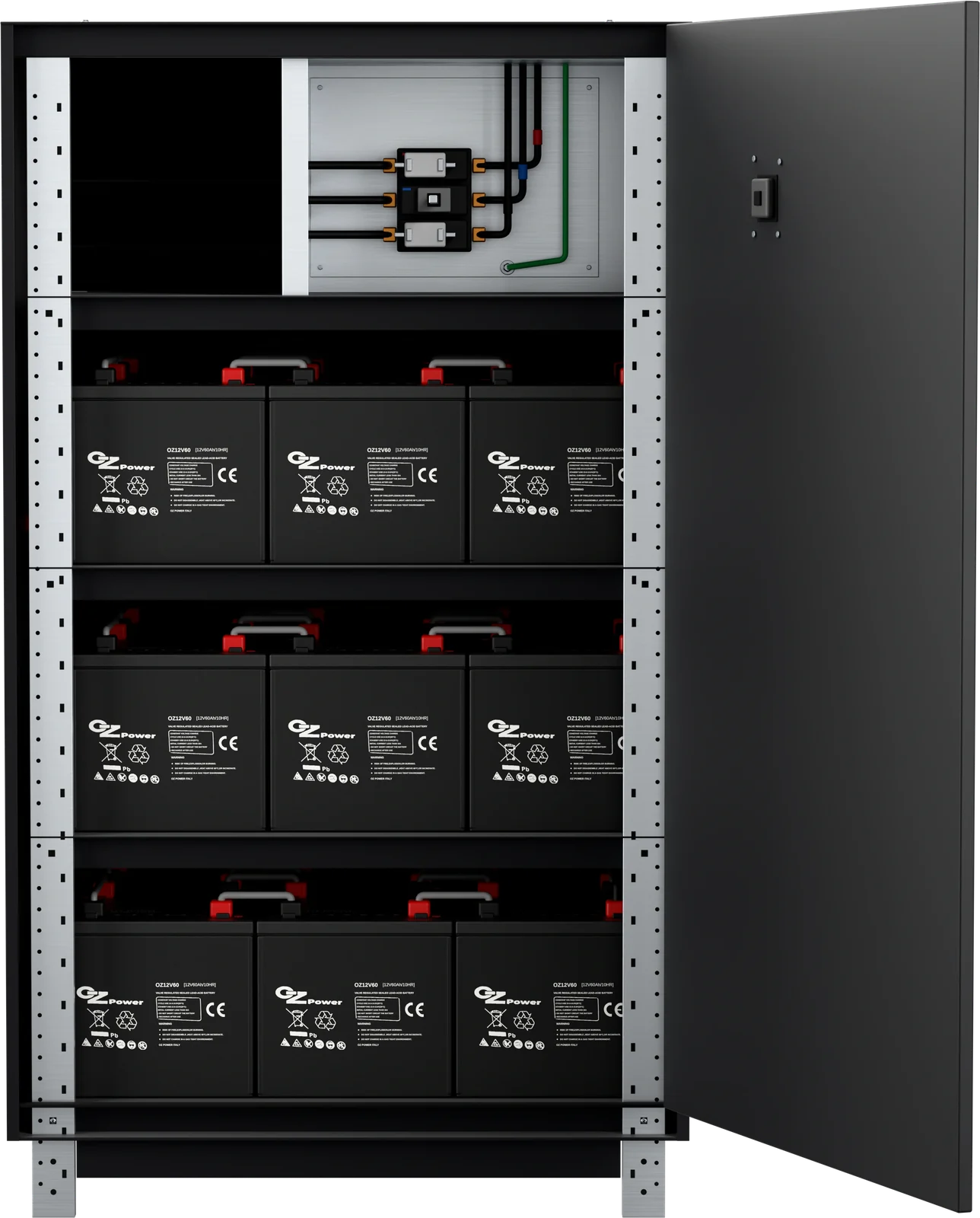
- Disconnect Q1
- Battery shelves
- OZ Power 12 V blocks
Front, door open · BB7
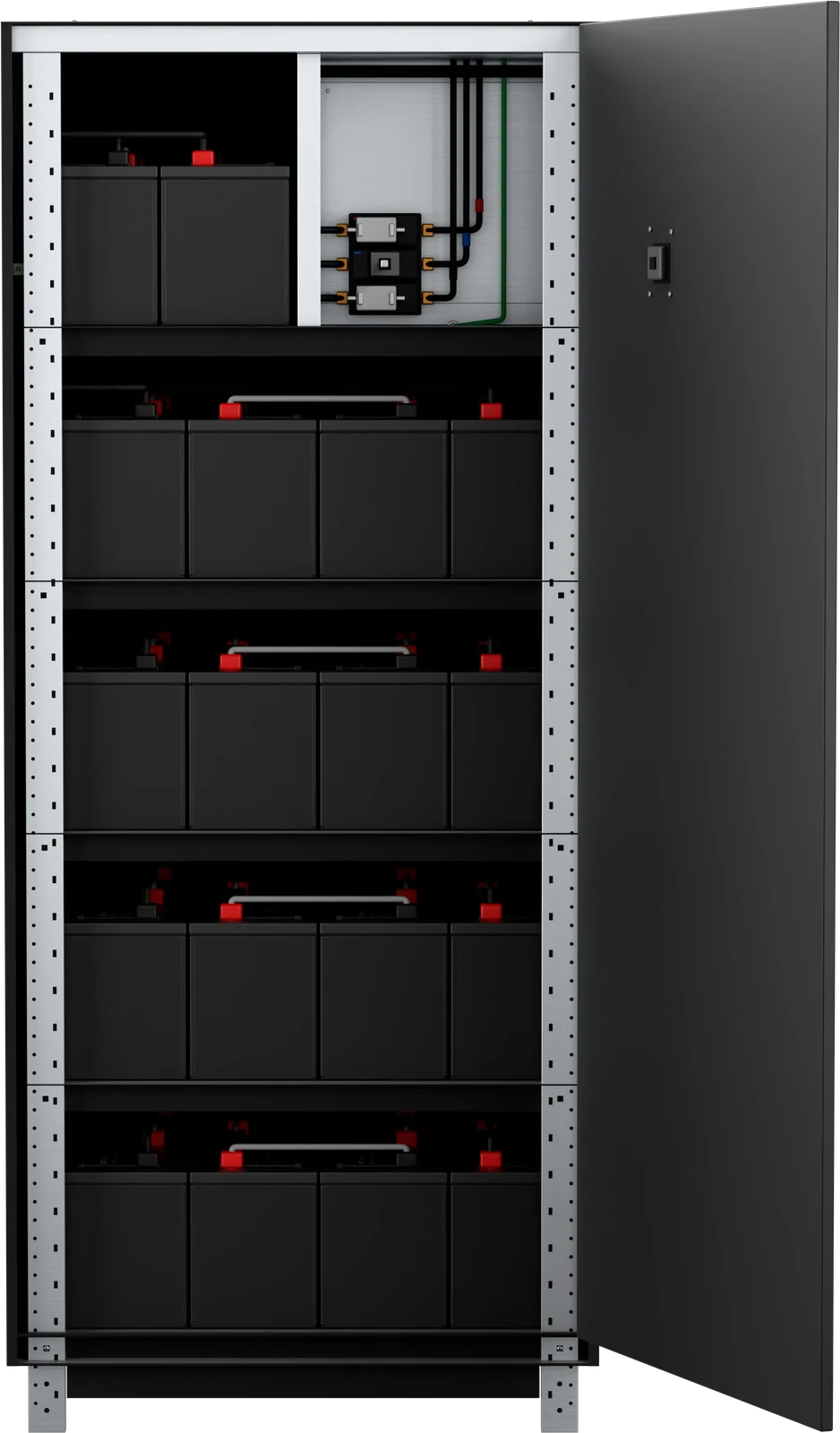
- Disconnect Q1
- Battery shelves
Front, door open · BB8
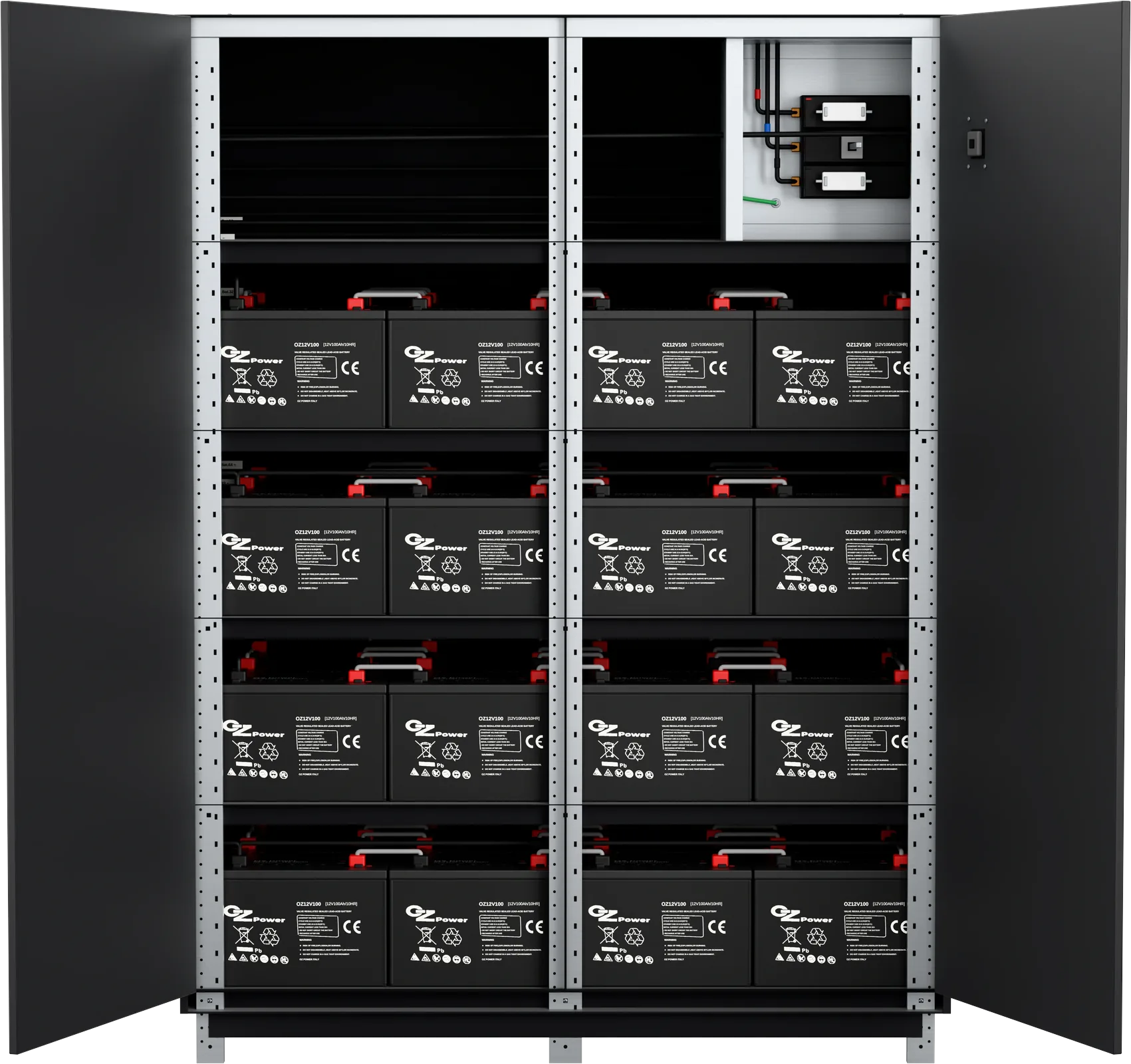
- Disconnect Q1
- Battery shelves
- OZ Power 12 V blocks
Overview
Key facts
- Range
- 9–100 Ah
- Voltage
- 12 V VRLA AGM · ±240 V DC
- Battery
- 12 V 24 / 40 Ah · 9 Ah · 12 V 60 Ah · 12 V 80 / 100 Ah
- Warranty
- 3 years
- Dimensions W × D × H
- 460 × 800 × 1400 to 1400 × 800 × 1900 mm
Applications:IST3 tower: BB1 · BB2 · BB3, tower cabinets beside the UPS, 12 V 9 Ah batteriesIST3-J · IST9 rack: BBJ · BBJ2, 2U and 3U cabinets in the same 19-inch rackIST7 10–40 kVA: BB4 · BB5, mobile BB4 with 9 Ah, or slim BB5 with 24 / 40 AhIST7 up to 200 kVA: BB6 · BB7 · BB8, 60 to 100 Ah, one or two strings per cabinet
Hands on
Open the Battery cabinets.
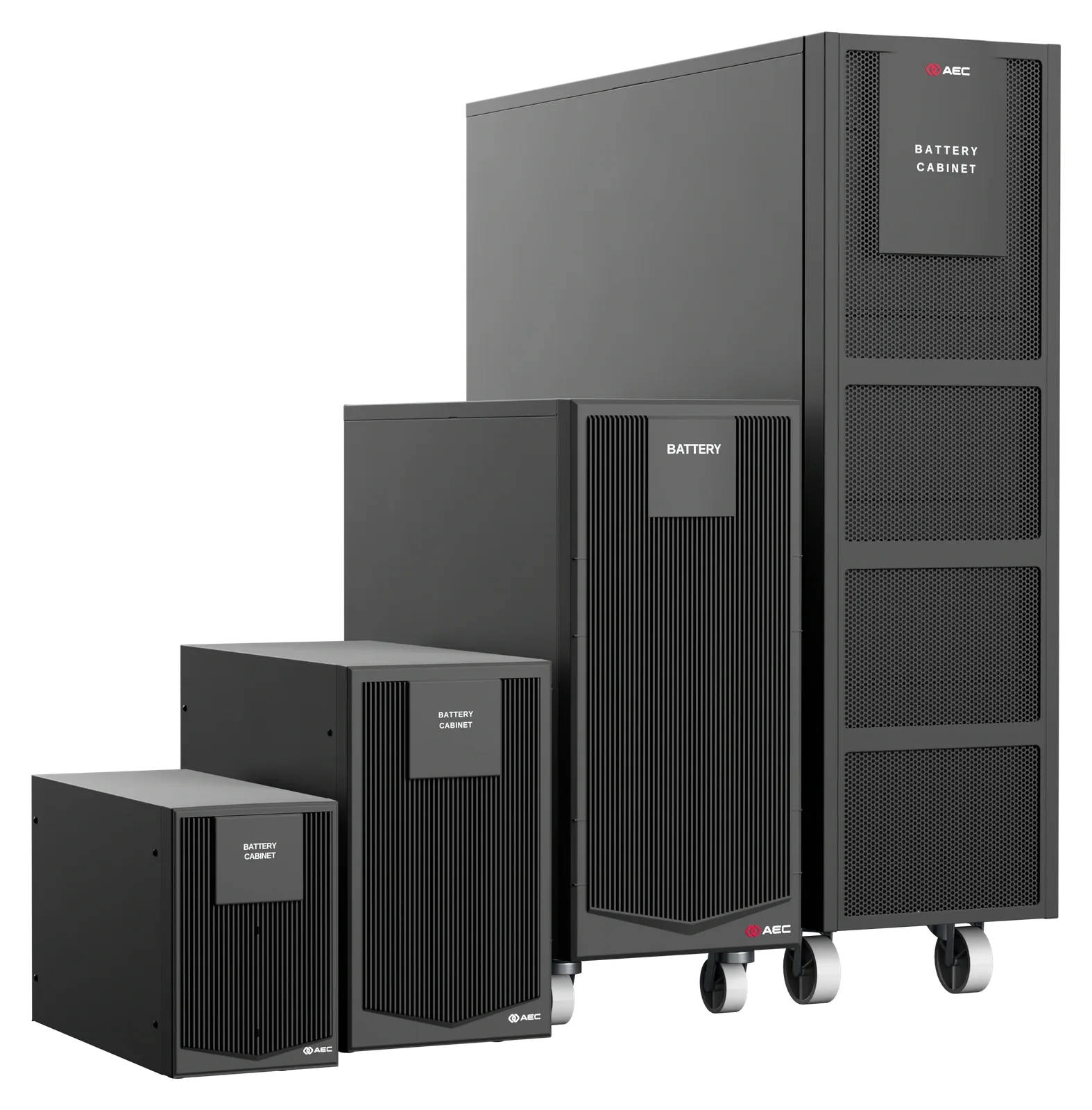
The cabinets at one scale, beside a 2 m rule.
Footprints to scale
Front view of the cabinets, all at the same scale, beside a 2 m rule. W × D × H, mm.
- BB4, empty 250 × 756 × 880 mm · 58 kg
- BB5, empty 460 × 800 × 1,400 mm · 110 kg
- BB6, empty 800 × 800 × 1,400 mm · 140 kg
- BB7, empty 800 × 800 × 1,900 mm · 160 kg
- BB8, empty 1,400 × 800 × 1,900 mm · 250 kg
Pictures
The Battery cabinets in pictures
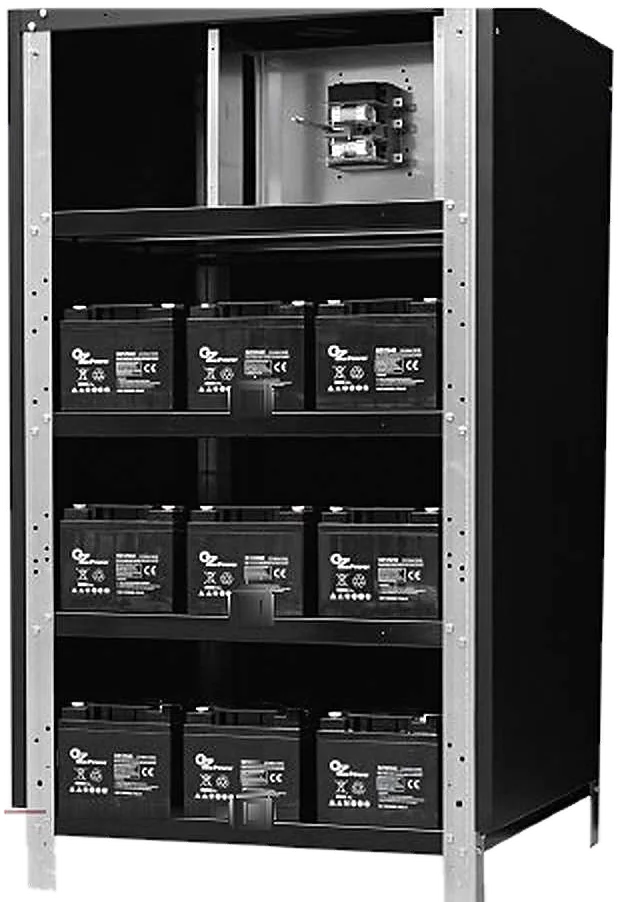
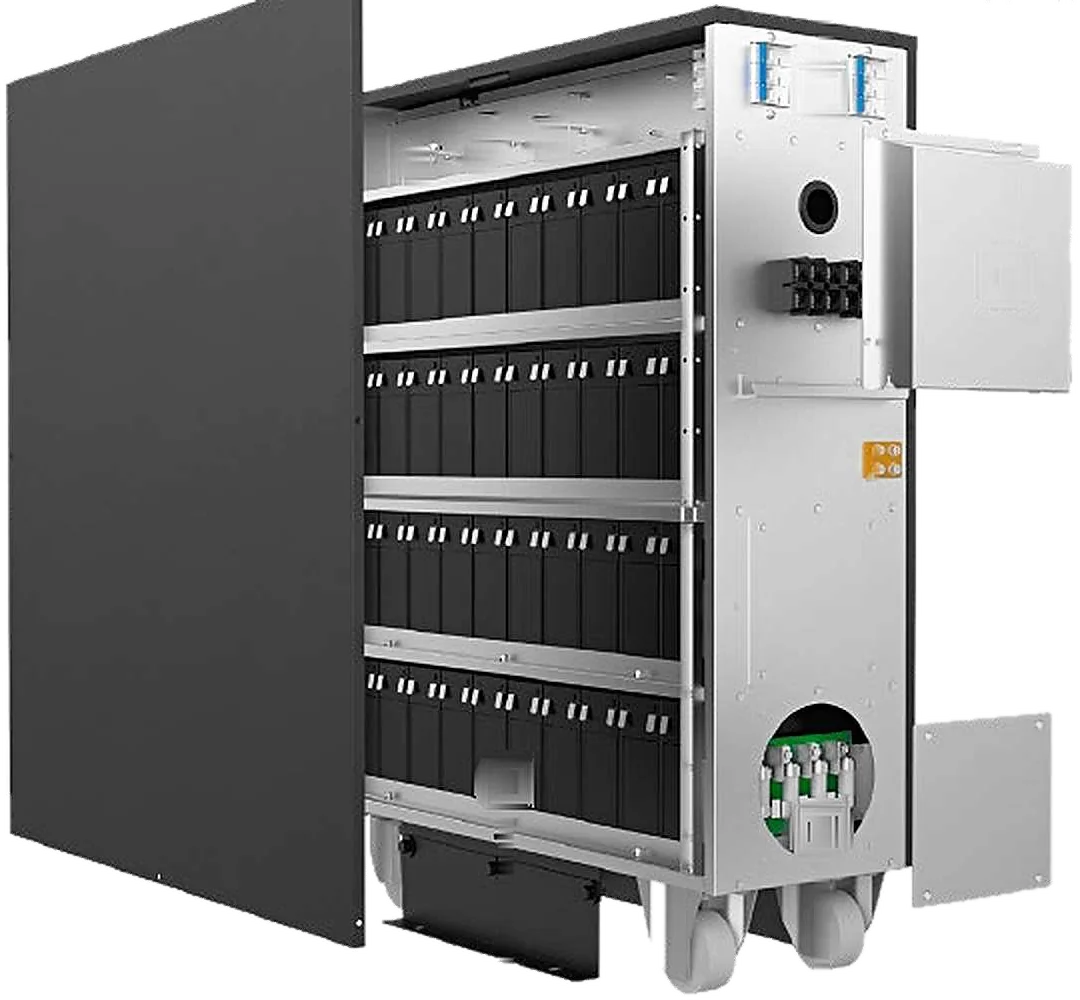
The photos and drawings of the EMEA 2026 catalogue: product views, displays, modules and connections. Tap a picture to enlarge it.
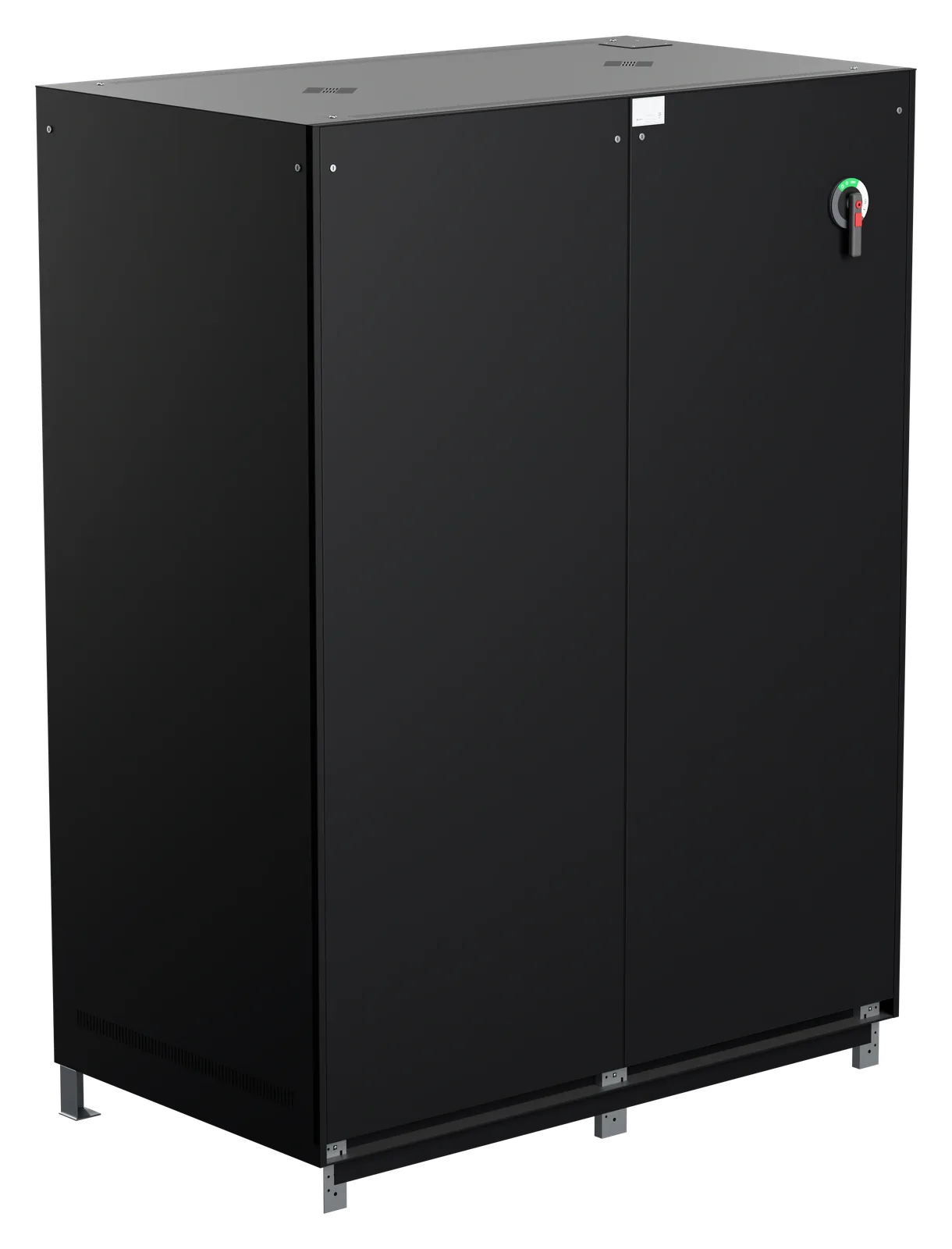
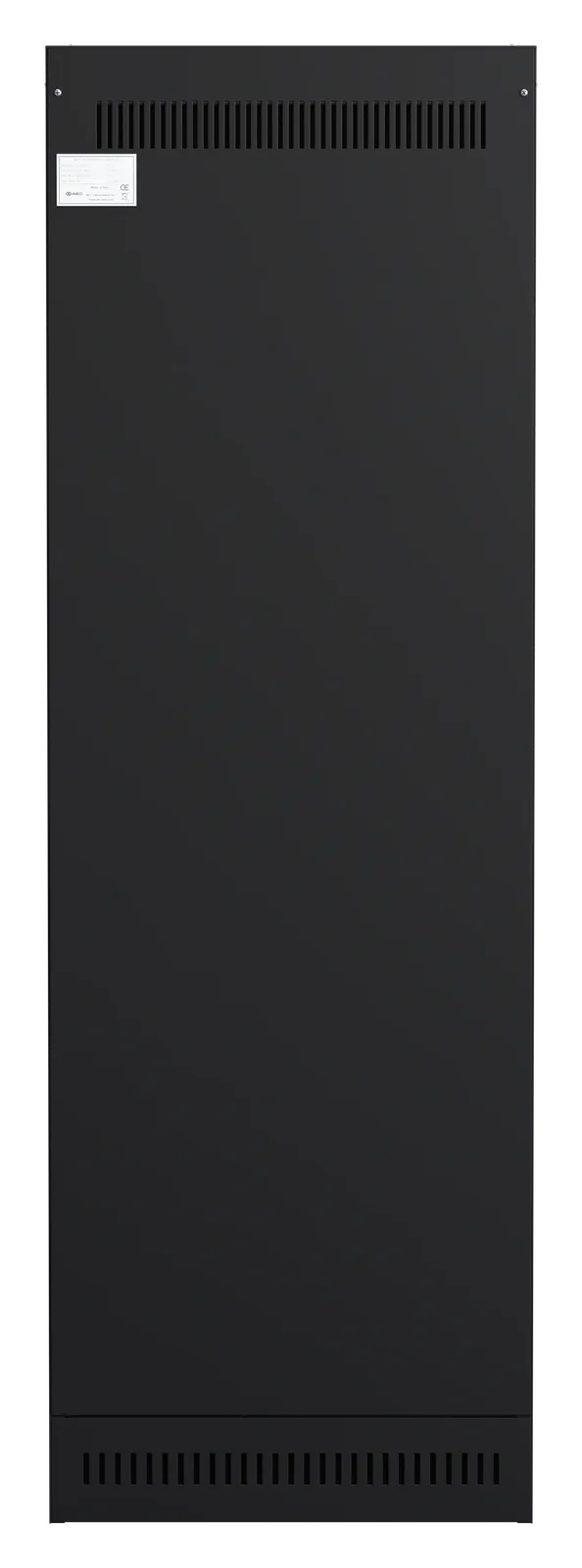
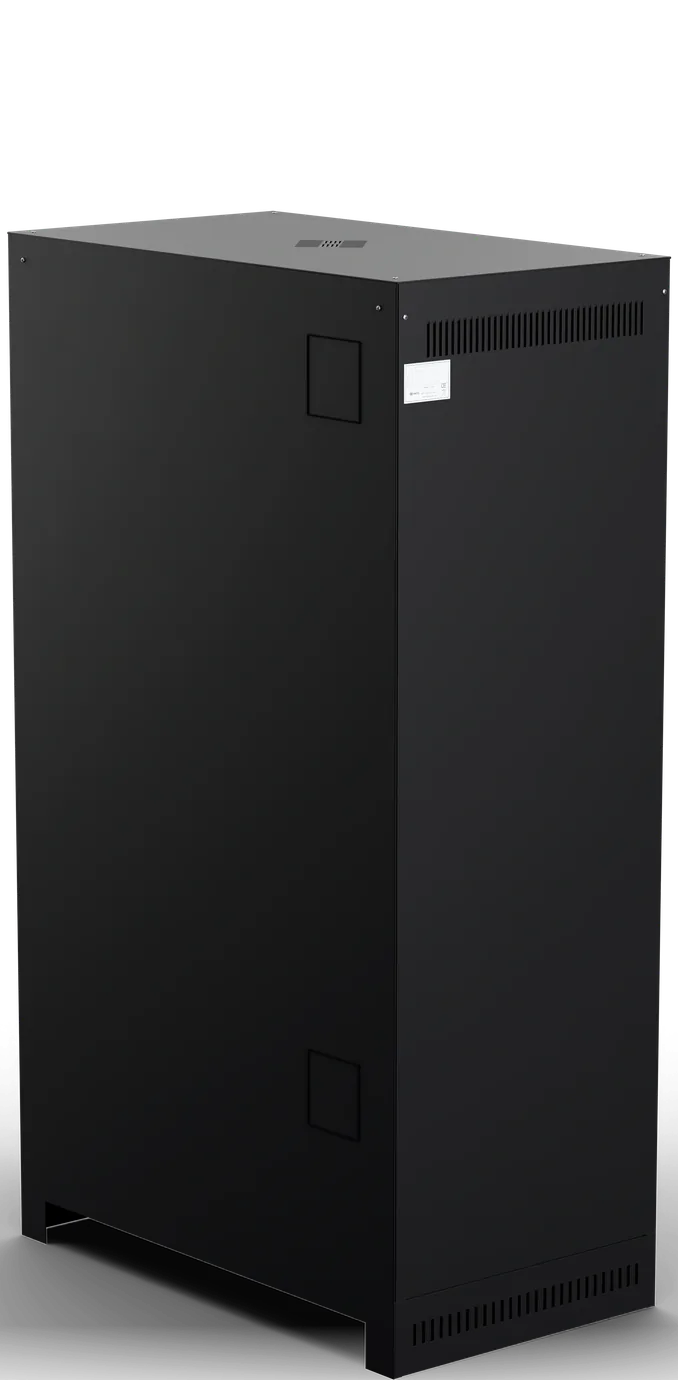
Models
Which Battery cabinets fits your load?
Every rating has its own page: that model's technical data, ordering codes, batteries and the questions people ask.
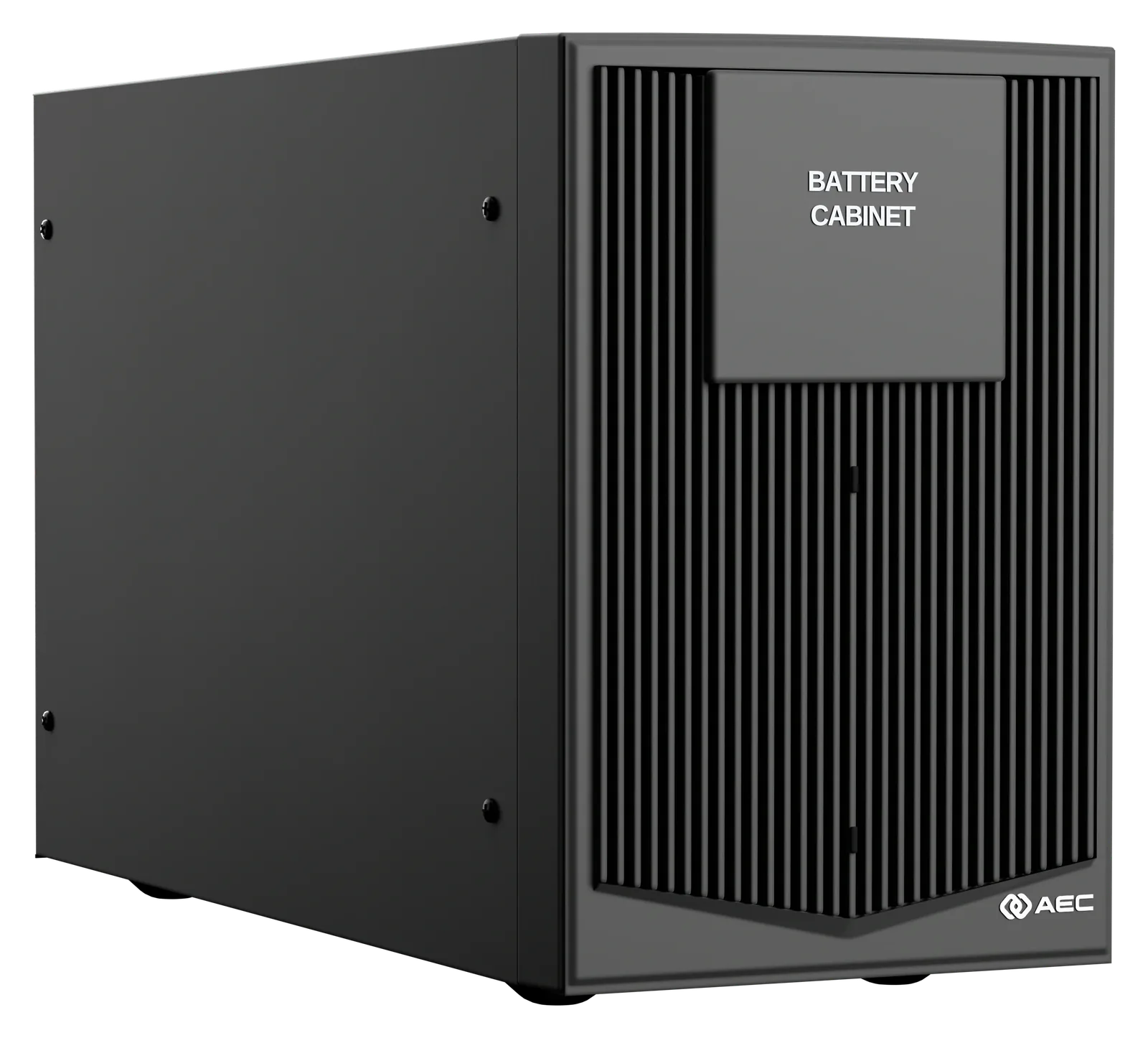 BB16 × 9 AhThe BB1 is a tower battery cabinet for the IST3 1 kVA: 145 × 360 × 225 mm, 4 kg empty, for up to six 12 V 9 Ah batteries.145 × 360 × 225 mmSize4 kg emptyWeightSee the model
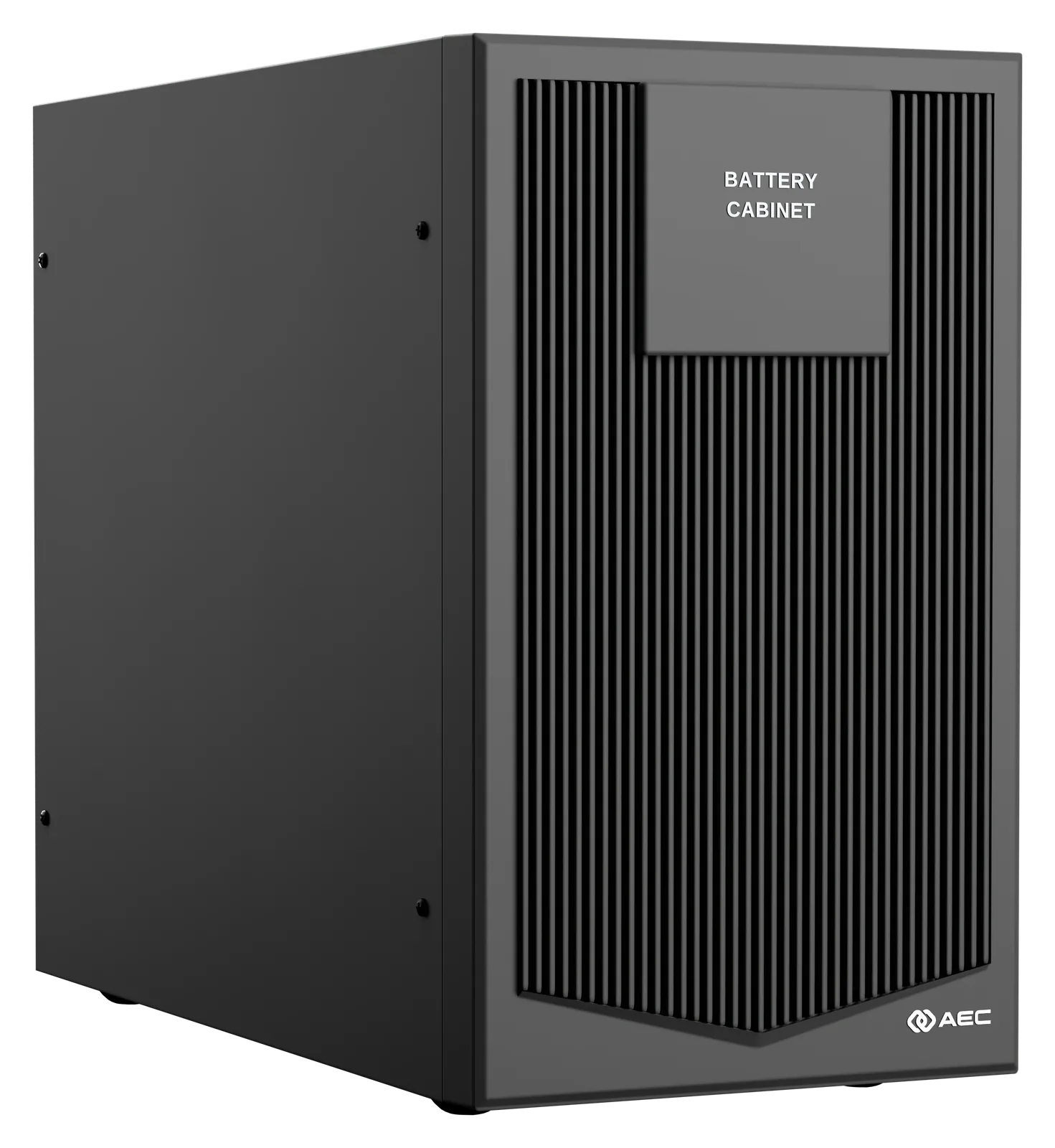 BB212 × 9 AhThe BB2 is a tower battery cabinet for the IST3 2 and 3 kVA: 190 × 400 × 330 mm, 6 kg empty, for up to twelve 12 V 9 Ah batteries.190 × 400 × 330 mmSize6 kg emptyWeightSee the model
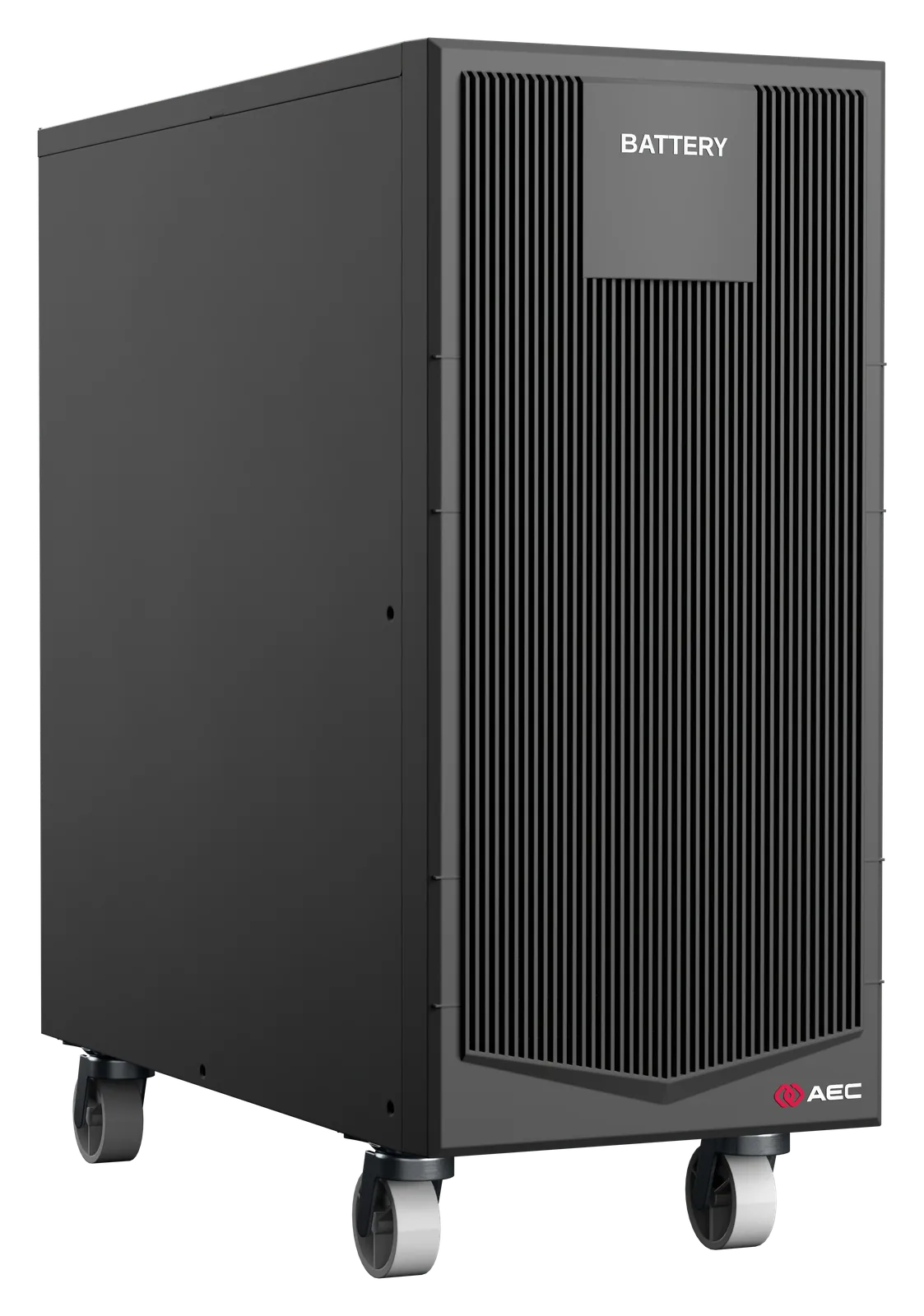 BB332 × 9 AhThe BB3 is a tower battery cabinet for the IST3 6 and 10 kVA: 230 × 502 × 553 mm, 15 kg empty, for up to thirty-two 12 V 9 Ah batteries.230 × 502 × 553 mmSize15 kg emptyWeightSee the model
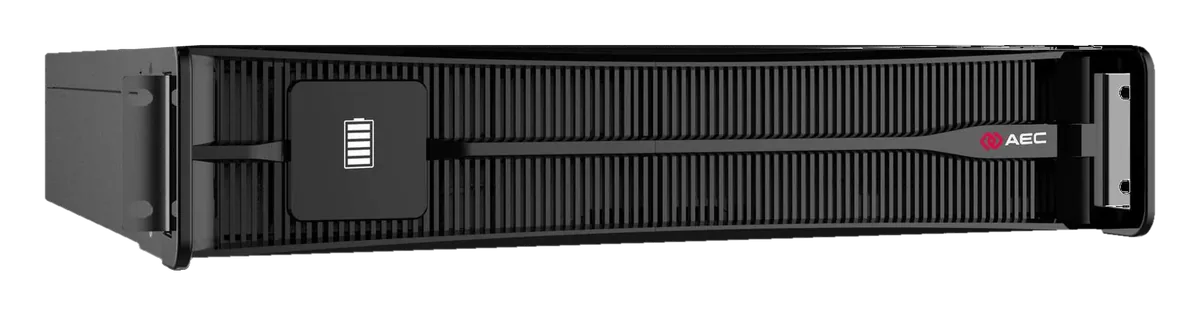 BBJ2U · 8 × 9 AhThe BBJ is a 2U rack battery cabinet for the IST3-J 1–3 kVA: 438 × 413 mm, 6 kg empty, for up to eight 12 V 9 Ah batteries.438 × 413 mm, 2USize6 kg emptyWeightSee the model
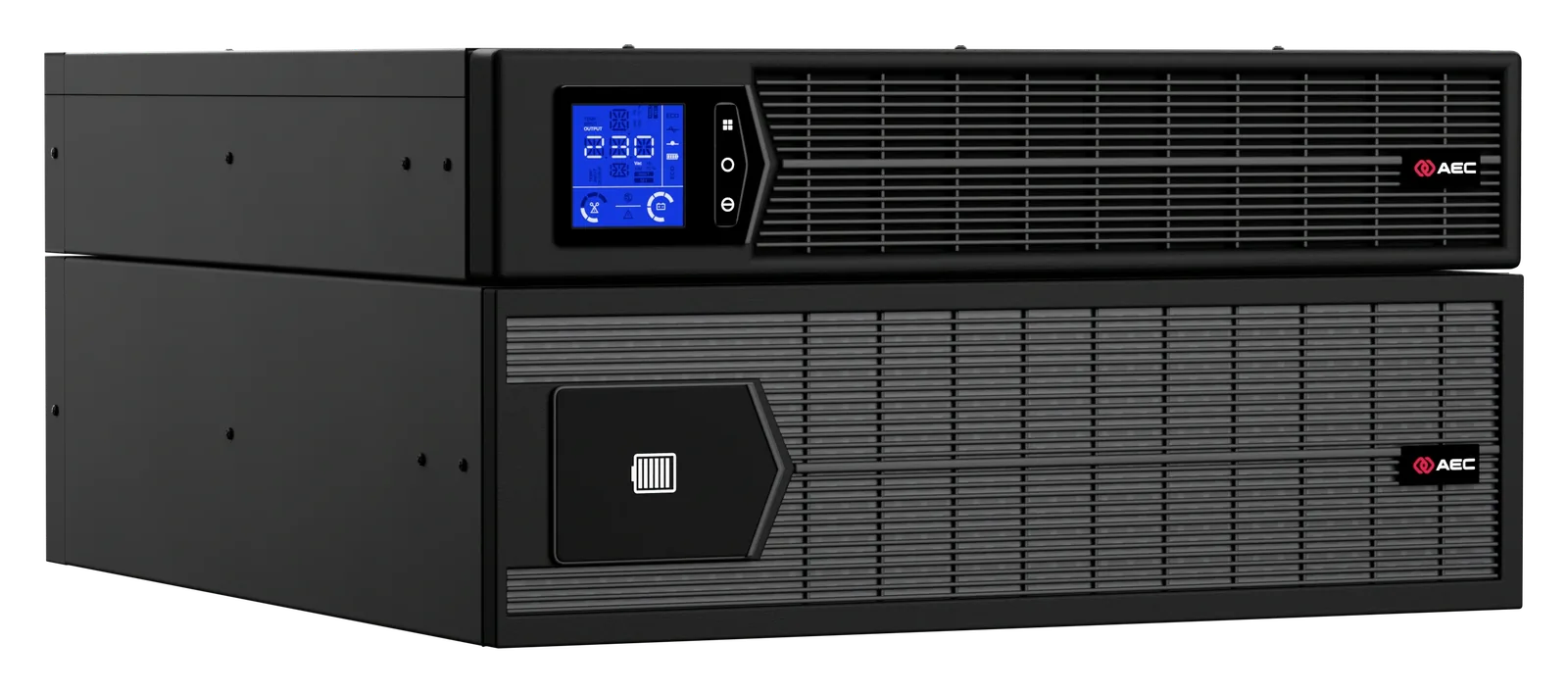 BBJ23U · 16 × 9 AhThe BBJ2 is a 3U rack battery cabinet for the IST3-J 6–10 kVA and the IST9 20 kVA: 438 × 500 mm, 10 kg empty, for up to sixteen 12 V 9 Ah batteries.438 × 500 mm, 3USize10 kg emptyWeightSee the model
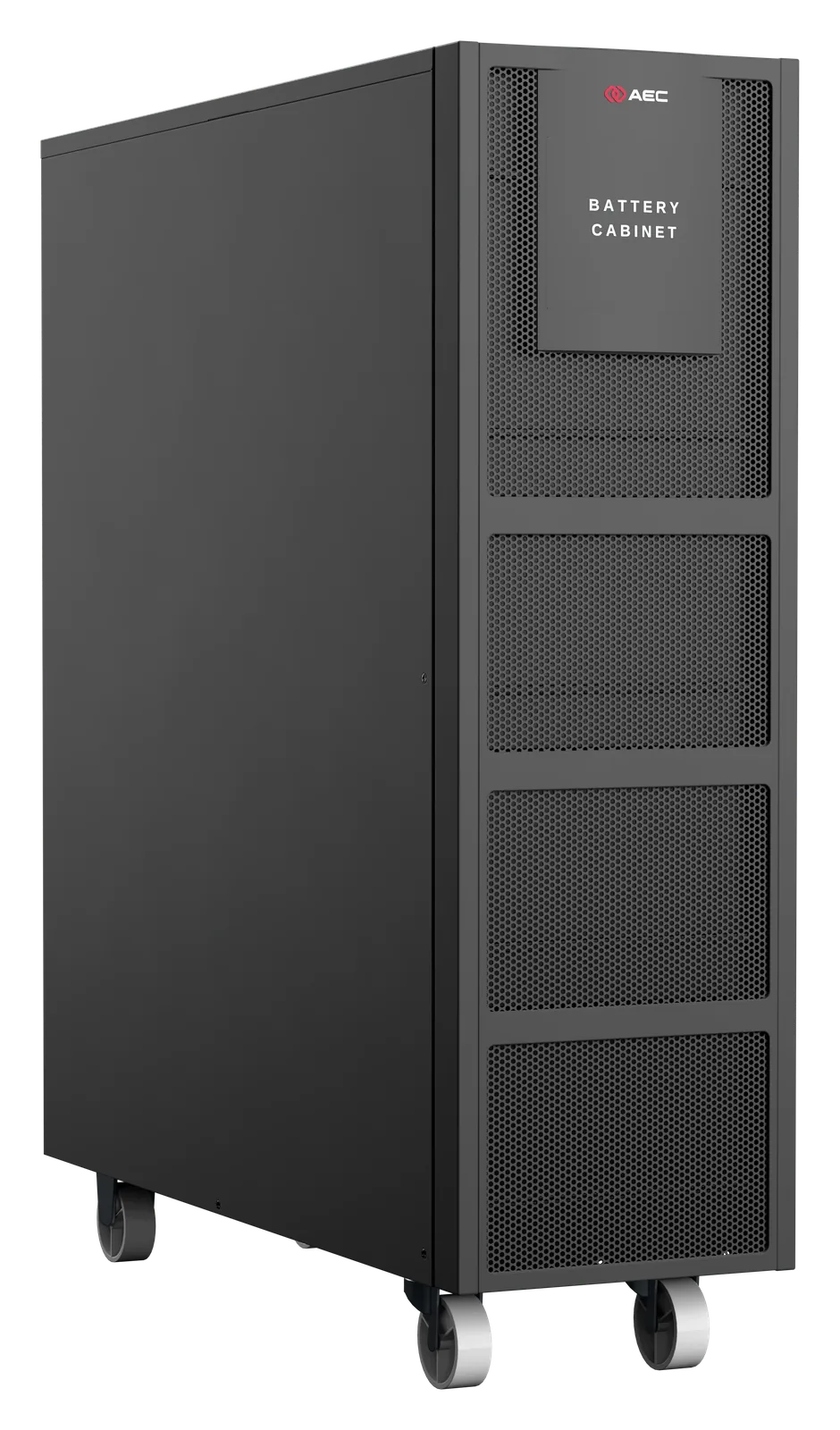
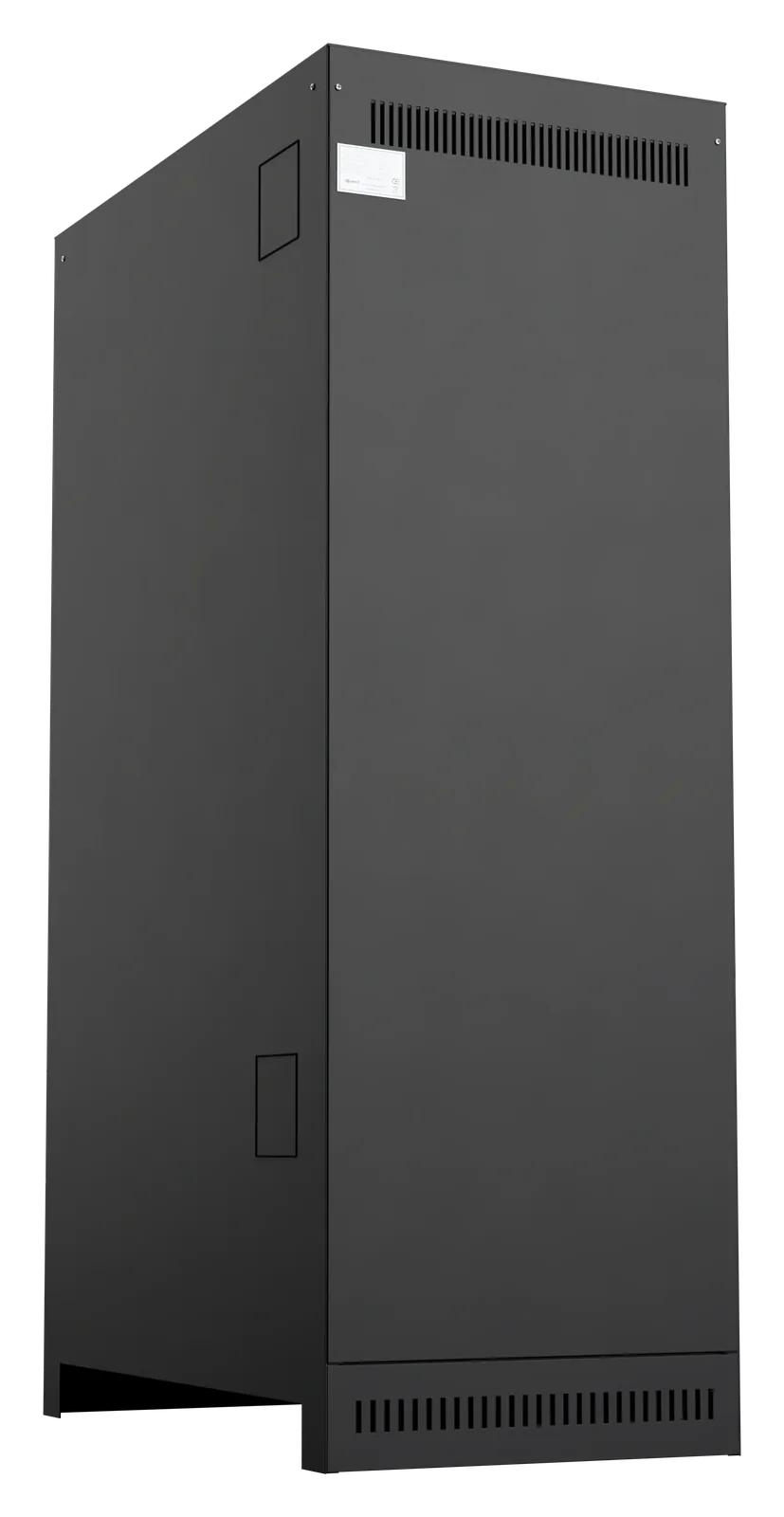 BB524 · 40 AhThe BB5 is a slim floor-standing battery cabinet, 460 × 800 × 1400 mm and 110 kg empty, for 30 to 40 batteries of 12 V 24 or 40 Ah, or 100–120 of 9 Ah.460 × 800 × 1400 mmSize110 kg emptyWeightSee the model
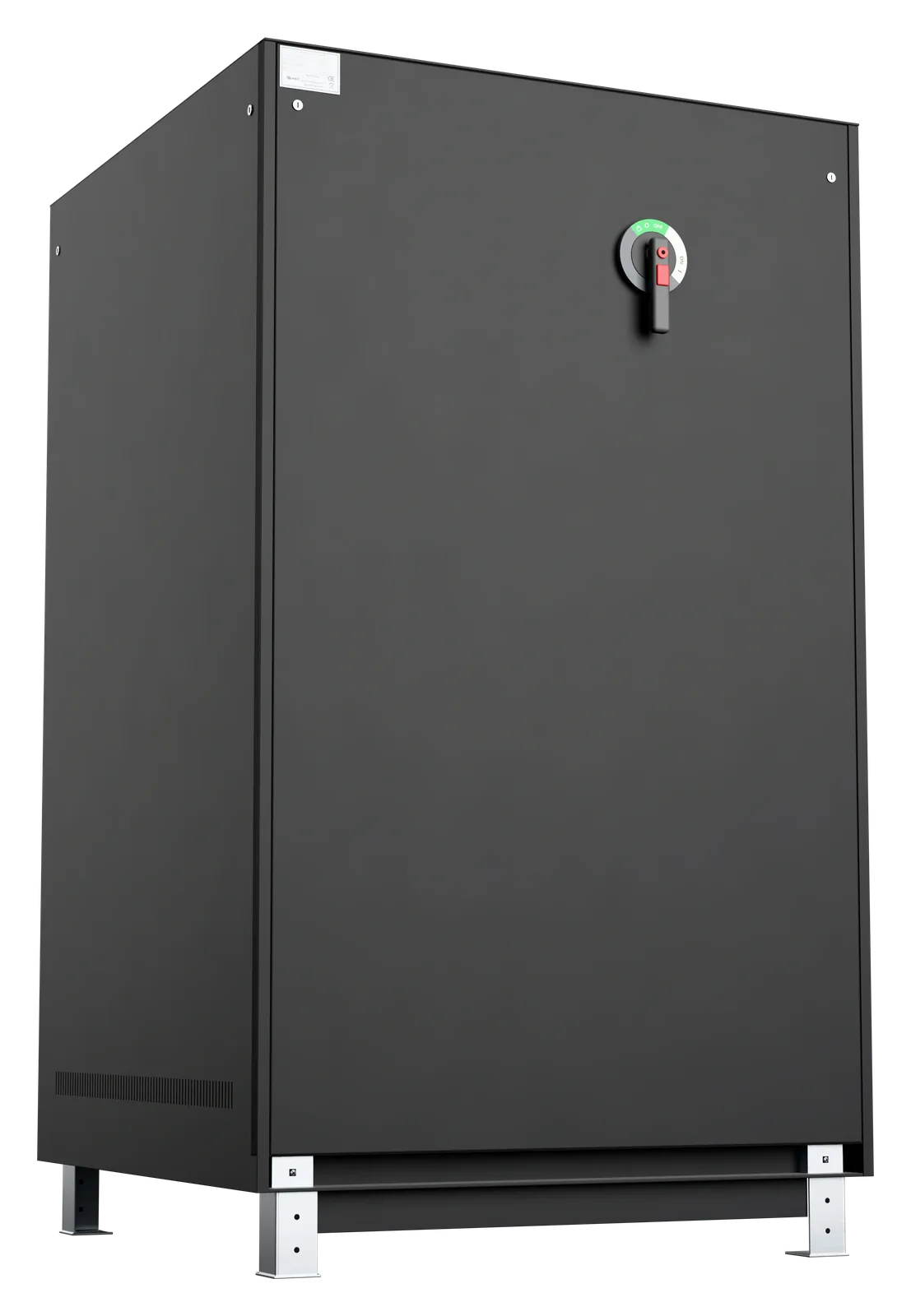 BB660 AhThe BB6 is a square floor-standing battery cabinet, 800 × 800 × 1400 mm and 140 kg empty, for 30 to 40 batteries of 12 V 60 Ah.800 × 800 × 1400 mmSize140 kg emptyWeightSee the model
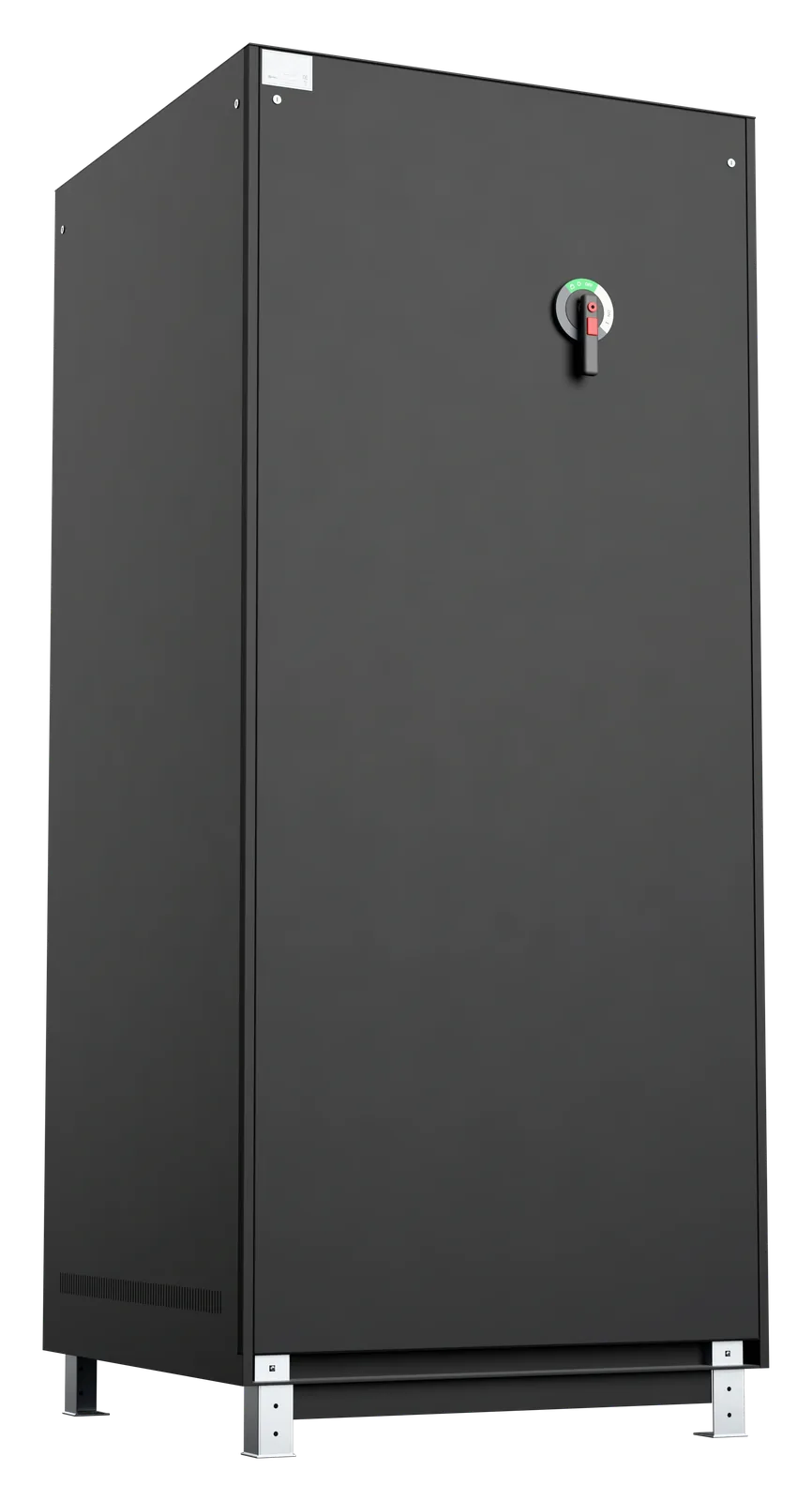 BB760 · 80 · 100 AhThe BB7 is a tall floor-standing battery cabinet, 800 × 800 × 1900 mm and 160 kg empty, for 28 to 36 batteries of 12 V 80 or 100 Ah.800 × 800 × 1900 mmSize160 kg emptyWeightSee the model
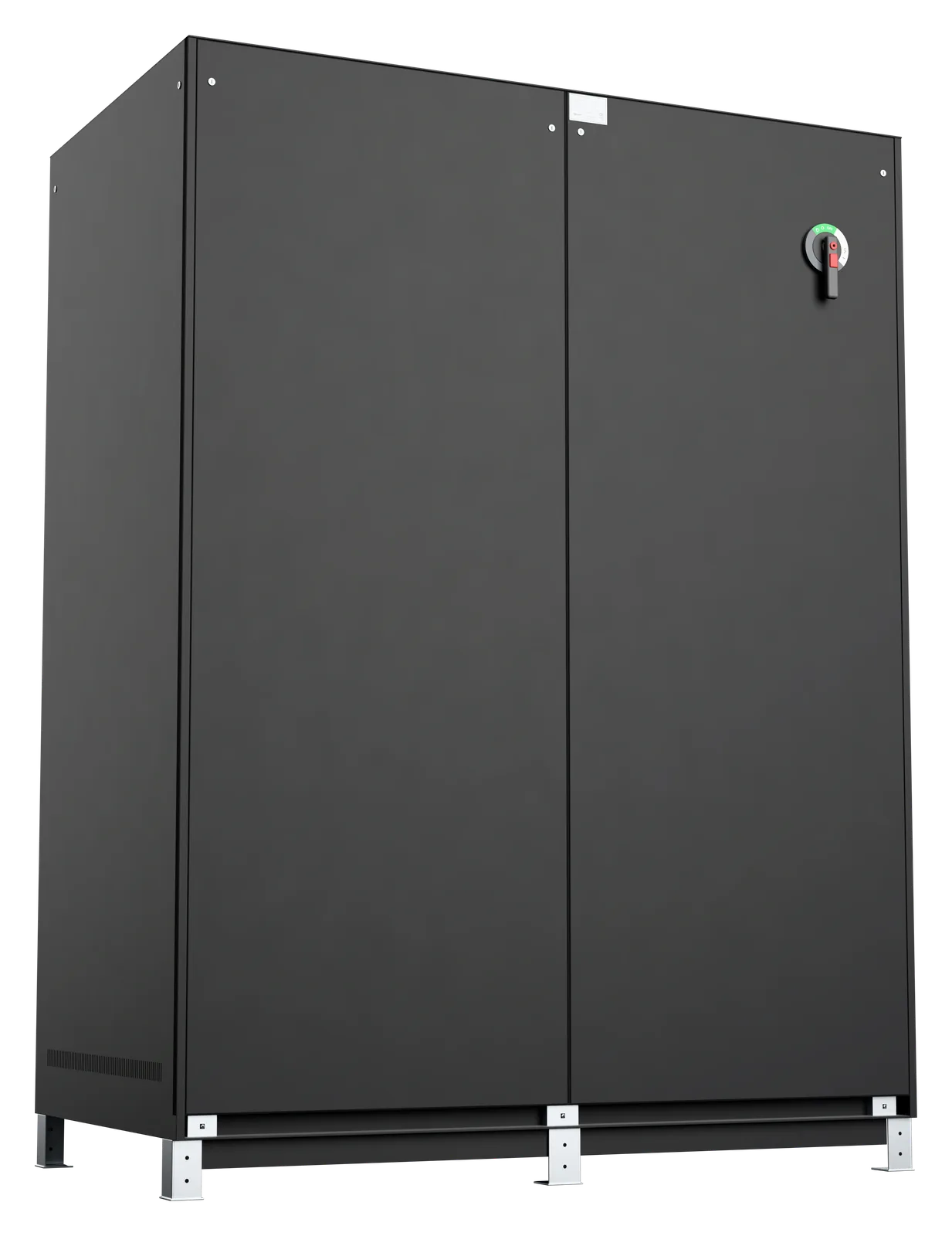 BB880 · 100 Ah, 2 stringsThe BB8 is a double floor-standing battery cabinet, 1400 × 800 × 1900 mm and 250 kg empty, for 40, 60 or 64 batteries of 12 V 80 or 100 Ah in two strings.1400 × 800 × 1900 mmSize250 kg emptyWeightSee the model
Datasheet
Datasheet Battery cabinets.
Every model side by side: keep only what differs, take it as CSV or print it.
| Model | BB5 | BB6 | BB7 | BB8 |
|---|---|---|---|---|
| Mechanical | ||||
| W × D × H (mm) | 460 × 800 × 1400 | 800 × 800 × 1400 | 800 × 800 × 1900 | 1400 × 800 × 1900 |
| Weight, empty | 110 kg | 140 kg | 160 kg | 250 kg |
| Front | screwed panel | door with lock | door with lock | two doors with lock |
| Battery levels | 4 + Q1 level | 3 + Q1 level | 4 + Q1 level | 4 in two bays + Q1 |
| Internal frame | 458 × 785 mm, 5 levels | 745 × 765 mm, 2–4 levels | 745 × 765 mm, 2–5 levels | 1350 × 765 mm, 2–5 levels |
| Cable entry | right side, top and bottom | top gland 100 × 100 · bottom | ||
| Floor fixing | through the base | through the feet | 4 × Ø9, centres 685 × 700 | through the feet |
| Batteries | ||||
| Battery | 12 V 24 / 40 Ah · 9 Ah | 12 V 60 Ah | 12 V 80 / 100 Ah | 12 V 80 / 100 Ah |
| Configurations | 30–40 · 100 / 120 × 9 Ah | 30–40 | 28–36 | 40 · 60 · 64 (×2 strings) |
| String voltage | ±180 … ±240 V | ±180 … ±240 V | ±168 … ±216 V | ±120 … ±192 V |
| Electrical | ||||
| Disconnect Q1 (3-pole) | fuses on +, N, − | fuses on + and − | ||
| Fuses F1 / F2 | 32–125 A | 63–160 A | 63–400 A | 63–400 A |
| UPS power (code) | 10–60 kW | 10–100 kW | 10–200 kW | 10–200 kW |
| Float · max. charge (per battery) | 13.5–13.7 V · 14.4 V | |||
| General | ||||
| Colour | RAL 9005 | |||
| Protection | IP20 · IP21–IP44 option | |||
| Standards | IEC/EN 62040-1 · EN IEC 62485-2 · CE | |||
| Warranty (cabinet) | 3 years | |||
From the AEC BB5, BB6, BB7 and BB8 user manuals and installation manuals (Rev. 1.0, 2026). VRLA batteries have a 1-year warranty for 9 Ah blocks and 2 years for larger blocks. Specifications are subject to change without notice.
Full technical details13 sections of the EMEA 2026 catalogue: functions, panel, connections, diagrams and ordering codes
Why Battery cabinets
THE RANGE
A cabinet for every AEC UPS
Matching tower cabinets for the IST3, rack cabinets for the IST3-J and IST9, and floor-standing cabinets for the IST7 three-phase UPS, from 9 Ah to 100 Ah batteries.

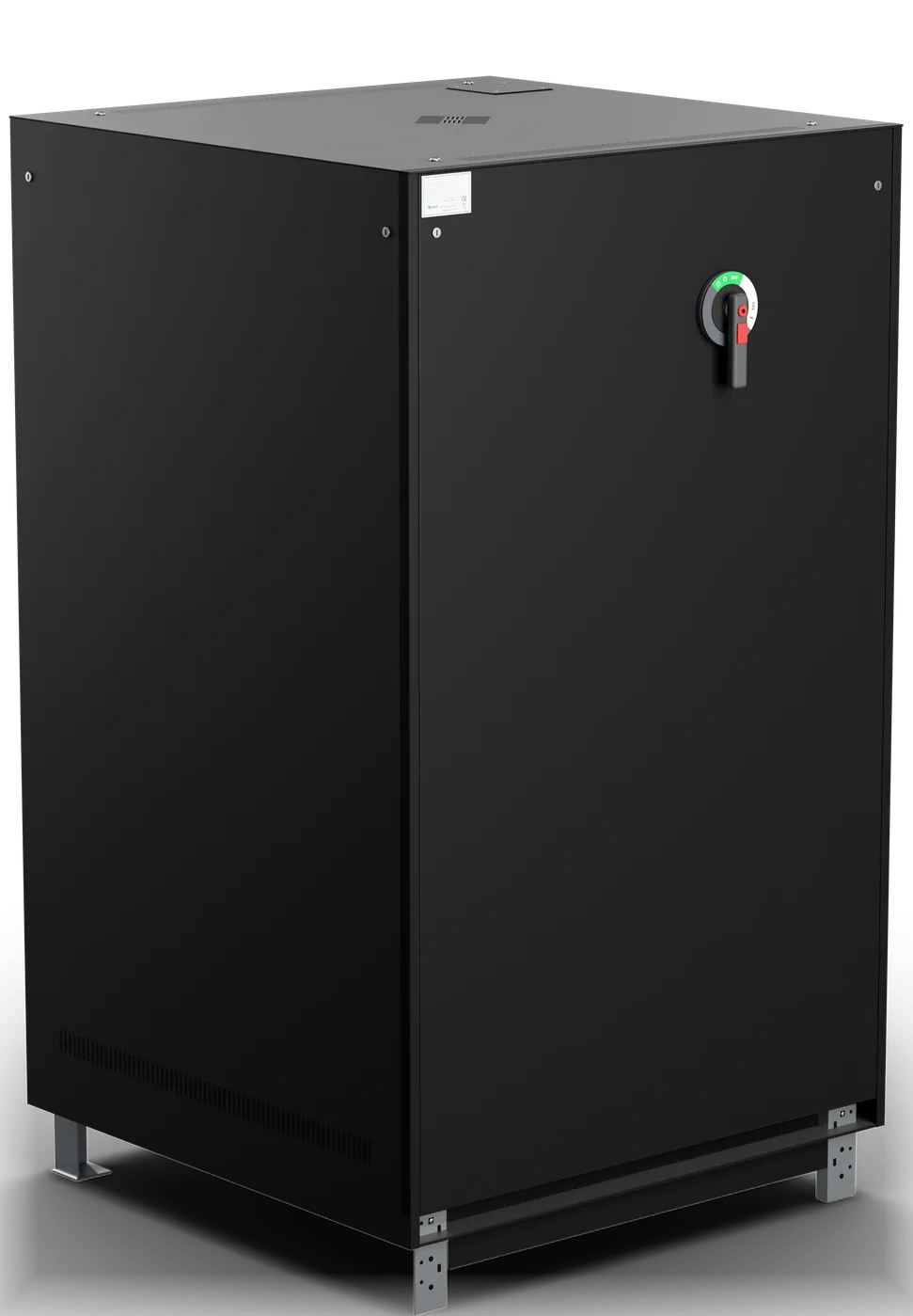

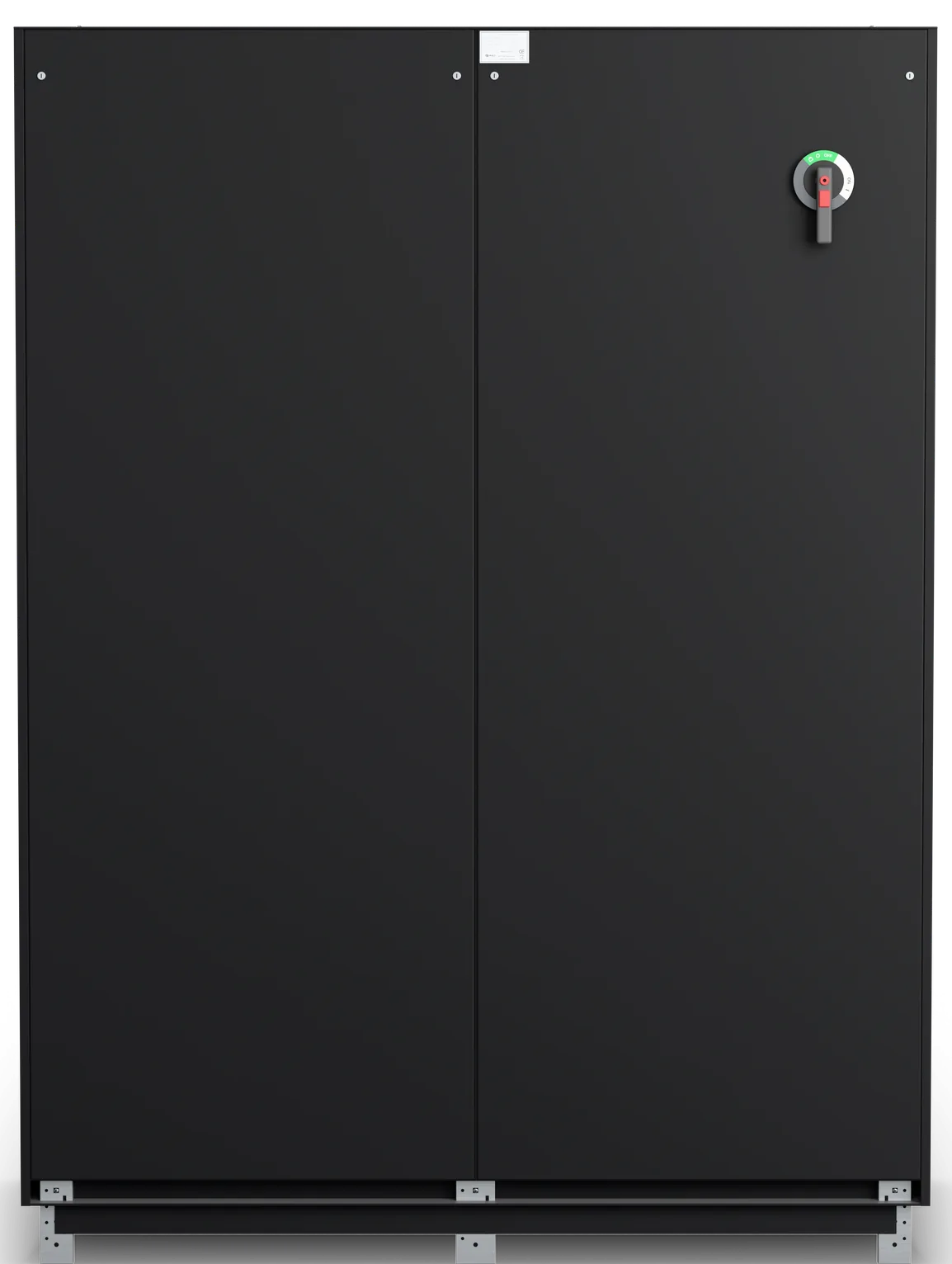
- Floor-standing cabinets in three heights (880, 1400 and 1900 mm) and four widths (250, 460, 800 and 1400 mm).
- Weights are without batteries. Combinations sold with each UPS are listed in the AEC code list and in the UPS sections of this catalogue.
TOWER AND RACK
Matching cabinets for single-phase UPS
Same colour and front style as the UPS they extend. Tower cabinets stand beside the IST3; rack cabinets fit the 19-inch rack under the IST3-J or IST9.
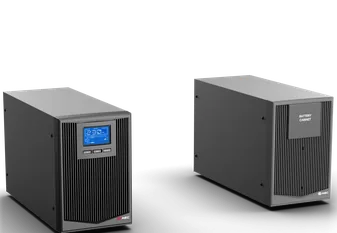


- BB1 for IST3 1 kVA: 145 × 360 × 225 mm, 4 kg, up to 6 × 12 V 9 Ah; e.g. IST3-1-6X9 = UPS + BB1 with 6 batteries.
- BB2 for IST3 2–3 kVA: 190 × 400 × 330 mm, 6 kg, up to 12 × 12 V 9 Ah; e.g. IST3-2-12X9, IST3-3-12X9.
- BB3 for IST3 6–10 kVA: 230 × 502 × 553 mm, 15 kg, up to 32 × 12 V 9 Ah; more BB3 per UPS for longer backup.
- BBJ for IST3-J 1–3 kVA: 438 × 413 mm, 2U, 6 kg, up to 8 × 12 V 9 Ah; up to 3 BBJ per UPS.
- BBJ2 for IST3-J 6–10 kVA and IST9 20 kVA: 438 × 500 mm, 3U, 10 kg, up to 16 × 12 V 9 Ah; up to 8 BBJ2 (IST3-J), 10 BBJ2 (IST9 20 kVA).
- How the code reads: UPS model and kVA, then the total number of batteries × their capacity in Ah. IST3J-6-32X9 = IST3-J 6 kVA with two BBJ2 and 32 × 12 V 9 Ah.
- Battery quantity per UPS is set by the UPS battery voltage: see the UPS sections.
BB4
Tower cabinet for the IST7 10–40 kVA
A mobile cabinet for the IST7 10–40 kVA, for up to 80 batteries of 12 V 9 Ah in four layers.
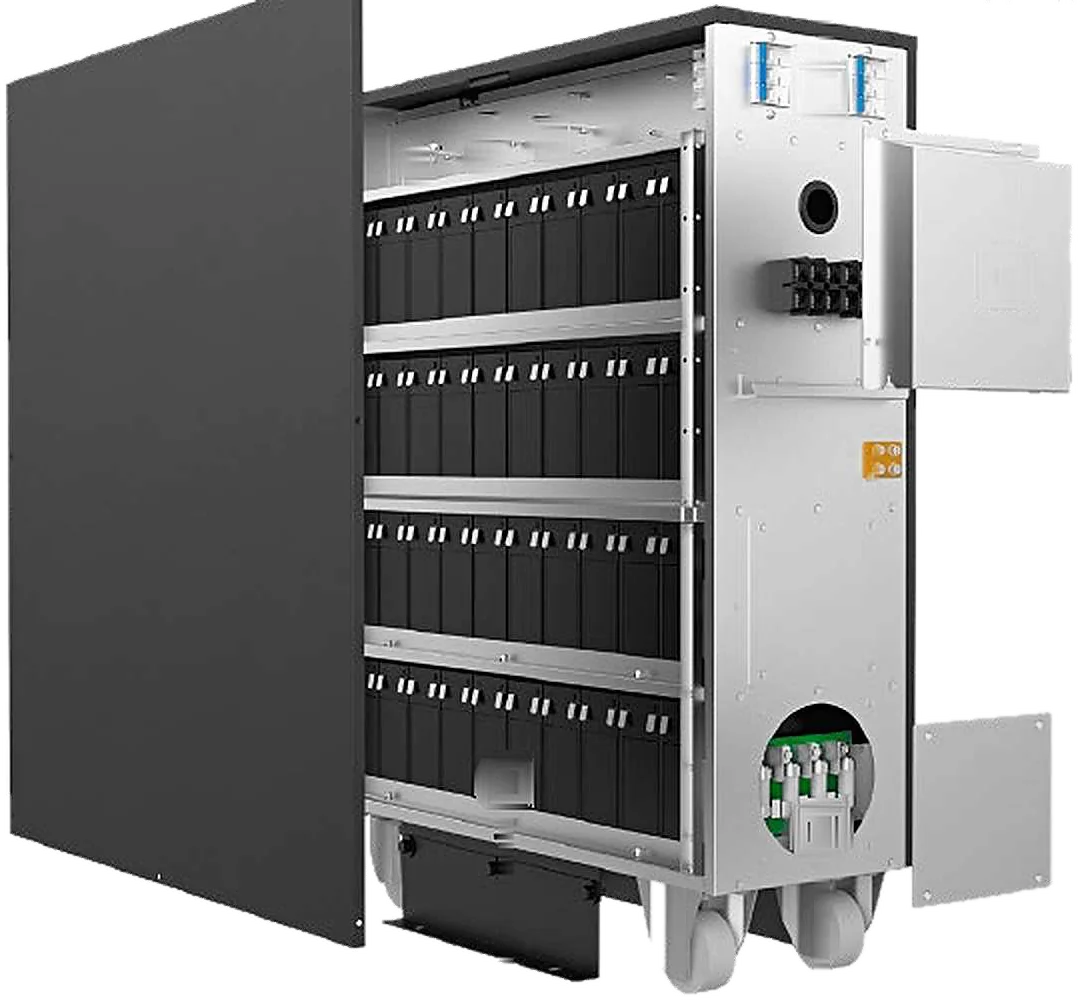


- Size W × D × H 250 × 756 × 880 mm; weight empty 58 kg.
- Battery layers: 4 layers, up to 20 batteries each, 80 × 12 V 9 Ah in total.
- Three-pole DC breaker, terminal cover, DC fuse protection board, optional second breaker, terminal block, earth (ground) terminal, wheels.
- Codes BB4-10k · BB4-20k · BB4-40k (UPS up to 10 / 20 / 40 kW).
- Internal cables included; external cables optional.
- With the IST7 10–40 kVA the UPS keeps its internal batteries; one BB4 adds a second string of 40, e.g. IST7-20-80X9 = 40 internal + 40 in BB4.
- No dedicated BB4 user manual: wiring is supplied by AEC with the cabinet.
BB5 TO BB8
One design, four sizes
Floor-standing steel cabinets for the IST7 three-phase UPS. The battery string is split in two equal halves: the midpoint is the neutral, so the cabinet supplies +, N and − to the UPS.
- Cabinet code = model + UPS power, e.g. BB7-120k.
- Minimum copper cross-section X1 → UPS: single-core, 70 °C PVC, in air (IEC 60364-5-52, method C); apply site derating; voltage drop in the X1 → UPS cables at most 1.5 V DC.
- Largest UPS per cabinet: BB5 60 kW, BB6 100 kW, BB7 200 kW, BB8 200 kW.
- Options: IP21 to IP44 on request (IP20 standard).
- Options: aluminium alloy or stainless steel versions.
- Options: forced ventilation with automatic fans, IP68, 12 or 24 V DC.
- Options: Q1 auxiliary contacts for remote signalling to the UPS or BMS.
- Options: 2-pole version (+ and − only).
- Options: with internal cables · with external cables · custom layouts.
- RAL 9005 painted steel, IP20; float voltage 13.5–13.7 V per battery; maximum charge voltage 14.4 V per battery; 3-year cabinet warranty.
| UPS kW | Fuse F1/F2 | Size | Cu mm² | PE mm² | BB5 | BB6 | BB7 | BB8 |
|---|---|---|---|---|---|---|---|---|
| 10 | 50 A | NH00 | 10 | 10 | ● | ● | ● | ● |
| 20 | 63 A | NH00 | 16 | 16 | ● | ● | ● | ● |
| 40 | 100 A | NH00 | 25 | 16 | ● | ● | ● | ● |
| 60 | 125 A | NH00 | 35 | 16 | ● | ● | ● | ● |
| 80 | 160 A | NH00 | 70 | 35 | ● | ● | ● | |
| 100 | 250 A | NH1 | 120 | 60 | ● | ● | ● | |
| 120 | 250 A | NH1 | 120 | 60 | ● | ● | ● | |
| 160 | 400 A | NH2 | 240 | 120 | ● | ● | ||
| 200 | 400 A | NH2 | 240 | 120 | ● | ● |
BB5
Slim cabinet, 24 to 40 Ah
Only 460 mm wide, with a screwed front panel. Five levels: four battery shelves and the top shelf with the disconnect Q1, which also takes batteries in the 34–40 configurations.
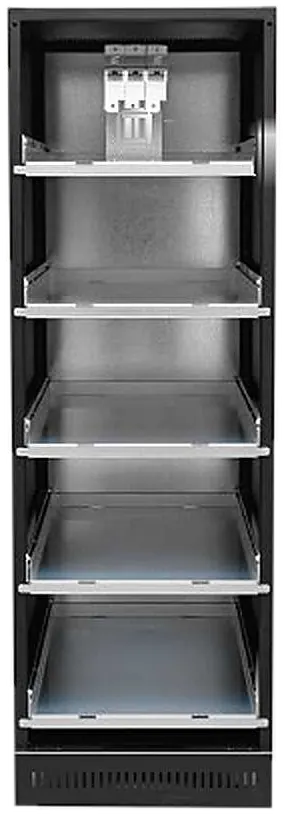

- Size W × D × H 460 × 800 × 1400 mm; weight empty 110 kg.
- Batteries: 30–40 × 12 V 24 or 40 Ah · 100 or 120 × 9 Ah (12 V VRLA AGM).
- Disconnect Q1 with fuses on +, N and −; fuses 50 / 63 / 100 / 125 A (UPS up to 60 kW).
- Front: screwed panel; ventilation slots in the plinth. Cable entry: right side, top and bottom.
- Typical UPS: IST7 10–60 kVA · IST3 10 kVA (100 × 9 Ah).
- Configurations (batteries: +/N/−): 30: 180 / 180 V · 360 V; 32: 192 / 192 V · 384 V; 34: 204 / 204 V · 408 V; 36: 216 / 216 V · 432 V; 38: 228 / 228 V · 456 V; 40: 240 / 240 V · 480 V.
- 9 Ah configurations: up to 30 batteries per shelf, wiring diagram supplied by AEC.
| Batteries | Total kg | UPS kVA |
|---|---|---|
| 30 · 32 · 34 × 24 Ah | 340 · 356 · 372 | 10 · 20 |
| 36 · 38 · 40 × 24 Ah | 388 · 400 · 420 | 10 · 20 · 30 · 40 |
| 30–38 × 40 Ah | 480–580 | 10 · 20 · 30 · 40 · 60 |
| 100 × 9 Ah | 355 | IST3 10 |
| 120 × 9 Ah | 405 | IST7 10 · 20 · 30 · 40 |
BB6
Square cabinet, 60 Ah batteries
An 800 × 800 mm footprint with a hinged door and a door-mounted handle for Q1. Three battery shelves plus the Q1 level; frames with 2, 3 or 4 levels suit the battery size.


- Size W × D × H 800 × 800 × 1400 mm; weight empty 140 kg.
- Batteries: 30–40 × 12 V 60 Ah (40 and 80 Ah layouts available), 12 V VRLA AGM.
- Disconnect Q1: fuses on + and −, N switched; fuses 50 to 250 A (UPS up to 120 kW).
- Door: hinged, with lock and Q1 rotary handle. Cable entry: top gland plate 100 × 100 mm; open base.
- Frame: 2, 3 or 4 levels · 745 × 765 mm.
- Configurations (batteries: +/N/−): 30: 180 / 180 V · 360 V; 32: 192 / 192 V · 384 V; 34: 204 / 204 V · 408 V; 36: 216 / 216 V · 432 V; 38: 228 / 228 V · 456 V; 40: 240 / 240 V · 480 V.
- For IST7 10 · 20 · 30 · 40 · 60 · 80 · 100 · 120 kVA.
| Batteries | Total kg | UPS kVA |
|---|---|---|
| 30 × 60 Ah | 660 | 10–100 |
| 32 × 60 Ah | 695 | 10–100 |
| 34 × 60 Ah | 730 | 10–100 |
| 36 × 60 Ah | 760 | 10–100 |
BB7
Tall cabinet, 80 to 100 Ah
The same footprint as the BB6, 1900 mm high, for large batteries. Four shelves plus the Q1 level, which takes 2 or 4 batteries in the 34 and 36 configurations.


- Size W × D × H 800 × 800 × 1900 mm; weight empty 160 kg.
- Batteries: 28–36 × 12 V 80 or 100 Ah, 12 V VRLA AGM.
- Disconnect Q1: fuses on + and −, N switched; fuses 50 to 400 A (UPS up to 200 kW).
- Floor fixing: 4 × Ø9 mm holes, centres 685 × 700 mm. Cable entry: top gland plate 100 × 100 mm; open base.
- Frame: 2 to 5 levels · 745 × 765 mm.
- Configurations (batteries: +/N/−): 28: 168 / 168 V · 336 V; 30: 180 / 180 V · 360 V; 32: 192 / 192 V · 384 V; 34: 204 / 204 V · 408 V; 36: 216 / 216 V · 432 V.
- Cabinet codes and fuses up to 200 kW; AEC code-list pairing up to IST7 160 kVA.
| Batteries | Total kg | UPS kVA |
|---|---|---|
| 30 × 80 Ah | 870 | 10–160 |
| 32 × 80 Ah | 930 | 10–160 |
| 34 × 80 Ah | 960 | 10–160 |
| 36 × 80 Ah | 1005 | 10–160 |
| 30 · 32 · 34 · 36 × 100 Ah | 1095 · 1155 · 1215 · 1275 | 10–160 |
BB8
Double cabinet, two strings in parallel
Two bays, two doors, Q1 on the right. Most configurations hold two identical strings in parallel at Q1, each with its own +, N and − cables.
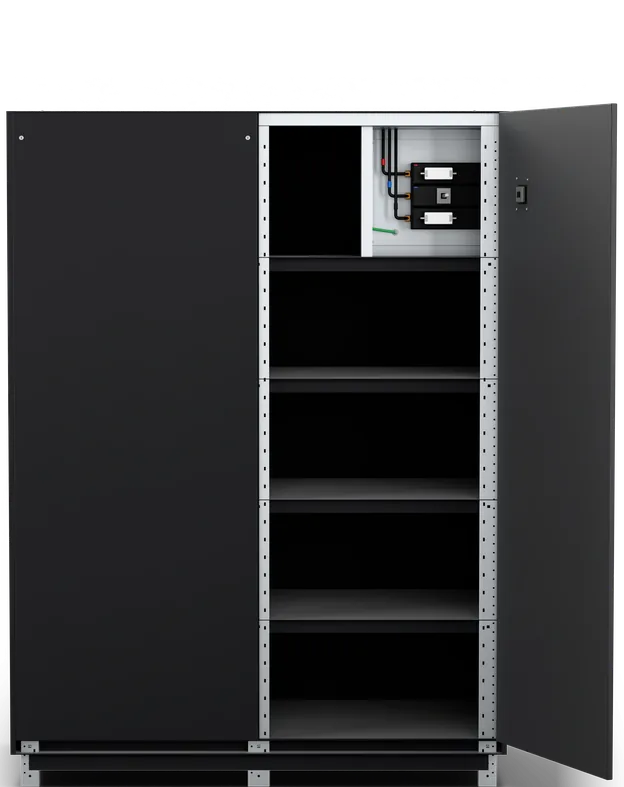

- Size W × D × H 1400 × 800 × 1900 mm; weight empty 250 kg.
- Batteries: 40, 60 or 64 × 12 V 80 or 100 Ah, 12 V VRLA AGM, two strings.
- Disconnect Q1 in the right bay: fuses on + and −, N switched; fuses 50 to 400 A (UPS up to 200 kW).
- Doors: two hinged doors with lock. Cable entry: top gland plate 100 × 100 mm; open base.
- Frame: two bays, 2 to 5 levels · 1350 × 765 mm.
- Configurations (batteries: +/N/−): 40 = 2 × 20: 120 / 120 V · 240 V ×2; 60 = 2 × 30: 180 / 180 V · 360 V ×2; 64 = 2 × 32: 192 / 192 V · 384 V ×2.
- In ×2 configurations each string has its own +, N and − cables to Q1: measure each string separately.
| Batteries | Total kg | UPS kVA |
|---|---|---|
| 40 × 80 Ah | 1195 | 10–160 |
| 60 × 80 Ah | 1650 | 10–200 |
| 64 × 80 Ah | 1735 | 60–200 |
| 40 × 100 Ah | 1495 | 10–200 |
| 60 × 100 Ah | 2095 | 10–200 |
| 64 × 100 Ah | 2215 | 60–200 |
INSTALLATION
Installed and checked step by step
The AEC manual of each cabinet gives the site requirements, the wiring order and the voltage readings to check before the cabinet is connected to the UPS.
- 01 Q1 OFF: keep the disconnect open for the whole job and for any work inside.
- 02 Batteries in place: bottom shelf first; positions and terminals exactly as in the AEC diagram.
- 03 Links, then N − +: fit links and jumpers; connect N, then −, then + last.
- 04 Measure, then close: check + to N, N to − and + to − at Q1; close Q1 during UPS commissioning.
- Nominal at 12 V per battery; float at 13.5–13.7 V. The two halves must differ by less than 1 %; a negative reading means reversed polarity.
- Site: indoor, dry, clean; never a sealed enclosure.
- 20–25 °C for best battery life (0–40 °C allowed): life halves about every 8 °C above 25 °C.
- At least 600 mm free in front; 100 mm behind and at the sides.
- Each cabinet earthed with its own PE conductor.
- Floor load with batteries: BB5 · 40 × 24 Ah 1141 kg/m²; BB5 · 38 × 40 Ah 1576 kg/m²; BB6 · 36 × 60 Ah 1188 kg/m²; BB7 · 36 × 100 Ah 1992 kg/m²; BB8 · 64 × 100 Ah 1978 kg/m².
- Several cabinets on one UPS: same batteries and string length, equal cables, each cabinet with its own Q1 and fuses.
| Batteries | + to N, N to − | + to − | Float, each half |
|---|---|---|---|
| 20 (BB8 ×2) | 120 V | 240 V | 135–137 V |
| 28 | 168 V | 336 V | 189–192 V |
| 30 | 180 V | 360 V | 202–206 V |
| 32 | 192 V | 384 V | 216–219 V |
| 34 | 204 V | 408 V | 230–233 V |
| 36 | 216 V | 432 V | 243–247 V |
| 38 | 228 V | 456 V | 256–260 V |
| 40 | 240 V | 480 V | 270–274 V |
VENTILATION · EN IEC 62485-2
Ventilation of the battery cabinet
Air flow Q = 0.05 × n × Igas × Crt × 10⁻³ m³/h (n cells, Igas 1 mA/Ah float or 8 mA/Ah boost). Natural ventilation: inlet and outlet of at least 28 × Qboost cm² each.
- Maintenance, monthly: visual check of cases, leaks, corrosion, ventilation and room temperature.
- Maintenance, every 6 months: voltage of every battery on float; check any battery more than 0.3 V from the average.
- Maintenance, every 12 months: terminal torque with Q1 OFF; clean dust.
- Every 3–5 years: capacity test or replacement.
| Example | Q float | Q boost | Openings |
|---|---|---|---|
| BB5 · 40 × 40 Ah | 0.48 m³/h | 3.8 m³/h | 108 cm² |
| BB6 · 40 × 60 Ah | 0.72 m³/h | 5.8 m³/h | 161 cm² |
| BB7 · 36 × 100 Ah | 1.08 m³/h | 8.6 m³/h | 242 cm² |
| BB8 · 64 × 100 Ah | 1.92 m³/h | 15.4 m³/h | 430 cm² |
ORDERING
Cabinet code, options and batteries
Choose the cabinet in three steps: UPS power and voltage, backup capacity, then cables and options.


- 1 · UPS: the UPS model and kW set the cabinet code and the number of batteries per string.
- 2 · Backup: the backup time sets the battery capacity (9 to 100 Ah) and the number of cabinets.
- 3 · Site: internal / external cables, IP degree, forced ventilation, Q1 auxiliary contacts.
- Example BB7-120k: BB7 cabinet for a UPS up to 120 kW: fuses F1/F2 250 A NH1, X1 → UPS cables at least 2 × 70 mm² Cu per pole, PE 35 mm². Order with or without fuses, internal cables and external cables.
- OZ Power 12 V batteries, 9 to 200 Ah.
Ordering codes Battery cabinets
| Code | Description |
|---|---|
BB1 · BB2 · BB3 | Tower cabinets for IST3 1 kVA · 2–3 kVA · 6–10 kVA (max 6 · 12 · 32 × 12 V 9 Ah) |
BBJ · BBJ2 | Rack cabinets 2U (max 8 × 9 Ah) and 3U (max 16 × 9 Ah) |
BB4-10k · -20k · -40k | BB4 for UPS up to 10 / 20 / 40 kW, max 80 × 9 Ah, internal cables |
BB4-11 · BB5-11 | Cabinets for single-phase UPS: max 80 × 9 Ah (BB4) · 120 × 9 Ah (BB5) |
BB5-10k … BB5-60k | BB5 for UPS up to 10 · 20 · 40 · 60 kW; 24 / 40 Ah or up to 120 × 9 Ah; 3 fuse holders |
BB6-10k … BB6-120k | BB6 for UPS up to 10 · 20 · 40 · 60 · 80 · 100 · 120 kW; 2 fuse holders |
BB7-10k … BB7-200k | BB7 for UPS up to 10 · 20 · 40 · 60 · 80 · 100 · 120 · 160 · 200 kW |
BB8-10k … BB8-200k | BB8 for UPS up to 10 · 20 · 40 · 60 · 80 · 100 · 120 · 160 · 200 kW |
OZ Power 12 V | 9 · 24 · 40 · 60 · 80 · 100 · 200 Ah · code on request |
BB4–BB8 | Codes: model + maximum UPS power, which sets fuse rating and cables. Each code is available with or without fuses, internal cables and external cables (X1 → UPS). |
Diagrams
The Battery cabinets, in diagrams
The path of the power, the ratings, the footprints and the losses, drawn from the figures of the EMEA 2026 catalogue.
Footprints to scale
Front view of the cabinets, all at the same scale, beside a 2 m rule. W × D × H, mm.
- BB4, empty 250 × 756 × 880 mm · 58 kg
- BB5, empty 460 × 800 × 1,400 mm · 110 kg
- BB6, empty 800 × 800 × 1,400 mm · 140 kg
- BB7, empty 800 × 800 × 1,900 mm · 160 kg
- BB8, empty 1,400 × 800 × 1,900 mm · 250 kg
Documents
Battery cabinets documents.
Battery cabinets catalogue pages and manuals in English, as PDF.
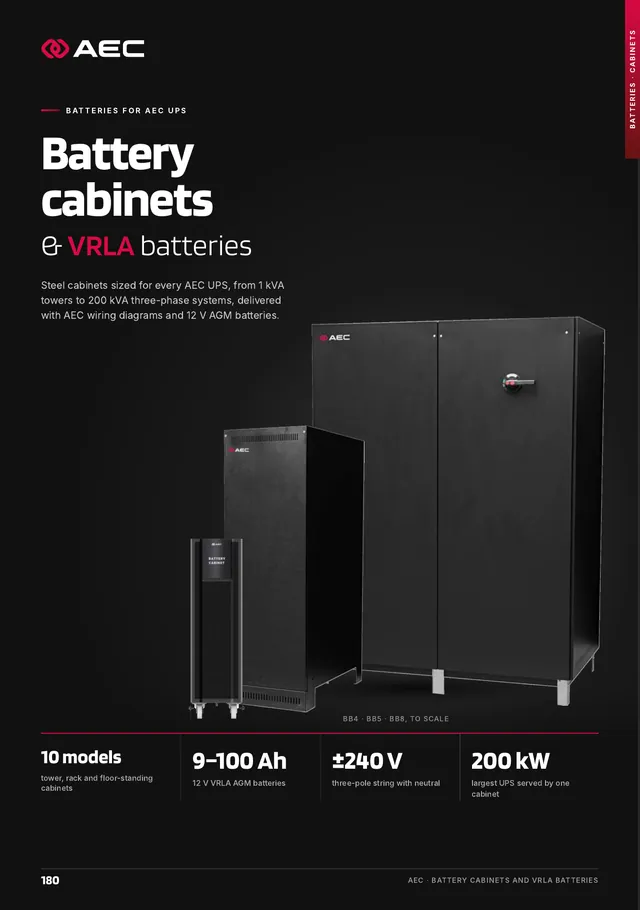 Battery cabinets · catalogue pagesCatalogue pages · English · 24 pages · 8.7 MBPDF
 BB5 battery cabinet · user manualBattery cabinet manual · English · 41 pages · 2.5 MBPDF
 BB6 battery cabinet · user manualBattery cabinet manual · English · 41 pages · 2.5 MBPDF
 BB7 battery cabinet · user manualBattery cabinet manual · English · 41 pages · 2.6 MBPDF
 BB8 battery cabinet · user manualBattery cabinet manual · English · 36 pages · 2.4 MBPDF
 UPS Catalogue EMEA 2026Catalogue · English · 222 pages · 39 MBPDF
Questions
Questions people ask
Which battery cabinet fits my AEC UPS?
BB1, BB2 and BB3 are tower cabinets for the IST3 1 / 2–3 / 6–10 kVA; BBJ (2U) and BBJ2 (3U) are rack cabinets for the IST3-J and IST9. For the IST7, BB4 and BB5 serve 10–40 kVA (BB5 up to 60 kW), BB6 up to 120 kW, and BB7 and BB8 up to 200 kW.
Which batteries and how many go in each floor-standing cabinet?
All cabinets use 12 V VRLA AGM batteries. BB5 takes 30–40 × 24 or 40 Ah (or 100–120 × 9 Ah), BB6 30–40 × 60 Ah, BB7 28–36 × 60, 80 or 100 Ah, and BB8 40, 60 or 64 × 80 or 100 Ah in two strings. With 40 batteries the three-pole string gives +240 V and −240 V around the neutral, 480 V in total.
What are the cabinet dimensions and weights?
Empty, BB5 measures 460 × 800 × 1400 mm (110 kg), BB6 800 × 800 × 1400 mm (140 kg), BB7 800 × 800 × 1900 mm (160 kg) and BB8 1400 × 800 × 1900 mm (250 kg). With batteries the floor load reaches, for example, 1992 kg/m² for a BB7 with 36 × 100 Ah.
What clearances and room conditions does a battery cabinet need?
Leave at least 600 mm free in front and 100 mm behind and at the sides, in an indoor, dry and clean room, never a sealed enclosure, with each cabinet earthed by its own PE conductor. 20–25 °C gives the best battery life (0–40 °C allowed): life halves about every 8 °C above 25 °C.
How is the cabinet protected and isolated from the UPS?
A three-pole DC switch-disconnector Q1 with fuses on + and − (BB5 also on N) isolates the UPS terminals from the batteries when OFF. The cabinet code (model + UPS power, e.g. BB7-120k) sets the fuse rating, from 50 A NH00 to 400 A NH2, and the cable sections.
What warranty do the battery cabinets have?
The cabinet has a 3-year warranty; VRLA batteries have 1 year for 9 Ah blocks and 2 years for larger blocks. Cabinets are RAL 9005 painted steel, IP20 as standard, IP21 to IP44 on request.
What maintenance do the battery cabinets need?
Monthly, a visual check of cases, leaks, corrosion, ventilation and room temperature; every 6 months, the float voltage of every battery; every 12 months, terminal torque with Q1 OFF and dust cleaning. Every 3–5 years, a capacity test or replacement.
In the same family:L6 LithiumOZ Power VRLABatteries and cabinets
Guides
Guides on the Battery cabinets
Talk to an AEC engineer
Tell us the load, the supply and the backup time you need for the AEC Battery cabinets 9–100 Ah: we answer with the model and the batteries that fit. AEC International sells through distributors in about 80 countries and an agency in every Italian region: ask AEC which one serves your area.