



















Batteries and cabinets · Lithium and VRLA lead-acid
L6 Lithium LiFePO4 lithium battery cabinet for UPS
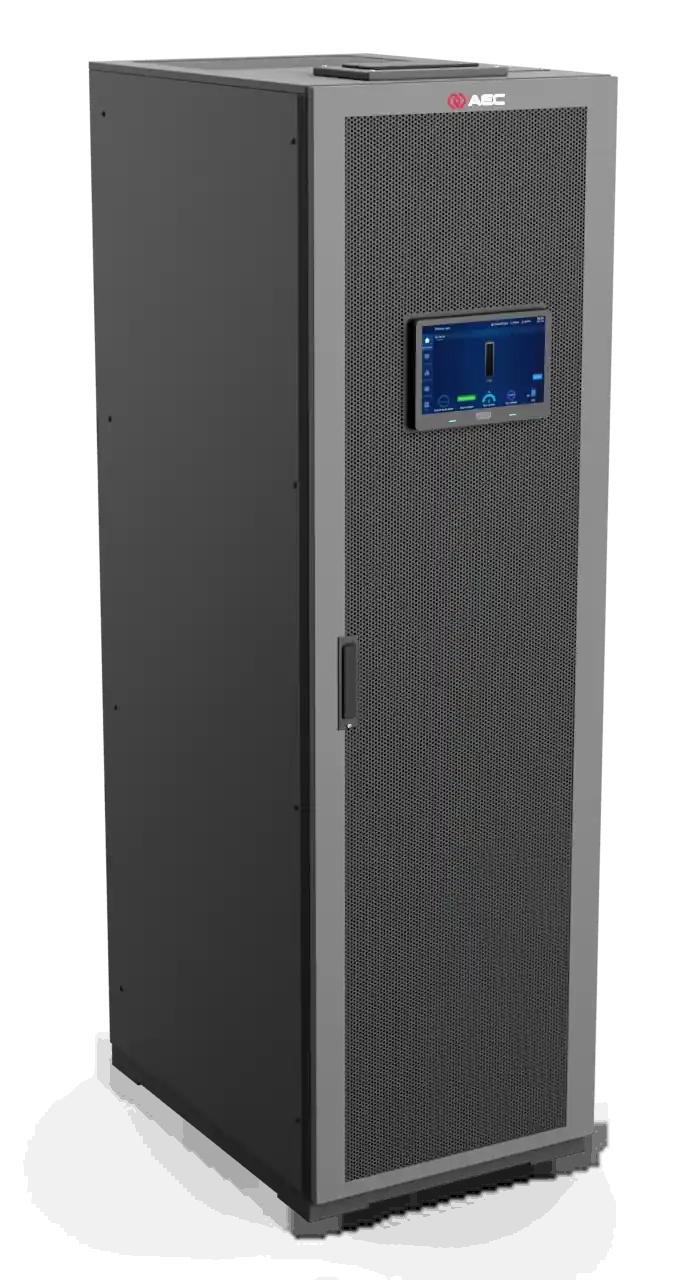
The AEC L6 is a lithium iron phosphate (LiFePO4) battery cabinet for AEC UPS from 6 to 1200 kVA, with hot-swappable 40, 50 or 100 Ah modules for three backup profiles. One cabinet with 100 Ah modules stores 69 kWh, and up to 15 cabinets run in parallel.
 Drag to turn
In 3D
Look around the L6 Lithium
Drag it round, swipe on a phone or use the arrow keys. X-ray makes the enclosure see-through, so you can see what sits behind the panels.
Rendered from AEC's 3D model of the L6 lithium battery cabinet. The full 3D view zooms in, opens the unit and names every part.
Hands on
Open the L6 cabinet yourself.
Click the unit: the door opens, then a module comes out. Drag to move it by hand. The 3D shows every part.

Backup time
The backup-time tool reads the catalogue's tables for lithium modules, L6 cabinets and VRLA strings.
Touch screen
The L6 Lithium touch screen.
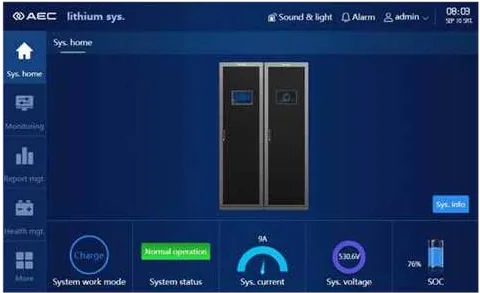
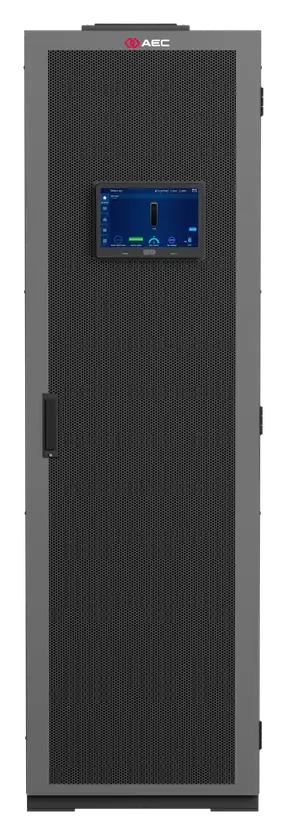
The 10-inch touch screen of the master cabinet shows the system, each cabinet, each module and each cell, records charge and discharge curves and stores events.
SYSTEM TOUCH SCREEN
Every cell in view
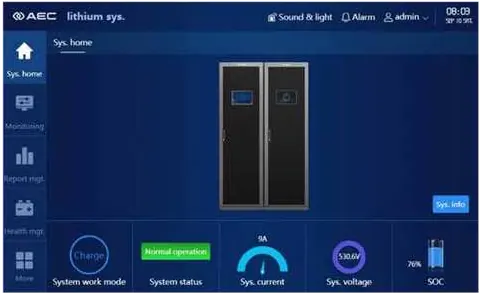
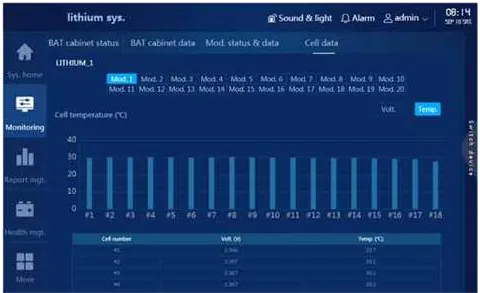
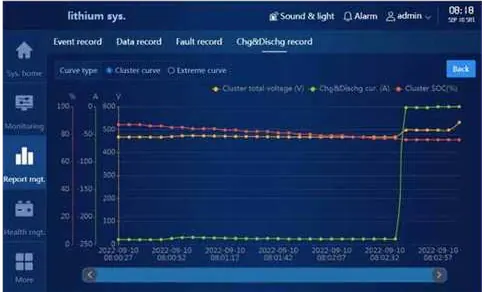
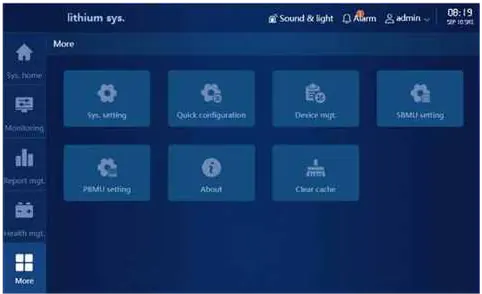
- 10" touch screen on the master cabinet; 3 indicators on each slave cabinet
- Screen button: press to switch the screen on or off, long press to restart it
- TCP/IP and RS485 communication; slave cabinets report to the master over LAN
- System home: work mode, system status, current, voltage and SOC at a glance
- Health details: health of every module in every cabinet
- Cell data: voltage and temperature of every cell
- Charge / discharge curves: cluster voltage, current and SOC over time
- Charge / discharge records: each charge and discharge with start, end, duration and current
- More: system settings, quick configuration, device management, cabinet and module BMS settings
- Remote monitoring: the touch screen connects to the UPS over RS485 and to a network management server over TCP/IP, for monitoring from the control room
What is what
Inside the L6 Lithium, part by part.
Each number on the picture is named in the list.
Front, door open
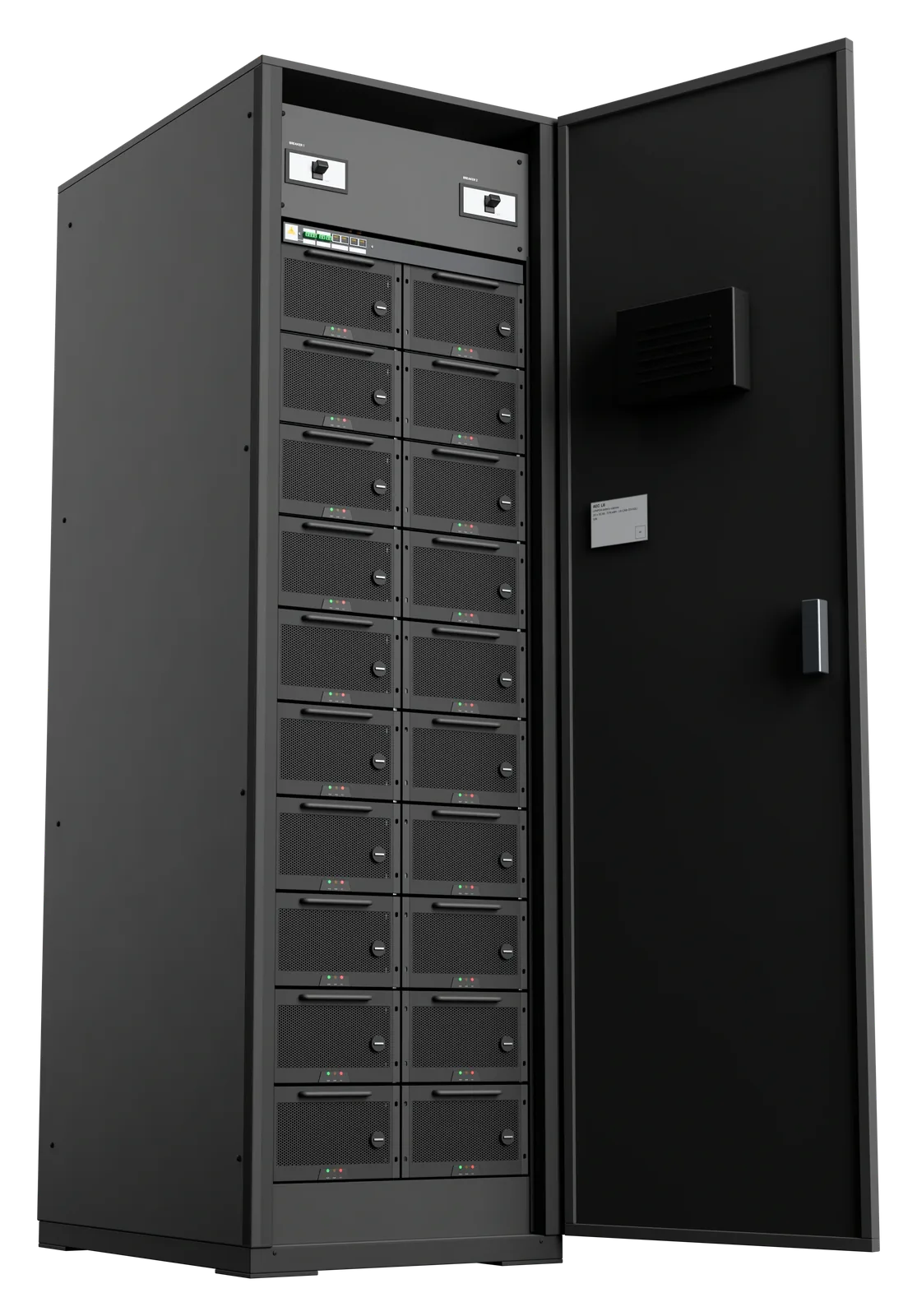
- Battery breaker 1The battery breaker of the cabinet.
- Battery breaker 2The second breaker of the L6-40 and L6-50 model M; model M1 has one breaker (UPS below 100 kVA, backup within 30 min).
- Communication moduleThe cabinet BMS: it watches every module and carries the display supply, EPO, CAN, LAN and RS485 to the UPS and the other cabinets.
- ON / OFF knobOn every module: turned, it locks the module in the cabinet and starts its output.
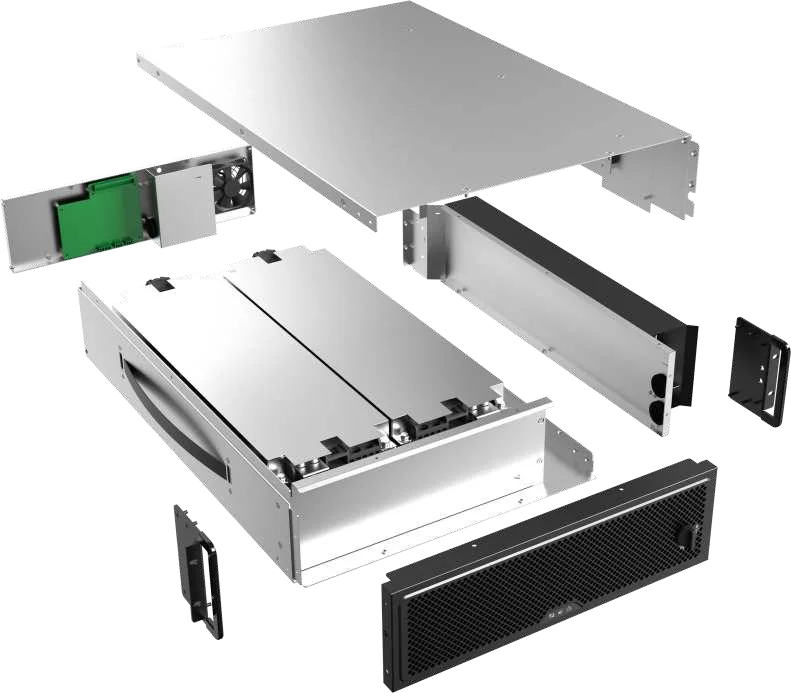
- Battery modulesUp to 20 modules of 40 or 50 Ah, or 12 of 100 Ah; each has its own BMS and DC/DC converter and slides out while the system runs. Free slots are closed by blank panels.
- Touch screen, from insideThe 10-inch touch screen is on the door of the master cabinet; slave cabinets have run, alarm and fault indicators.
Overview
Key facts
- Range
- 40 · 50 · 100 Ah
- Voltage
- 240 / ±240 / 480 V DC
- Battery
- 41 kWh · 58 kWh · 69 kWh
- Display
- 10-inch touch screen (master cabinet) · indicators (slave cabinet)
- Communication
- TCP/IP, RS485 (CAN reserved)
- Network card
- TCP/IP (LAN)
- Warranty
- 5 years
- Dimensions W × D × H
- 600 × 850 × 2000 mm
THE MAIN FEATURE · PARALLEL, NOT SERIES
Parallel, not series: every module works on its own
Many lithium systems connect their packs in series to reach the UPS voltage, like a lead-acid string: one bad pack and the whole string stops. L6 joins every module to the DC bus in parallel, each through its own isolated DC/DC converter. A fault stays inside one module; the others keep the load on.


- Output voltage set by the DC/DC: 240 V in parallel, 480 V in series, ±240 V with neutral; the system output follows the UPS battery input
- Longer battery life: intelligent voltage equalisation and SOH detection reduce battery stress
- CAPEX: a single module is replaced, not the whole battery
- OPEX: no oversized battery from day one, add modules later
| What happens | Packs in series (typical) | L6, modules in parallel |
|---|---|---|
| One module fails | The string opens: the whole battery is lost | That module leaves on its own; the others keep supplying the UPS |
| Replacing a module | With the power cut off, about 180 minutes | Hot swap with the load on, about 5 minutes |
| Old and new modules | Cannot be mixed: the string wants matched packs | Work together: each on its own converter |
| More backup later | A whole new string | One module at a time, up to 15 cabinets |
| Safety | Battery tied to the mains, no insulation check; a separate high-voltage cabinet | Isolated DC/DC, insulation checked on line; no high-voltage cabinet |
| Current sharing | One current through every pack | ≤ 3% unbalance between modules and between cabinets |
Hands on
Open the L6 Lithium.
Slide the modules in one by one and read the cabinet's energy.

Modules in the cabinet
Pick the module and how many go in: the cabinet's energy follows, module by module.
- Energy
- 41.0 kWh
- Module
- 2.05 kWh
- Full cabinet, power
- 200 kW
Pictures
The L6 Lithium in pictures
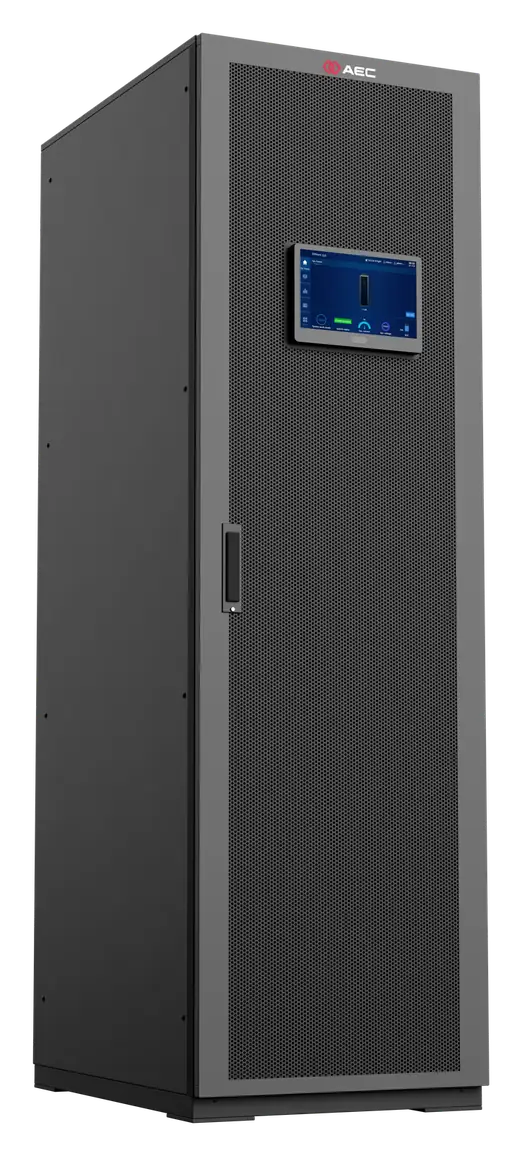
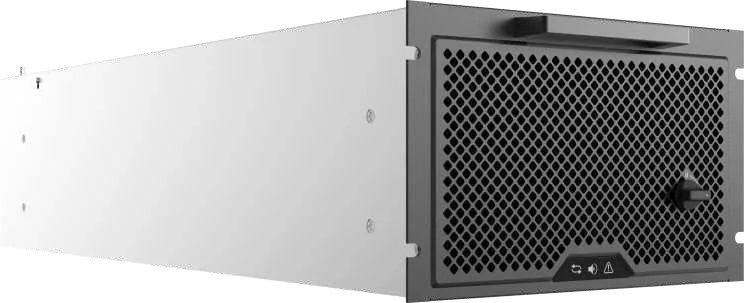
The photos and drawings of the EMEA 2026 catalogue: product views, displays, modules and connections. Tap a picture to enlarge it.
Models
Which L6 Lithium fits your load?
Every rating has its own page: that model's technical data, ordering codes, batteries and the questions people ask.
Datasheet
Datasheet L6 Lithium.
Every model side by side: keep only what differs, take it as CSV or print it.
| Model | L6-40 | L6-50 | L6-100 |
|---|---|---|---|
| Cabinet | |||
| Nominal capacity | 41 kWh | 58 kWh | 69 kWh |
| Max. modules per cabinet | 20 | 12 | |
| Rated output power (discharge) | 200 kW | 60 kW | |
| Rated output voltage (discharge) | 240 / ±240 / 480 V DC (three output systems) | ||
| Rated input voltage (charge) | 265 / ±265 / 530 V DC | ||
| Cell charge current | max. 40 A, default 20 A | ||
| Discharge overload | 125–135%: 1 min · 135–150%: 30 s · > 150%: 500 ms | ||
| Current unbalance (module / cabinet) | ≤ 3% | ||
| Max. cabinets in parallel | 15 | ||
| SOC · SOH | module SOC accuracy ≥ 95% · SOH estimate accuracy ≥ 90% | ||
| Functions | discharge SOC balance, battery cold start, self-start after power recovery, EPO, module-level fire control, cell insulation detection | ||
| Protection | over-temperature, over-current, short circuit, battery over- and under-voltage, low SOC | ||
| Module | |||
| Capacity · cell discharge rate | 40 Ah · 6C | 50 Ah · 4C | 100 Ah · 1C |
| Rated voltage · energy | 51.2 V · 2.05 kWh | 57.6 V · 2.88 kWh | 57.6 V · 5.76 kWh |
| Cell cycle life | 5,000 cycles at 50% depth of discharge | ||
| DC/DC output per module | 10 kW | 5 kW | |
| Size (W × D × H) | 223 × 665 × 152 mm | 440 × 665 × 132 mm | |
| Weight | 36 ± 1 kg | 37 ± 1 kg | 52 ± 1 kg |
| General | |||
| Communication | TCP/IP, RS485 (CAN reserved) | ||
| Display | 10-inch touch screen (master cabinet) · indicators (slave cabinet) | ||
| Operating · storage temperature | 0 … +40 °C · −10 … +45 °C | ||
| Humidity · altitude | 5–95% non-condensing · < 4000 m, derating above 2000 m (IEC 62040-3) | ||
| Noise · protection | < 65 dB · IP20 · battery-side overvoltage level 2 | ||
| Cabinet size (W × D × H) | 600 × 850 × 2000 mm | ||
| Weight with full modules | 965 ± 20 kg (M1: 955) | 985 ± 20 kg (M1: 975) | 810 ± 24 kg |
Cabinet energy and other cabinet and system data from the L6 user manual; module voltage, energy and DC/DC power from AEC lithium documentation. Specifications are subject to change without notice.
Full technical details20 sections of the EMEA 2026 catalogue: functions, panel, connections, diagrams and ordering codes
Why L6 Lithium
WHY L6
One system, three backup profiles
The L6 system is made of lithium battery cabinets, hot-swappable battery modules, distribution switches and a three-layer battery management system. Choose the module by the backup time: high-rate cells for minutes of high power, 1C cells for hours.
- 240 / ±240 / 480 V DC output, three systems
- SOC accuracy ≥ 95%
- Current unbalance ≤ 3%
- For AEC IST7 and IST6 UPS, 6–1200 kVA
- Typical backup: AEC sizing tables, initial capacity
WHY LITHIUM
Lithium iron phosphate, without lead-acid limits
Lead-acid batteries take space and weight, give no warning before a failure and are replaced several times during the life of a UPS. LFP modules managed by a three-layer BMS remove these limits.
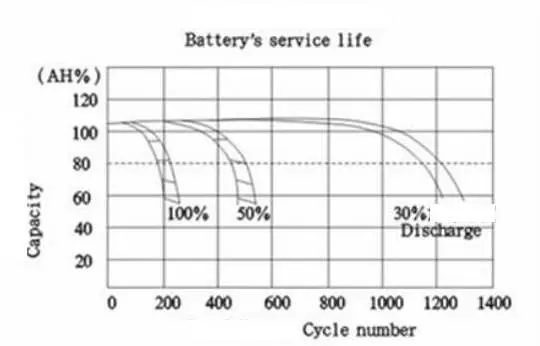

- Lead-acid, low energy density: large volume, large footprint and heavy weight; floor loading becomes an issue
- Lead-acid, no warning of danger: no advance warning and no health analysis of the battery
- Lead-acid, short life, high replacement cost: replaced three times during the life cycle of a UPS
- Lead-acid, high maintenance cost: at least two checks per year
- L6: 5,000 cell cycles at 50% depth of discharge; 3.2 V rated voltage of every LFP cell
- L6: 3-layer BMS (module, cabinet, system); 5 min module replacement, online
- Isolated DC/DC in every module: the battery is separated from the mains
- Modules in parallel: a fault stays inside one module; old and new modules work together
- Module fire protection and on-line insulation detection
| Item | L6 lithium LFP | Lead-acid (VRLA) |
|---|---|---|
| Battery health | SOC and SOH of every module and cabinet, early warning | no health analysis, no advance warning |
| Replacement in the UPS life | not needed | 3 times |
| A faulty unit | leaves the system on its own, the others keep working | packs in series: one fault affects the whole string |
| Old and new | mixed in the same system | cannot be mixed |
| Maintenance | online, module by module | checks at least twice a year |
THE CABINET
Everything behind one door
A 600 × 850 × 2000 mm cabinet holds the breakers, the communication module and the battery modules. Front air inlet, rear or top air outlet.

- Battery breaker 1: battery breaker of the cabinet
- Battery breaker 2: second breaker on L6-40 / L6-50 model M; model M1 has one breaker (for UPS below 100 kVA and backup within 30 min)
- Communication module (cabinet BMS): AC supply for the display, EPO, CAN, LAN and RS485 to the UPS
- Battery modules: up to 20 × 40 / 50 Ah modules, or 12 × 100 Ah modules; free slots closed by blank panels
- Touch screen: master cabinet with 10-inch touch screen on the door; slave cabinets have run, alarm and fault indicators
- Cooling: front air inlet with rear air outlet, or front inlet and top outlet with the top cover plate removed; fan speed controlled for long fan life and low noise
- 600 × 850 mm (W × D), 2000 mm high · 20 modules (40 / 50 Ah) or 12 (100 Ah) · IP20 · < 65 dB
| Indicator (slave cabinet) | Colour | On |
|---|---|---|
| Run | blue | system running normally |
| Alarm | yellow | a module in alarm or protection |
| Fault | red | system fault |
TWO CABINET VERSIONS
One footprint, two module sizes
The same cabinet takes 20 modules of 40 or 50 Ah for high power and short backup, or 12 modules of 100 Ah for long backup.


- 40 · 50 Ah: 20 modules, 41 · 58 kWh, 200 kW rated power; modules in two columns
- 100 Ah: 12 modules, 69 kWh, 60 kW rated power; modules in one column
- Battery breakers: distribution switches of the cabinet
- Cabinet BMS and communication module: monitors every module of the cabinet; ports to the UPS and the other cabinets
- Touch screen: 10 inches, on the door of the master cabinet
| Module | Energy per cabinet | Rated power per cabinet |
|---|---|---|
| 40 Ah | 41 kWh | 200 kW |
| 50 Ah | 58 kWh | 200 kW |
| 100 Ah | 69 kWh | 60 kW |
BATTERY MODULE
Lithium modules that slide in like drawers
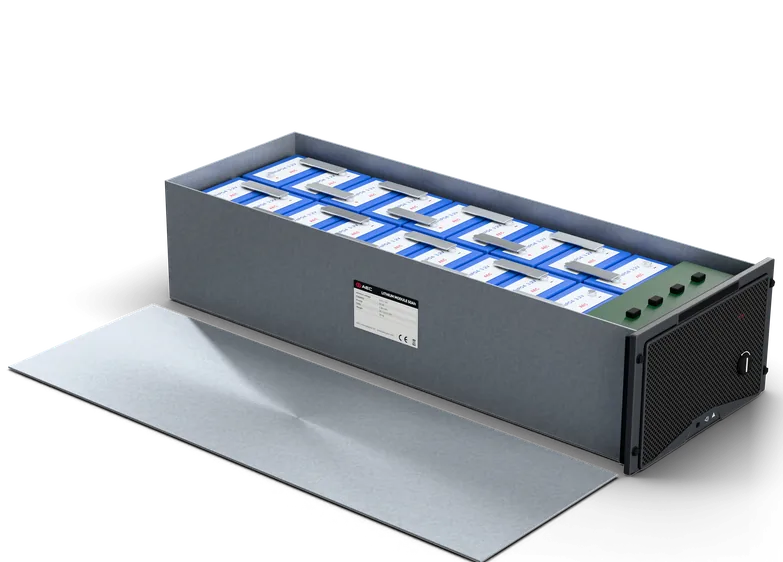
Every module has its own battery management unit and a bidirectional DC/DC converter. With the knob locked, the module is held in the cabinet and starts to deliver its output.
- L6-40: 51.2 V, 40 Ah, 2.05 kWh, 36 ± 1 kg
- L6-50: 57.6 V, 50 Ah, 2.88 kWh, 37 ± 1 kg
- L6-100: 57.6 V, 100 Ah, 5.76 kWh, 52 ± 1 kg
- Size 223 × 665 × 152 mm (40 / 50 Ah), 440 × 665 × 132 mm (100 Ah)
- DC/DC output per module: 10 kW (40 / 50 Ah) · 5 kW (100 Ah)
- Parts: front handle; indicators run (green), alarm (yellow), fault (red); ON / OFF knob that locks the module in the cabinet and starts its output; fan; output connector; handle
- Position marks on top of the module show half (yellow 1/2) and quarter (red 1/4) insertion
- LFP cells, 3.2 V · cell discharge rate 6C · 4C · 1C · 5,000 cell cycles at 50% depth of discharge · module SOC accuracy ≥ 95%
Pick a state: the module's lights come on as the catalogue's table gives them.
| Status | Run (green) | Alarm (yellow) | Fault (red) |
|---|---|---|---|
| Charge | on | ||
| Discharge | flashing | ||
| Sleep | on | on | |
| Off | on | ||
| Module alarm | on | ||
| Communication fault | flashing (3 s) | ||
| Module protection | on | ||
| Battery fault | flashing |
40 AND 50 AH MODULES
Two capacities, one drawer size
The 40 Ah module uses 6C cells for high power and short backup; the 50 Ah module uses 4C cells and stores more energy in the same 223 mm drawer. Both deliver 10 kW through their own DC/DC converter.
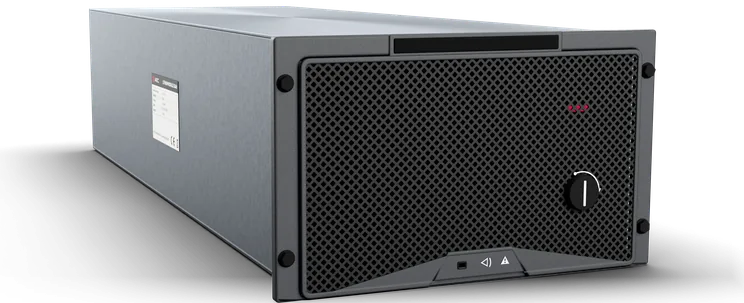
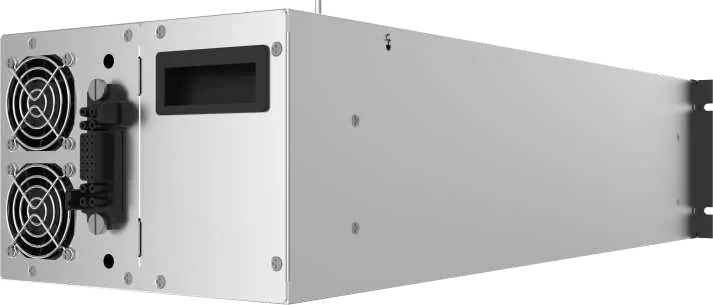
- Front: front handle; indicators run, alarm, fault; in-place switch that locks the module and starts its output
- Rear: fans; connector for power and signal; rear handle
- Inside: bidirectional, isolated DC/DC module; LFP battery cells, 3.2 V; front sealing plate
- Same size, same cabinet slots: 40 and 50 Ah modules are chosen by backup time and power
| Item | 40 Ah · 6C | 50 Ah · 4C |
|---|---|---|
| Cells | LFP, 3.2 V · 18 in series | LFP, 3.2 V · 18 in series |
| Module voltage | 57.6 V | 57.6 V |
| Energy per module | 2.05 kWh | 2.88 kWh |
| Cell discharge rate | 6C | 4C |
| DC/DC output | 240 / ±240 / 480 V · 10 kW | 240 / ±240 / 480 V · 10 kW |
| Current unbalance | ≤ 3% | ≤ 3% |
| Full cabinet, 20 modules | 41 kWh · 10 min at rated power | 58 kWh · 14 min at rated power |
| Size (W × D × H) | 223 × 665 × 152 mm | 223 × 665 × 152 mm |
| Weight | 36 ± 1 kg | 37 ± 1 kg |
| Noise | 58 dB | 58 dB |
100 AH MODULE
Long backup, in a wider drawer
The 100 Ah module uses 1C cells for backup times from one to four hours. It is 440 mm wide, delivers 5 kW through its own DC/DC converter and fills the 12-slot cabinet.
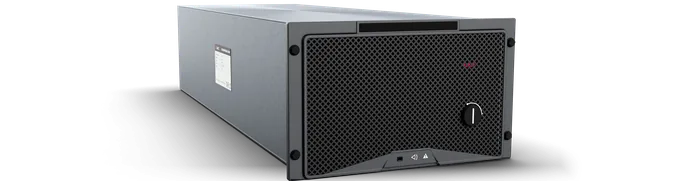
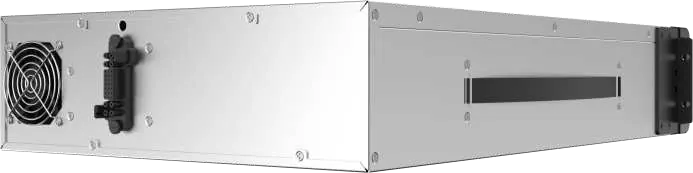

- Front: front handle; indicators run, alarm, fault; in-place switch that locks the module and starts its output
- Rear and side: fan; connector for power and signal; side handle
- Inside: bidirectional, isolated DC/DC module, 5 kW; LFP battery cells, 3.2 V; front and rear sealing plates
- Which module? 40 Ah: 2.05 kWh per module, 10 kW DC/DC output, 20 modules per cabinet, 10 min full cabinet at rated power
- Which module? 50 Ah: 2.88 kWh per module, 10 kW DC/DC output, 20 modules per cabinet, 14 min full cabinet at rated power
- Which module? 100 Ah: 5.76 kWh per module, 5 kW DC/DC output, 12 modules per cabinet, 57 min full cabinet at rated power
| Item | 100 Ah · 1C |
|---|---|
| Cells | LFP, 3.2 V · 18 in series · 1C |
| Module voltage · energy | 57.6 V · 5.76 kWh |
| DC/DC output | 240 / ±240 / 480 V · 5 kW |
| Current unbalance | ≤ 3% |
| Full cabinet, 12 modules | 69 kWh · 57 min at rated power |
| Size (W × D × H) | 440 × 665 × 132 mm |
| Weight · noise | 52 ± 1 kg · 58 dB |
HOW IT WORKS
A DC/DC converter in every module
Each module connects to the DC bus through its own bidirectional converter: modules work in parallel, share the current and can be mixed or replaced one at a time.
- Charge mode: mains normal and modules not full, the bidirectional DC/DC converter steps the UPS charge voltage (265 / ±265 / 530 V DC) down and charges with constant current and limited voltage
- Sleep mode: mains normal and modules full, no charge or discharge until battery voltage or SOC falls below the setting
- Discharge mode: mains abnormal, the DC/DC converter boosts the battery to 240 / ±240 / 480 V DC and supplies the UPS
- 240 · ±240 · 480 V rated DC output, three output systems; 265 · ±265 · 530 V rated charge input; cell charge current max 40 A, default 20 A
- Switch from charge to discharge within the UPS dynamic output requirements; on / off overshoot ≤ 3% of rated voltage
- Modular parallel design: modules and cabinets share the load; current unbalance between modules or cabinets ≤ 3%
- N+1 redundancy: a faulty module leaves without stopping the system; capacity configured precisely in small steps
- Matched to AEC UPS: designed for the AEC IST7 and IST6 series, from 6 to 1200 kVA; the touch screen talks to the UPS over RS485
| Discharge overload | Protection after |
|---|---|
| 125–135% | 1 min |
| 135–150% | 30 s |
| > 150% | 500 ms |
SAFE AND SMART
Safety functions and the three-layer BMS
Safety functions, a three-layer battery management system and smart functions from the L6 user manual.
- Isolation: DC/DC isolated design and physical isolation between lithium modules and UPS
- Dual low-voltage design: low pack voltage, and no voltage at the module output when it is off
- Auto exit: the faulty module exits automatically; the other modules keep working (N+1 parallel redundancy)
- Insulation monitored online in real time with pre-alarm before it fails; cell insulation detection
- Module-level fire control
- Full protection set: over-temperature, over-current, short circuit, battery over- and under-voltage, low SOC; EPO
- Mixed modules: self-adaptive output power control, new and old modules work together at module and cabinet level
- Self-adaptive SOC management: discharge SOC balance control, efficient management with less effort
- Capacity test without outage: the battery capacity is tested with no power outage risk
- Alarms and data: alarm convergence and data recording locate a problem quickly and accurately
- Cold start and self-start: battery cold start; automatic restart when power returns
- Intelligent fan control: long fan life and low noise
| Module BMS | Cabinet BMS | System BMS (touch screen) |
|---|---|---|
| Module charge and discharge monitoring: temperature, voltage | Monitors the module BMS units | Monitors the cabinet BMS units |
| Module SOC and SOH | Cabinet SOC and SOH | Information display, reports and alarms |
| Module fault diagnosis and protection | Cabinet fault diagnosis and protection | Communicates with the UPS and the network management system |
IN PRACTICE
The L6 in service, in pictures
How the L6 behaves in service: faults stay inside one module, modules are replaced and tested online, and the system grows with the load.


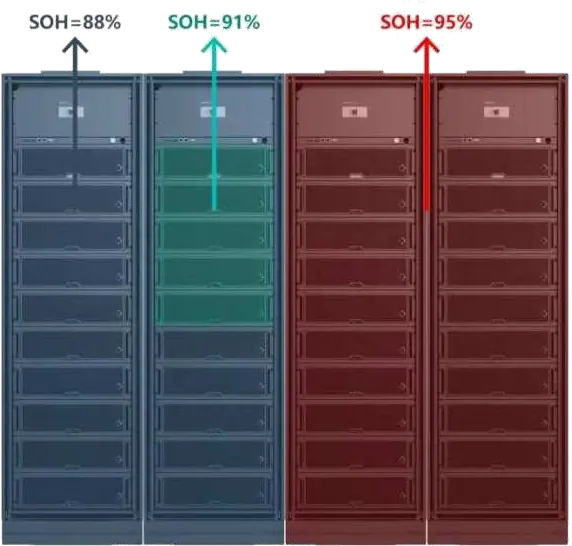

- Automatic exit: a faulty module leaves the system; the bus keeps the other modules working
- Hot swap: faulty modules are replaced online, without switching the system off
- Old and new together: cabinets of different ages (SOH 88%, 91%, 95%) work together through adaptive SOC management
- Battery test, no outage: modules are tested online in groups, with no risk of power failure
- Expansion in phases: modules or cabinets are added as the load grows, up to 15 cabinets
- In-row installation: with the rear frame the cabinet lines up with modular UPS and IT racks
BACKUP TIME · L6-40 SHORT BACKUP
10 and 20 minutes
Cabinets and modules for each UPS power (cabinets · modules), from the L6 sizing table (2026): new modules, 95% battery and inverter efficiency, the 10% reserve included, never fewer modules than carry the UPS rating.
- The 10% reserve is already in the figures: for 40 Ah the L6 sizing table gives the same counts as AEC's own
- Steps of one module for a precise sizing
| UPS kW | 10 min | 20 min |
|---|---|---|
| ≤ 60 | 1 · 6 | 1 · 12 |
| ≤ 80 | 1 · 8 | 1 · 16 |
| ≤ 100 | 1 · 10 | 1 · 20 |
| ≤ 200 | 1 · 20 | 2 · 40 |
| ≤ 300 | 2 · 30 | 3 · 60 |
| ≤ 400 | 2 · 40 | 4 · 80 |
| ≤ 500 | 3 · 50 | 5 · 100 |
| ≤ 600 | 3 · 60 | 6 · 120 |
| ≤ 800 | 4 · 80 | 8 · 160 |
BACKUP TIME · L6-50 SHORT BACKUP
15 and 30 minutes
Cabinets and modules for each UPS power (cabinets · modules), from the L6 sizing table (2026): new modules, 95% battery and inverter efficiency, the 10% reserve included, never fewer modules than carry the UPS rating.
| UPS kW | 15 min | 30 min |
|---|---|---|
| ≤ 60 | 1 · 7 | 1 · 13 |
| ≤ 80 | 1 · 9 | 1 · 17 |
| ≤ 100 | 1 · 11 | 2 · 22 |
| ≤ 200 | 2 · 22 | 3 · 43 |
| ≤ 300 | 2 · 32 | 4 · 64 |
| ≤ 400 | 3 · 43 | 5 · 85 |
| ≤ 500 | 3 · 53 | 6 · 106 |
| ≤ 600 | 4 · 64 | 7 · 127 |
| ≤ 800 | 5 · 85 | 9 · 170 |
BACKUP TIME · L6-100 LONG BACKUP
1, 2 and 4 hours
Cabinets and modules for each UPS power (cabinets · modules), from the L6 sizing table (2026): new modules, 95% battery and inverter efficiency, the 10% reserve included, never fewer modules than carry the UPS rating.
- AEC engineers choose the module type, the number of modules and cabinets and the reserve for each project
- 20 modules of 40 / 50 Ah per cabinet; 12 modules of 100 Ah per cabinet
| UPS kW | 1 h | 2 h | 4 h |
|---|---|---|---|
| ≤ 6 | 1 · 2 | 1 · 3 | 1 · 6 |
| ≤ 10 | 1 · 3 | 1 · 5 | 1 · 9 |
| ≤ 15 | 1 · 4 | 1 · 7 | 2 · 13 |
| ≤ 20 | 1 · 5 | 1 · 9 | 2 · 17 |
| ≤ 40 | 1 · 9 | 2 · 17 | 3 · 34 |
SYSTEMS AND OPTIONS
From one cabinet to fifteen
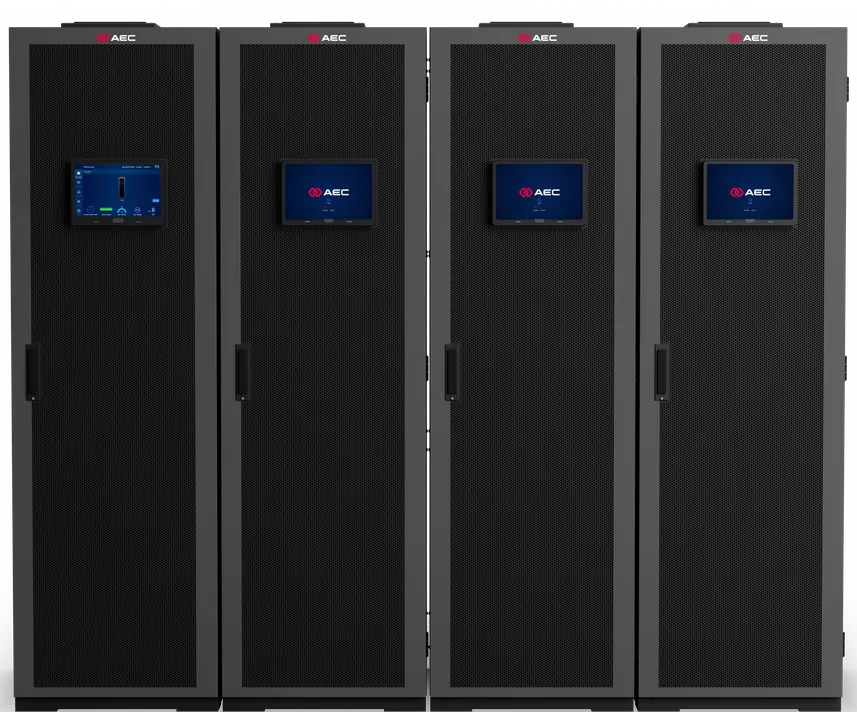
Up to 20 modules (40 / 50 Ah) or 12 modules (100 Ah) in a single cabinet. Above that, master and slave cabinets work in parallel, up to 15 cabinets.
- Networking device: 8 network ports, communication among up to 7 systems
- Blank panels for empty module slots
- In-row rear frame: extends the cabinet depth to line up with modular UPS or IT racks
- M · M1 breakers: L6-40 / L6-50 with two battery breakers (M) or one (M1, for UPS below 100 kVA and backup within 30 min); L6-100 one battery breaker
- M2 · S2: versions for the IST6 modular UPS
- Master · slave: slave and combiner cabinets on the right or left of the master
- Communication module ports: AC IN · AC OUT 160–300 V AC supply for the display, cascade between cabinets; EPO external switch (master), shared among cabinets; CAN1 · CAN2 reserved, cabinets and external CAN; LAN monitoring by upper computer, cascade between cabinets; RS485 communication with the UPS, RJ45
- 15 cabinets in parallel · 8 cabinets per combiner · TCP/IP and RS485 · EPO shared among cabinets
| Combiner cabinet | L6-C-2000 | L6-C-4000 |
|---|---|---|
| Cabinets | up to 4 | up to 8 |
| Max. output current | 2000 A | 4000 A |
| Size (W × D × H) | 400 × 850 × 2000 mm | 400 × 850 × 2000 mm |
| Weight | 120 kg | 140 kg |
| Output wiring | top or bottom | top or bottom |
INSTALLATION AND SERVICE
Installed once, expanded online
Site, transport and storage requirements, the AEC service path and module replacement.
- Concrete or non-flammable floor only
- Operating temperature 0–40 °C; relative humidity 5–95% non-condensing
- Below 4000 m; above 2000 m derate per IEC 62040-3
- Keep air inlets, outlets and fans clear, with good ventilation around the cabinet
- Warning labels around the system: disconnect before wiring
- Modules shipped at 20–50% state of charge
- Storage −10 … +45 °C (best 0 … +35 °C), at least 200 mm off the floor and 500 mm from walls and heat sources
- After 6 months in storage, check again; charge every 3 months for long storage
- If transported or stored outside the storage range, let it stabilise for more than 4 h before installation
- Sizing: module type, number of modules and cabinets, reserve
- Installation: cabinets, combiner, wiring to the UPS, EPO and communication
- Commissioning: power-on test with the UPS, BMS settings, alarms
- Expansion: modules added online; cabinets added to the parallel system
- Module replacement: a faulty module does not stop the system, it reduces redundancy; shut it down, pull it out and replace it, the module supports hot swap and is replaced in a few minutes
- Safety first: operation and wiring by qualified personnel only; after switching off, wait at least 10 minutes and measure the terminals before working on the system
- 24/7 AEC technical assistance by phone and WhatsApp; WhatsApp reply in < 30 min to technical and commercial questions
- warranty 3 years on the UPS and 5 years on the lithium batteries; L6 lithium cabinets 5 years, extendable with a maintenance contract
- 21+ countries with spare parts across the Allis Electric group
- AEC service: service@aecups.com · +39 393 080 5211 · www.aecups.com
ORDERING
Choose module, quantity and cabinets
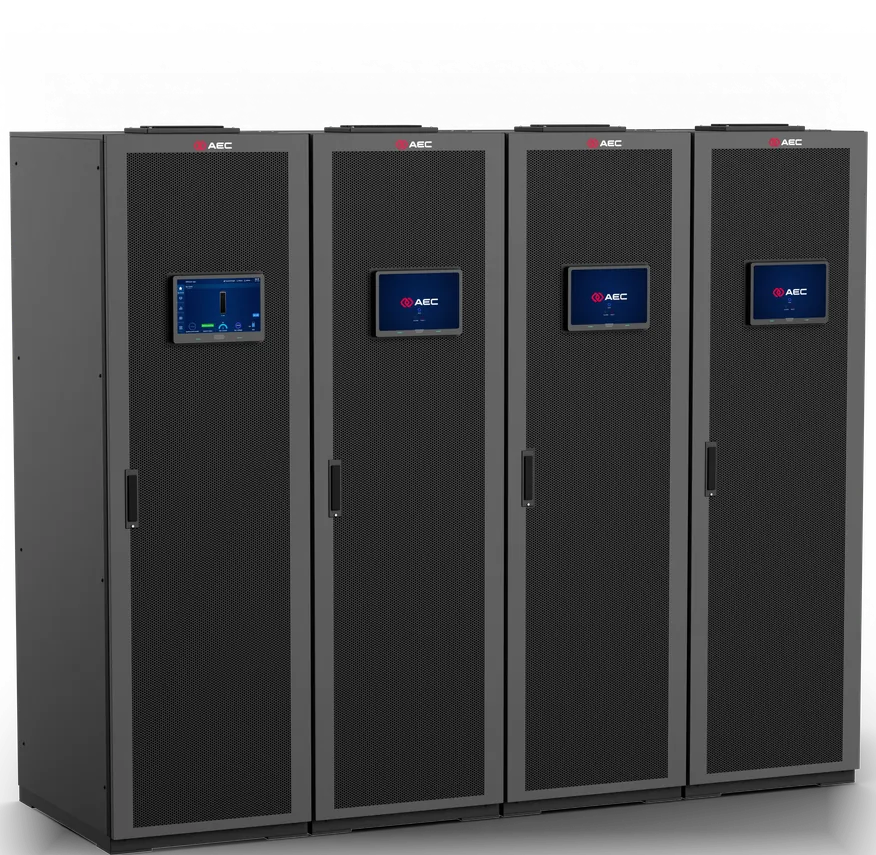
AEC configures the system for each UPS: module type and quantity, cabinets, combiner and accessories.
- How to size: UPS power (kW) and required backup time
- Module: 40 / 50 Ah for minutes, 100 Ah for hours
- Modules and cabinets from the Backup time tables, with the 10% reserve
- Single cabinet, or master + slaves + combiner
- 3 module types · 20 · 12 modules per cabinet · 15 cabinets in parallel · 6–1200 kVA AEC UPS range
Ordering codes L6 Lithium
| Code | Description |
|---|---|
| L6-40 cabinet | Cabinet for up to 20 × 40 Ah modules, master (touch screen) or slave (indicators), M or M1. Code on request. |
| L6-50 cabinet | Cabinet for up to 20 × 50 Ah modules, master or slave, M or M1. Code on request. |
| L6-100 cabinet | Cabinet for up to 12 × 100 Ah modules, master or slave. Code on request. |
| Modules | 40 Ah · 50 Ah · 100 Ah lithium modules, hot-swappable. Code on request. |
L6-C-2000 · L6-C-4000 | Combiner cabinet: L6-C-2000 (up to 4 cabinets) · L6-C-4000 (up to 8 cabinets). Code on request. |
| Accessories | Networking device · blank panels · in-row rear frame. Code on request. |
Diagrams
The L6 Lithium, in diagrams
The path of the power, the ratings, the footprints and the losses, drawn from the figures of the EMEA 2026 catalogue.
Energy per cabinet
Every cabinet in the range, in proportion to the energy it stores; beside it, the power per cabinet.
Footprints to scale
Front view of the cabinets, all at the same scale, beside a 2 m rule. W × D × H, mm.
- L6-40 cabinet, full (20 modules) 600 × 850 × 2,000 mm · 965 ± 20 (M1: 955) kg
- L6-50 cabinet, full (20 modules) 600 × 850 × 2,000 mm · 985 ± 20 (M1: 975) kg
- L6-100 cabinet, full (12 modules) 600 × 850 × 2,000 mm · 810 ± 24 kg
- L6-C-2000 combiner, up to 4 cabinets 400 × 850 × 2,000 mm · 120 kg
- L6-C-4000 combiner, up to 8 cabinets 400 × 850 × 2,000 mm · 140 kg
Documents
L6 Lithium documents.
L6 Lithium catalogue pages and manuals in English, as PDF.
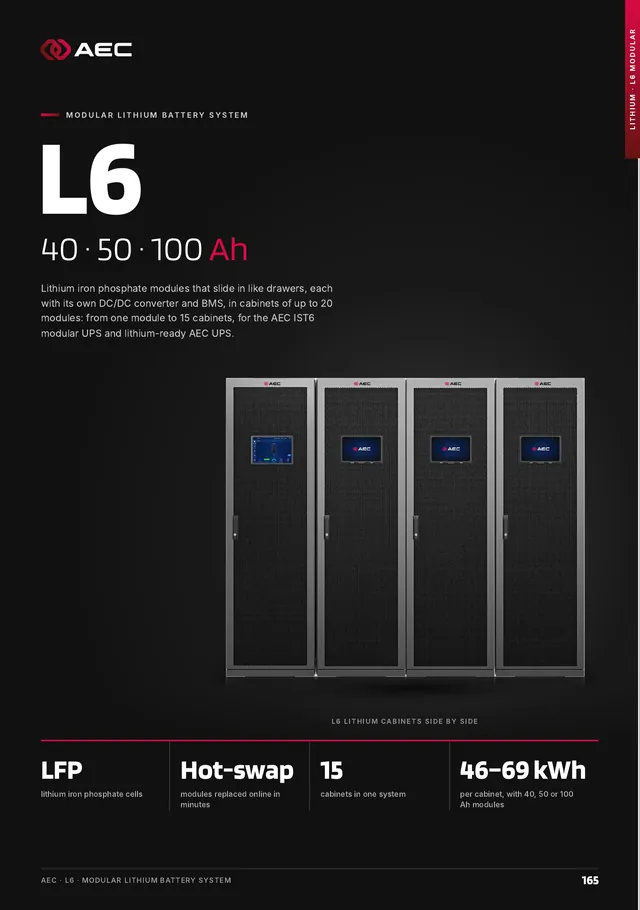 L6 Lithium · catalogue pagesCatalogue pages · English · 15 pages · 8.5 MBPDF
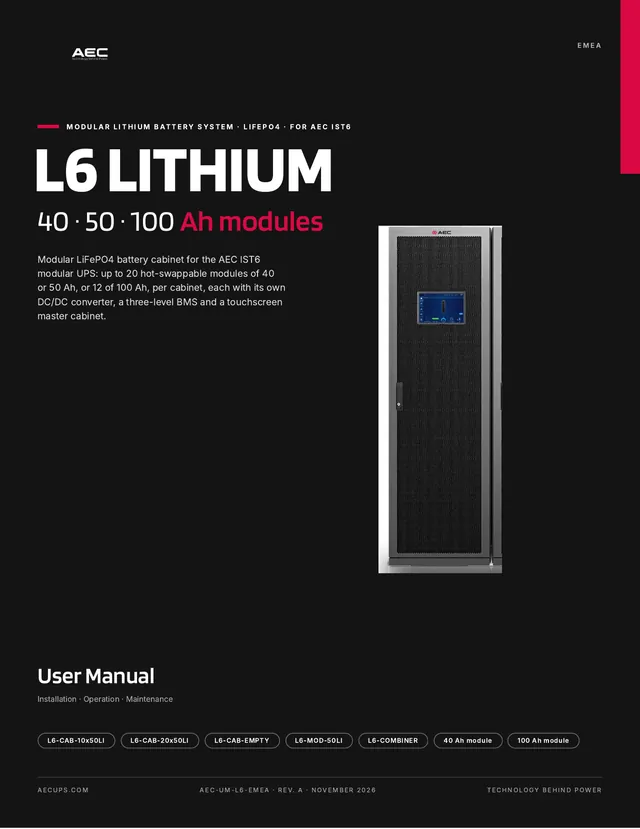 L6 lithium battery cabinet · user manualUser manual · English · 63 pages · 7.2 MBPDF
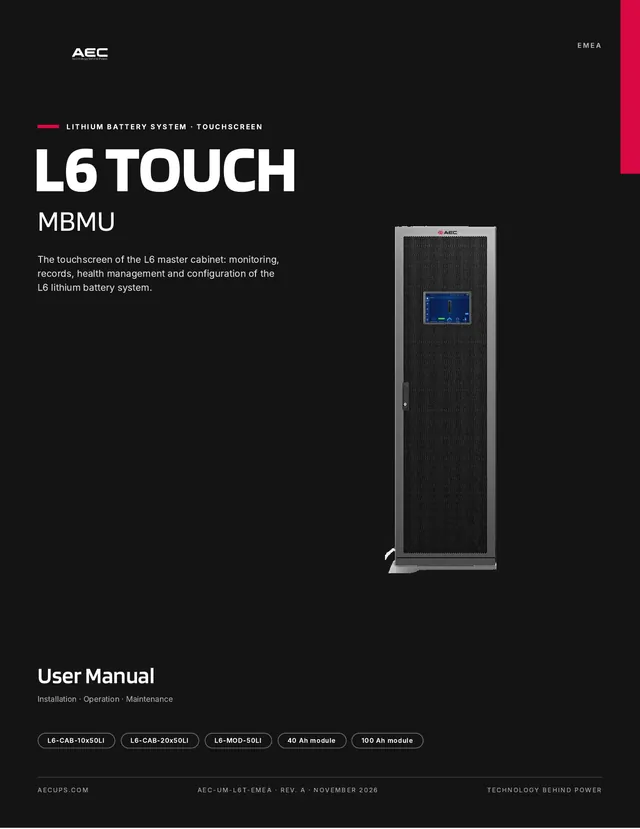 L6 touch screen (MBMU) · user manualUser manual · English · 46 pages · 4.3 MBPDF
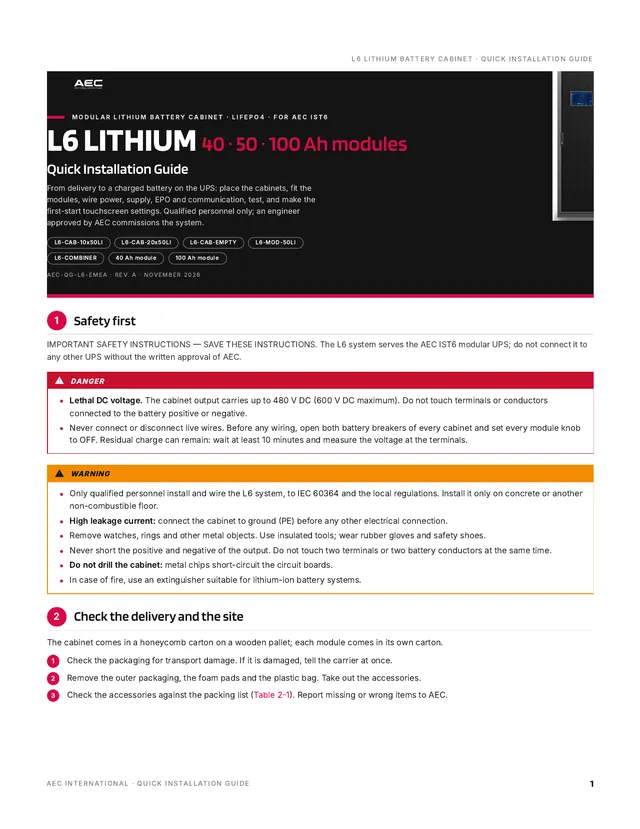
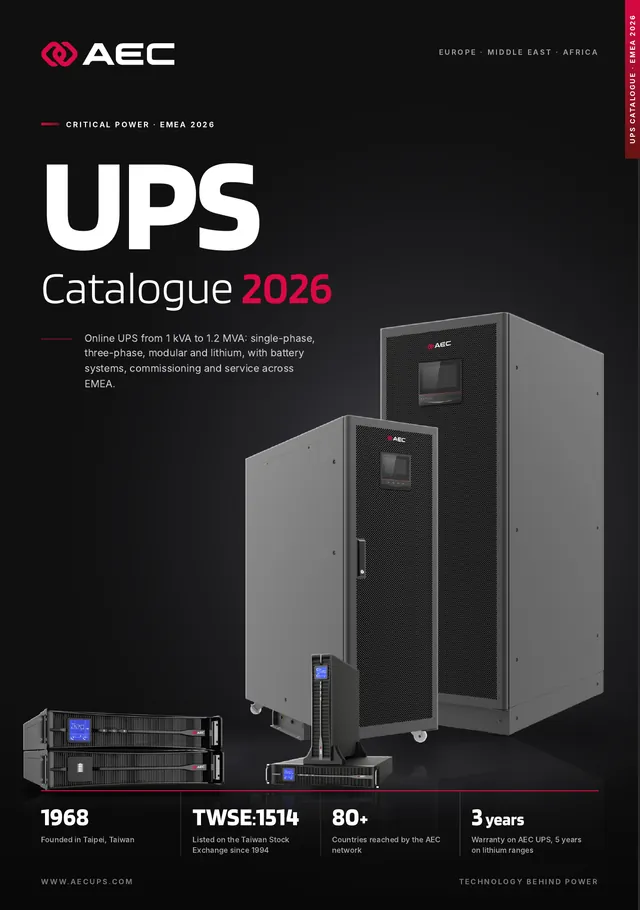 UPS Catalogue EMEA 2026Catalogue · English · 222 pages · 39 MBPDF

Questions
Questions people ask
Which L6 module should I choose for my backup time?
The 40 Ah module (6C cells) is for short backup of 10 or 20 minutes, the 50 Ah module (4C) for 15 or 30 minutes, and the 100 Ah module (1C) for long backup of 1, 2 or 4 hours. A full cabinet gives 10 minutes (40 Ah), 15 minutes (50 Ah) or 1 hour (100 Ah) at rated power.
How many cabinets and modules do I need for my UPS?
From the AEC sizing tables, a UPS up to 100 kW needs 1 cabinet with 10 × 40 Ah modules for 10 minutes. Up to 200 kW, 1 cabinet with 20 × 50 Ah modules for 15 minutes; up to 20 kW, 1 cabinet with 8 × 100 Ah modules for 2 hours. Plan a 10% reserve (actual backup = theoretical × 0.9); AEC engineers confirm module type, quantity and reserve for each project.
How long do the L6 lithium batteries last?
The LFP cells are rated for 5,000 cycles at 50% depth of discharge. In AEC's comparison, a lead-acid battery is replaced three times during the life of a UPS, while the L6 needs no replacement and a faulty module is changed on its own.
What are the L6 cabinet size, energy and weight?
Every cabinet measures 600 × 850 × 2000 mm. With 20 modules it stores 41 kWh (40 Ah) or 58 kWh (50 Ah) at 200 kW rated power, weighing 965 or 985 kg; with 12 × 100 Ah modules it stores 69 kWh at 60 kW and weighs 810 kg.
Which UPS can the L6 work with?
The L6 is designed for the AEC IST7 and IST6 series, from 6 to 1200 kVA. Its DC/DC converters deliver 240, ±240 or 480 V DC to follow the UPS battery input, and the touch screen talks to the UPS over RS485.
Can modules be replaced or added without switching off?
Yes: modules are hot-swappable and replaced online in about 5 minutes, and a faulty module leaves the system on its own while the others keep working. New and old modules work together, so capacity can grow up to 15 cabinets in parallel.
What are the installation requirements for the L6?
Install on a concrete or non-flammable floor, at 0–40 °C and 5–95% relative humidity non-condensing, below 4000 m (derating above 2000 m), with air inlets and outlets kept clear. Modules are shipped at 20–50% state of charge and stored at −10 … +45 °C.
In the same family:Battery cabinetsOZ Power VRLABatteries and cabinets
Guides
Guides on the L6 Lithium
Talk to an AEC engineer
Tell us the load, the supply and the backup time you need for the AEC L6 Lithium 40 · 50 · 100 Ah: we answer with the model and the batteries that fit. AEC International sells through distributors in about 80 countries and an agency in every Italian region: ask AEC which one serves your area.